

This content is for informational purposes only and does not constitute medical advice. Please consult with a licensed podiatrist for a personalized evaluation and treatment plan. Individual results may vary.

Most foot problems start small, with a twinge of foot arch pain, a sore toe, or swelling at the end of the day. Many cases ease with rest, better shoes, and simple home care. A podiatrist is needed when the pain lasts more than a week or two, gets worse, limits walking, or comes with redness, numbness, or an open sore. This guide explains seven of the most common foot conditions and the warning signs that call for professional care.

For anyone in Los Angeles dealing with ongoing foot pain, it helps to see a Los Angeles podiatrist for an evaluation with Dr. Arkady Kaplansky, who diagnoses and treats these conditions and can prevent a minor issue from becoming a serious one.
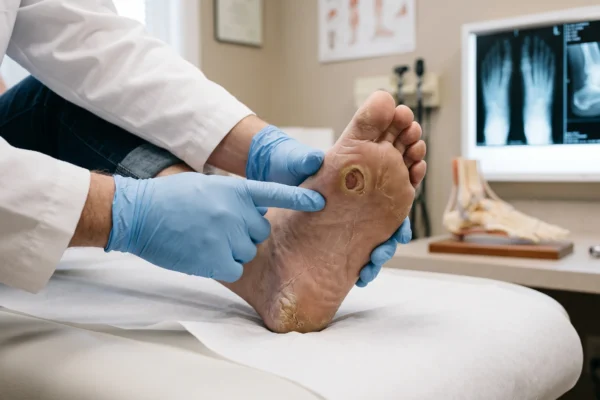
A detailed clinical photograph, in medium close-up, focusing on a doctor's two blue nitrile-gloved hands examining a patient's foot resting on white paper on an exam table. The patient's foot, positioned on the right side of the frame, has a prominent, non-healing neuropathic ulcer with thick callous edges near the metatarsal heads. The surrounding skin is dry and fissured. One gloved hand supports the foot, and the other index finger is carefully poised near the edge of the ulcer. The sleeve of a white lab coat is visible. The composition is a sharp focus on the foot and hands. The background is a softly blurred medical office, with an active X-ray viewbox on the wall displaying advanced Charcot foot x-rays and an anatomical model of a Charcot foot deformity. Cool, clean clinical overhead lighting illuminates the scene.

Heel and Arch Problems

Pain in the heel and arch is one of the most common reasons people visit a foot doctor. The feet carry the body’s full weight with every step, so the tissues that support the arch are under constant strain.

Plantar Fasciitis

Plantar fasciitis is the most common cause of heel pain. It is inflammation of the plantar fascia, the thick band of tissue that connects the heel to the toes and supports the arch. The classic sign, described by NIH, is sharp foot arch pain or heel pain with the first few steps in the morning that eases as the foot warms up, then returns after long periods of standing. Rest, stretching, ice, supportive shoes, and arch supports usually help.

Fallen Arches and Strained Foot Ligaments

Flat feet, or fallen arches, happen when the arch flattens and the foot rolls inward. Weak or overstretched foot ligaments and tired foot muscles can leave the arch poorly supported, leading to aching in the arch, heel, or even the knees and hips. Many people have flat feet with no pain at all. When discomfort does appear, supportive footwear, orthotic inserts, and exercises that strengthen the foot muscles often bring relief without surgery.

Toe and Forefoot Problems

The toes and the ball of the foot take a lot of pressure, especially in tight or narrow shoes. Over time, that pressure can change the shape of the foot.

Bunions

A bunion is a bony bump that forms at the base of the big toe when the joint shifts out of place, pushing the toe toward the others. According to Cleveland Clinic, years of pressure, often from tight shoes, along with inherited foot shape, can cause one to form. Symptoms include pain, swelling, and redness at the big-toe joint. Wider shoes, bunion pads, and orthotics can ease pressure, while severe cases may need surgery.

Hammertoes

A hammertoe is a toe that bends downward at the middle joint instead of lying flat, often the result of muscle imbalance or shoes that crowd the toes. Early on, the toe can still be straightened and responds well to roomier shoes, padding, and toe exercises. If left alone, the joint can stiffen into a fixed position that may require a procedure to correct. Catching it early keeps treatment simple.

Nail and Skin Problems

Problems with the toenails and skin are common, easy to overlook, and sometimes the first sign of a bigger issue. They can also be uncomfortable and, in some cases, lead to infection.

Ingrown Toenails and Nail Infections

An ingrown toenail develops when the corner of a nail grows into the surrounding skin, causing pain, redness, and swelling. Cleveland Clinic notes that tight shoes and cutting nails too short or curved are common causes. Fungal nail infections are another frequent problem, turning nails thick, yellow, and brittle. Mild ingrown nails may improve with soaking and proper trimming, but repeated or infected nail infections, and any infection in a person with diabetes, should be treated by a podiatrist.

Athlete's Foot

Athlete’s foot is a fungal skin infection that causes itching, burning, and peeling skin, often between the toes. It thrives in warm, damp conditions like sweaty socks and shared locker-room floors. Over-the-counter antifungal creams clear up many cases, but stubborn or spreading infections, especially when the skin cracks open, need medical care to prevent a deeper infection.

Pain and Swelling on Top of the Foot

Not all foot pain sits in the heel or toes. Discomfort across the top of the foot is common and has several possible causes worth understanding.

Extensor Tendinitis and Top-of-Foot Pain

Foot tenderness on top of the foot often comes from extensor tendinitis, an irritation of the tendons that run along the top and lift the toes. Tight shoes, laces tied too tightly, or a sudden jump in activity can trigger it. Foot aching on top of the foot may also signal a stress fracture, nerve irritation, or arthritis. Because top of foot discomfort has many causes, lasting or worsening pain there deserves a professional exam to find the real reason.

Common Causes of Feet Swelling

Swollen feet are common and not always serious. The usual causes of foot swelling include standing or sitting for long periods, hot weather, pregnancy, an injury like a sprain, or shoes that are too tight. Swelling in both feet can sometimes point to a problem with the heart, kidneys, or circulation, while sudden swelling in one foot with pain or redness needs prompt attention. Elevating the feet and choosing supportive shoes can ease mild, everyday swelling.

Diabetes and Foot Health

Foot care takes on special importance for anyone with diabetes. High blood sugar over time can damage nerves and reduce blood flow to the feet, which means a diabetic foot may not feel a cut, blister, or sore. Without that warning, a small wound can grow and heal slowly. Daily foot checks, well-fitting shoes, and never going barefoot help protect against serious complications. People with diabetes should have a foot exam at least once a year, and any new sore, cut, or color change should be seen by a podiatrist right away rather than treated at home.

Simple Ways to Prevent Foot Problems

Many foot conditions can be avoided with a few everyday habits. Since the feet support the whole body, small choices add up over a lifetime of walking and standing.

Choosing the Right Shoes

Footwear is the single biggest factor in foot health. Shoes with a wide toe box, good arch support, and cushioning take pressure off the toes and spread weight evenly. Shoes that are too tight or too narrow contribute to bunions, hammertoes, ingrown nails, and top-of-foot pain. Buying shoes later in the day, when the feet are at their largest, helps ensure a comfortable fit. Replacing worn-out athletic shoes also protects the arch and heel.

Daily Foot Care Habits

A short daily routine keeps small problems from growing. Washing and drying the feet well, especially between the toes, lowers the risk of fungal nail infections and athlete’s foot. Trimming toenails straight across helps prevent ingrown nails. Gentle stretching of the calves and the arch keeps the foot muscles and foot ligaments flexible, which eases foot arch pain. Anyone who notices ongoing discomfort should not simply push through it; the foot is sending a signal worth listening to.

When to See a Podiatrist

Many foot problems improve with rest, supportive shoes, and time. A visit to a podiatrist is wise, however, when certain signs appear. The Cleveland Clinic guide to foot pain and most foot specialists point to these red flags:

  • Foot pain that lasts more than a week or two, or keeps coming back.
  • Pain that makes it hard to walk, stand, or wear normal shoes.
  • Swelling, redness, or warmth that does not go down, or any open sore.
  • Numbness, tingling, or loss of feeling in the feet.
  • Any foot wound or infection in a person who has diabetes.

Early treatment usually means simpler care and a faster recovery. A podiatrist can pinpoint the cause, often with a quick exam and sometimes an X-ray, and build a plan to relieve pain and protect the foot. Residents of Los Angeles who are living with stubborn foot problems can reach out to Dr. Arkady Kaplansky’s practice for expert evaluation and treatment.

Frequently Asked Questions

What are the most common foot problems?

Some of the most common foot conditions are plantar fasciitis, fallen arches, bunions, hammertoes, ingrown toenails and nail infections, top-of-foot tendinitis, and diabetic foot complications. Most begin mild and respond to rest and better shoes.

When should a person see a podiatrist?

A podiatrist is needed when foot pain lasts more than a week or two, makes walking hard, or comes with swelling, numbness, or an open sore. Anyone with diabetes should see a podiatrist for any foot wound right away.

What causes pain on the top of the foot?

Foot tenderness on top of the foot often comes from extensor tendinitis, irritated by tight shoes or a sudden increase in activity. Top of foot discomfort can also signal a stress fracture, nerve irritation, or arthritis, so lasting pain should be checked.

What causes swollen feet?

Common causes of foot swelling include long periods of standing or sitting, hot weather, pregnancy, injury, or tight shoes. Swelling in both feet can sometimes reflect a heart, kidney, or circulation issue, and sudden one-sided swelling needs prompt care.

How are ingrown toenails and nail infections treated?

Mild ingrown toenails may improve with warm soaks and proper straight-across trimming. Repeated or infected nails, fungal nail infections, and any infection in a person with diabetes should be treated by a podiatrist to avoid complications.