

This content is for informational purposes only and does not constitute medical advice. Please consult with a licensed podiatrist for a personalized evaluation and treatment plan. Individual results may vary.
Achilles tendinopathy is a chronic, degenerative condition affecting the primary connective tissue of the ankle joint, characterized by structural collagen breakdown rather than acute inflammation.
Clinical intervention is required immediately when an athlete experiences localized thickening of the tendon, persistent morning stiffness that impairs walking, or sharp pain during the push-off phase of running. According to clinical practice guidelines published in the Journal of Orthopaedic & Sports Physical Therapy, these symptoms indicate that the tendon matrix has entered a state of mechanical failure, which significantly elevates the risk of a full-thickness rupture if loading is not modified.
For residents in Southern California, early diagnosis is critical to maintaining an active lifestyle and preventing permanent mobility loss. Athletes can access advanced clinical care in Los Angeles with Dr. Arkady Kaplansky to implement modern, evidence-based rehabilitation strategies tailored for the aging ankle.
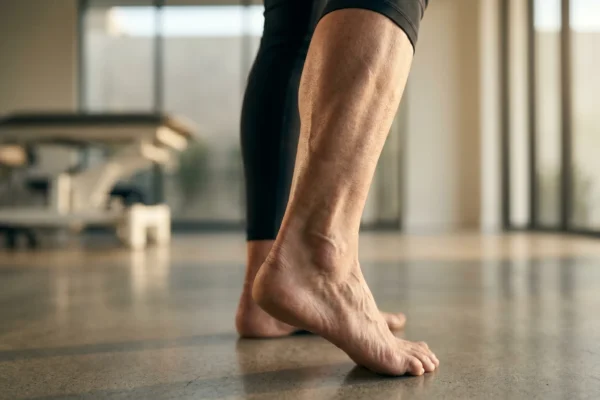
The Biological Shift: Why the Over-50 Ankle is Different
After age 50, the body’s ability to synthesize new collagen fibers slows by approximately 30-50 percent. This biological reality means that the “wear and tear” from long-distance running accumulates faster than the body can repair it.
The structural integrity of the ankle joint relies on the interfascicular matrix (IFM) – a specialized tissue that allows collagen fibers to glide past one another. In older runners, this matrix loses its hydration and elasticity.
When the IFM fails, the fibers rub against each other, creating heat and micro-tears. This leads to the characteristic aching achilles tendon that many masters athletes dismiss as simple aging.
Primary Differences in Tendon Architecture by Age
| Biological Marker | Runner (Age 18-30) | Runner (Age 50+) | Impact on Ankle Health |
|---|---|---|---|
| Collagen Type | Mostly Type I (Strong) | Increasing Type III (Weak) | Reduced tensile strength |
| IFM Hydration | High (Optimal gliding) | Low (Increased friction) | Stiffness and micro-tears |
| Tenocyte Activity | Rapid response to load | Delayed/Blunted response | Longer recovery required |
| Blood Flow | Moderate | Significantly reduced | Slower metabolic clearing |
| AGE Accumulation | Minimal | High (Brittle fibers) | Increased rupture risk |
Why Traditional Stretches for Achilles Tendonitis Often Fail
The Danger of Advanced Glycation End-Products (AGEs)
- Stretching Tension: Aggressive stretches for achilles tendonitis pull on these cross-linked fibers, causing them to fracture.
- Cellular Stress: The tension from stretching triggers a stress response in the cells, causing further discomfort.
- Load Mismanagement: Stretching does nothing to build the strength needed to handle the 6-8 times body weight force experienced during a run.
Mechanical Compression in Insertional Tendinopathy
- Bone Compression: This movement crushes the tendon against the back of the heel bone.
- Avascular Zones: The pressure further restricts blood flow to the most vulnerable part of the ankle.
- Haglund’s Deformity: Constant friction can lead to the growth of a “pump bump” or bone spur, which physically grinds into the tendon.
The Myth of High-Volume Repetitions
- No Recovery: The aging tendon requires 48-72 hours to synthesize new collagen after a heavy workout.
- Cumulative Fatigue: Daily loading prevents the “matrix remodeling” phase, leading to chronic breakdown.
- Metabolic Exhaustion: The cells simply cannot keep up with the demand for repair at such a high frequency.
Heavy Slow Resistance: The New Gold Standard
Phase-Based Loading Schedule (12-Week Protocol)
| Phase | Duration | Exercise Focus | Goal |
|---|---|---|---|
| Phase 1: Isometric | Weeks 1-2 | 45-second holds (Seated/Standing) | Pain reduction and cell signaling |
| Phase 2: Isotonic | Weeks 3-8 | Slow 6-second reps (Heavy load) | Collagen synthesis and thickening |
| Phase 3: Plyometric | Weeks 9-12 | Controlled hopping and jumping | Return of “spring” to the ankle |
Criteria for Progressing the Load
- Morning Stiffness: Must be less than 15 minutes upon waking.
- Pain Levels: Pain must not exceed a 3/10 during the exercise.
- Recovery: Any pain triggered by the workout must return to baseline within 24 hours.
- Strength Symmetry: The injured ankle should be within 10% of the strength of the healthy ankle.
Modern Technology in Podiatric Recovery
This technology is particularly beneficial for postpartum patients as it is non-invasive, painless, and carries no risk to nursing infants. Combined with gait analysis technology, these tools allow clinicians to identify the exact second during a stride when the arch collapses, enabling more accurate orthotic prescriptions and faster recovery times.
Why Is Proper Footwear a Medical Necessity After Pregnancy?
Criteria for Postpartum Recovery Footwear
- Deep Heel Cup: This feature stabilizes the heel bone (calcaneus) and prevents it from tilting inward.
- Rigid Midsole: A shoe should not fold in half; it must provide a stable platform for the arch.
- Wide Toe Box: Sufficient space allows the toes to splay, reducing pressure on the metatarsal heads.
- Cushioned Outsole: High-rebound materials help absorb the impact of each step.
- Rocker-Bottom Geometry: This specialized sole shape helps the foot transition smoothly from heel to toe, reducing strain on the ball of the foot.
The 6-Second Cadence Rule
- 3 Seconds Up (Concentric): This slow lift avoids the “snap” of a quick movement.
- 3 Seconds Down (Eccentric): This controlled lowering builds the structural integrity of the tendon.
- Zero Bounce: Pausing at the bottom and top of the movement prevents the use of momentum, ensuring the tendon does all the work.
Recognizing Achilles Tendinitis Symptoms in Masters Athletes
The Ankle Audit: Daily Symptoms Checklist
- Morning Stiffness: Do the first ten steps out of bed feel like walking on glass?
- Localized Thickening: Is there a visible “lump” or nodule about 2 inches above the heel?
- Warm-Up Phenomenon: Does the pain go away after the first mile of a run, only to return much worse the next day?
- Dorsiflexion Pain: Does pulling the toes toward the shin cause a sharp, localized ache?
- Crepitus: Is there a “grating” or “crunching” sensation when moving the ankle joint?
Mapping Pain Patterns
| Symptom Timing | Clinical Meaning | Action Required |
|---|---|---|
| Pain during warm-up only | Early stage Reactive Tendinopathy | Reduce mileage by 20%; begin HSR |
| Pain in achilles when running | Tendon Dysrepair stage | Cease running for 7 days; start Isometrics |
| Achilles hurts after running | High mechanical sensitivity | Improve hydration and check footwear |
| Persistent aching achilles tendon | Degenerative Tendinopathy | Immediate professional podiatric consult |
Systemic and Metabolic Factors in Tendon Repair
Hydration and Matrix Lubrication
- Water Intake: Active runners should consume at least 0.5 to 0.7 ounces of water per pound of body weight.
- Electrolyte Balance: Magnesium and Calcium are essential for the “cross-bridging” of muscle and tendon fibers.
- Salt Management: Excessive sodium intake without adequate water can increase osmotic pressure in the tendon, worsening swelling.
The Impact of Hormonal Changes
- Estrogen: Vital for collagen synthesis in women. Post-menopausal runners are at a 4x higher risk for tendon issues.
- Testosterone: Critical for maintaining the thickness and “stiffness” (load-bearing capacity) of the tendon fibers in men.
- Growth Hormone: Natural declines in GH mean that the “remodeling phase” of tissue repair takes significantly longer.
Metabolic Health and Glycation
- Glucose Spikes: Frequent sugar intake binds to the collagen in the ankle, creating a “stiff” gait.
- Insulin Resistance: This state prevents nutrients from effectively entering the poorly vascularized tendon tissue.
- Cholesterol: High LDL levels have been linked to the deposition of fatty streaks within the Achilles tendon, weakening its core.
Biomechanical Benchmarks for Safe Running
The ``Ankle Protection`` Fact Sheet
- The 10% Rule: Never increase training volume (mileage) or intensity (speed) by more than 10% per week.
- Cadence Target: Aim for 170-180 steps per minute. A higher cadence reduces the “ground contact time,” which lowers the stress on the Achilles.
- Footwear Lifespan: Modern running shoes lose 50% of their shock-absorbing capacity after 300 miles. For older runners, replacing shoes every 350 miles is a non-negotiable safety requirement.
- Surface Choice: Avoid deep sand or excessively soft trails, which force the Achilles into a deep, high-tension stretch with every stride.
Advanced Clinical Interventions in Los Angeles
Regenerative and Minimally Invasive Options
- Platelet-Rich Plasma (PRP) Therapy: A concentration of the patient’s own growth factors is injected into the “gray zones” of the tendon to stimulate cellular repair.
- Extracorporeal Shockwave Therapy (ESWT): Acoustic sound waves create micro-trauma in the stiffened tissue, “tricking” the body into sending fresh blood and nutrients to the ankle.
- Ultrasound-Guided Debridement: A minimally invasive procedure to remove the “biological sludge” (Type III collagen) and AGEs that prevent the tendon from gliding.
- Minimally Invasive Surgery: For full ruptures,PMC reports that minimally invasive surgical repair allows for a much faster return to sport than the old “open” surgeries, with significantly less scarring.
Recovery Timeline for Advanced Treatments
| Treatment Type | Initial Recovery | Return to Light Running | Full Athletic Return |
|---|---|---|---|
| Shockwave (ESWT) | 0 Days | Immediate (Modified) | 4-6 Weeks |
| PRP Injection | 3-7 Days | 4 Weeks | 12 Weeks |
| Minimally Invasive Surgery | 2 Weeks | 12-16 Weeks | 6-9 Months |
Final Summary Checklist for Runners Over 50
- Stop Passive Stretching: Replace long, static calf stretches with active, heavy loading (HSR).
- Monitor Morning Stiffness: Treat any stiffness lasting over 15 minutes as a “yellow light” to reduce training volume.
- Prioritize Strength: Perform seated calf raises to target the soleus muscle, which handles 60-70% of the load during a run.
- Manage Systemic Health: Keep blood sugar stable and hydration levels high to prevent the “brittleness” caused by glycation.
- Seek Professional Help Early: If pain persists for more than two weeks despite rest, consult a specialist to prevent structural achilles tendon damage.
By respecting the biological changes of the aging ankle and adopting modern, load-based rehabilitation, runners over 50 can safely continue their sport without the fear of a debilitating Achilles injury.