

This content is for informational purposes only and does not constitute medical advice. Please consult with a licensed podiatrist for a personalized evaluation and treatment plan. Individual results may vary.
The most effective approach for resolving dry cracked feet involves a clinical combination of high-concentration keratolytic agents, such as urea (25-40%), and professional mechanical debridement to remove thickened, non-viable skin. This condition, medically identified as heel fissures, occurs when the skin on the heel becomes excessively dry (anhidrosis) and loses the elasticity required to support the weight of the body. Immediate medical attention is necessary if cracks begin to bleed, cause pain during walking, or show signs of infection such as warmth, redness, and swelling, as these symptoms indicate a breach in the protective skin barrier.
Expert diagnosis and personalized treatment plans in the Los Angeles area are available through Dr. Arkady Kaplansky, a podiatrist specializing in advanced restorative foot care.
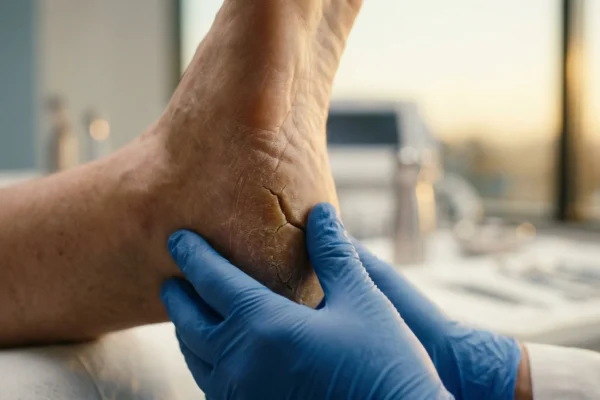
Understanding The Clinical Pathology Of Heel Fissures
During the normal human gait, the fat pad located under the calcaneus (heel bone) expands horizontally to absorb the force of impact. Healthy, hydrated skin is elastic enough to accommodate this expansion. However, when hyperkeratosis (the thickening of the skin) occurs, the skin becomes brittle. The mechanical pressure of walking forces this rigid tissue to split, creating fissures that can extend into the deeper dermis. This not only causes sharp pain but also exposes the body to environmental pathogens.
Environmental And Lifestyle Factors In Southern California
- Low Humidity Cycles: Regions such as the San Fernando Valley and the Inland Empire frequently experience periods of extreme low humidity. This arid air draws moisture out of the skin through a process called transepidermal water loss (TEWL).
- Constant Exposure to Elements: The local culture emphasizes open-back footwear, such as flip-flops and sandals. These styles provide no lateral support for the heel’s fat pad, allowing for maximum expansion and increasing the likelihood of skin rupture.
- Surface Heat Stress: High temperatures on pavement and sand during the summer months cause thermal micro-trauma, which further damages the skin’s lipid barrier and worsens dry scaly feet.
- Water Hardness: Many areas in Southern California have hard water with high mineral content, which can strip natural moisture from the skin during frequent showering.
Comparison Of Treatment Modalities: Home Care vs. Professional Intervention
| Feature | Standard Home Maintenance | Professional Podiatric Treatment |
|---|---|---|
| Primary Goal | Surface softening and prevention | Restoration of skin integrity and infection control |
| Tools Utilized | Pumice stones, emery boards, foot files | Sterile surgical blades, high-speed medical burrs |
| Active Ingredients | Standard lotions, <10% urea | Medical-grade keratolytics (25-40% urea), AHAs |
| Immediate Effect | Temporary texture improvement | Removal of the hard fissure rim and pain relief |
| Infection Management | None | Antiseptics and specialized medical dressings |
| Accessibility | Self-application at home | In-office or mobile via doctor2me for home-bound patients |
The Science Of Keratolytic Agents In Dry Feet Treatment
High-Concentration Urea (Carbamide)
Alpha-Hydroxy Acids (AHAs)
Professional Procedures For Severe Heel Fissures
Medical Debridement
Fissure Strapping and Support
Precision Buffing
Risks Of Neglected Foot Health
- Cellulitis: Deep fissures allow bacteria like Staphylococcus to enter the soft tissue. This can lead to cellulitis, a serious infection characterized by rapid swelling and redness that can spread up the leg.
- The Diabetic Factor: For individuals with diabetes, dry and cracked feet are a major risk factor for foot ulcers. Due to peripheral neuropathy, a patient may not feel a deep crack, leading to a silent infection that can result in tissue necrosis and, in severe cases, amputation.
- Compensatory Pain: To avoid the sharp pain of a heel fissure, patients often alter their gait. Walking on the toes or the sides of the feet can cause secondary musculoskeletal issues in the ankles, knees, and hips.
Maintenance and Long-Term Prevention Strategies
- Strategic Soaking: Feet should be soaked in lukewarm water for 10-15 minutes to hydrate the skin. Very hot water should be avoided as it strips the skin of essential lipids.
- Post-Hydration Occlusion: Immediately after drying the feet, a thick layer of a urea-based cream should be applied. This should be followed by an occlusive agent, such as a petroleum-based ointment, to lock the moisture in.
- Nighttime Therapy: Wearing cotton socks over treated feet at night creates a “greenhouse effect,” significantly increasing the absorption of therapeutic creams.
- Footwear Selection: Patients should prioritize closed-heel shoes with adequate cushioning. For those in Los Angeles who prefer sandals, selecting models with a deep, molded heel cup can help contain the heel’s fat pad and prevent skin stretching.
Comprehensive Care Access in Los Angeles
Frequently Asked Questions
What is the best treatment for dry cracked feet?
Why does the skin on the heels become so dry and scaly?
Can deep heel fissures lead to serious health complications?
When should a specialist be consulted for cracked heel treatment?
Are there effective home remedies for cracked heels?
How does urea help in treating dry feet?
References
- American Podiatric Medical Association — Conditions Affecting the Foot and Ankle – APMA MAIN
- Mayo Clinic — Dry skin – Symptoms and causes – Mayo Clinic
- Cleveland Clinic — Cracked Heels? Here’s How To Heal Your Feet
- PubMed — Moisturisers for the treatment of foot xerosis: a systematic review