

Professional corn on your foot treatment in Los Angeles involves more than just trimming away dead skin; it focuses on correcting the underlying biomechanical pressure. For most patients, the most effective approach combines specialized medical debridement with custom foot orthotics, Radiesse dermal fillers for cushioning, or surgical correction of bone deformities to ensure the pain doesn’t return.
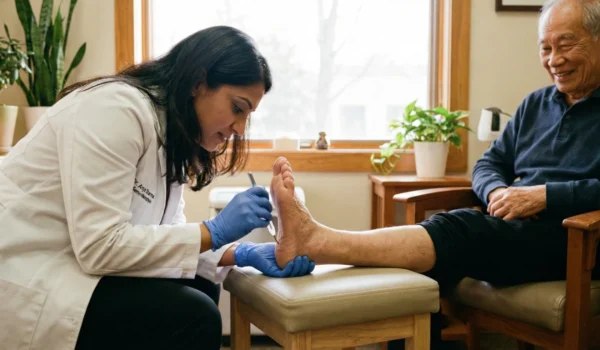
Understanding the Root Cause: The Reason of Corn on Foot Development
A corn is essentially your body’s way of protecting itself. The primary reason of corn on foot formation is repetitive friction or concentrated pressure corns on feet. When your skin is squeezed between a bone and the hard surface of a shoe, the basal layer of the epidermis speeds up cell production. This creates a thick, protective layer of keratin.
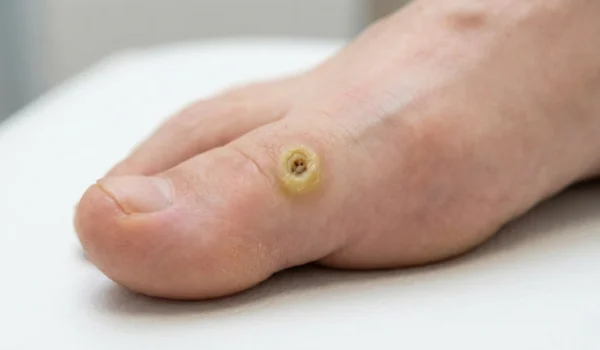
Unlike a flat callus, a corn has a hard, cone-shaped “plug” or core that points inward. Even a foot corn small in size can cause significant pain because this core presses directly onto the nerves in the deeper layers of your skin every time you take a step.
Advanced Technologies: Moving Toward a Permanent Corns Cure
In modern podiatry, achieving a lasting corns cure means looking at how your foot moves. Los Angeles clinics utilize three primary technologies to treat the cause, not just the symptom:
-
Custom Foot Orthotics: This is the “gold standard” of podiatrist corn treatment. These are custom-made shoe inserts designed from a 3D scan of your foot. They redistribute weight so that the specific spot where the corn forms is no longer under stress.
-
Radiesse Filler for Feet: This innovative “internal cushion” method is perfect for people with thin skin on their soles. By injecting Radiesse filler under the corn, a podiatrist can replace lost fatty tissue, protecting the bone and skin from the inside out. This is a highly effective treatment for corns on side of foot or on the balls of the feet.
-
Foot and Ankle Surgery: If a structural issue like a hammertoe is the culprit, surgery can provide a permanent solution. By straightening the toe, the surgeon removes the bony protrusion that was rubbing against your shoe, which is often the most reliable way of getting rid of corn on foot problems for good.
Beyond the Surface: Specialized Diagnostic Protocols
In Los Angeles, leading podiatrists use sophisticated diagnostic tools that go far beyond a visual exam. Digital Gait Analysis and Pedobarography (pressure mapping) allow specialists to see exactly where your stride is failing. By walking across a sensor-laden mat, the computer generates a heat map of your foot.
If the “hot spots” align perfectly with your corn locations, it confirms that your foot’s structure—not just your shoes—is the problem. This data is then used to mill orthotics with sub-millimeter precision, ensuring that the corn on your foot treatment is backed by hard data rather than guesswork.
The Role of Regenerative Medicine and Biologics
Beyond mechanical fixes, modern medicine now utilizes Platinum Biologics and regenerative therapies to heal the damage caused by chronic corns. When a corn has been present for years, the underlying soft tissue often becomes scarred or chronically inflamed.
Advanced biological treatments can help rejuvenate the skin’s elasticity and repair the dermal layers. For patients with recurrent, painful lesions, these therapies work alongside laser treatment los angeles to reduce deep-tissue inflammation and stimulate the body’s natural healing response, ensuring the skin remains supple and less prone to hyperkeratosis.
Specialized Care for High-Risk Groups: Diabetes and PAD
For individuals with diabetes or peripheral artery disease (PAD), an ingrown corn on foot isn’t just a nuisance—it’s a medical emergency. Due to peripheral neuropathy, these patients may not feel the pain of a developing corn until it has already caused a breakdown of the tissue underneath.
In these cases, a podiatrist provides specialized Wound Care to prevent a corn from turning into a diabetic foot ulcer. Because circulation is often compromised, the body cannot heal these minor wounds on its own. Professional intervention is required to safely debride the area and apply advanced dressings that promote healing while keeping the site sterile.
The Dangers of ``Bathroom Surgery`` and Chemical Burns
While it is tempting to try a DIY foot treatment at home using a foot file for corns or over-the-counter medicated pads, these methods carry significant risks. “Bathroom surgery”—using non-sterile tools like nail clippers or needles to dig out a corn—is a leading cause of staph infections in the foot.
Furthermore, the 40% salicylic acid found in many store-bought pads is non-discriminatory; it eats away at healthy skin just as easily as it does the corn. This often results in a painful chemical burn surrounding the original corn, making a professional corn on your foot removal even more complicated.
| Method | Home Remedies | Podiatrist Intervention |
|---|---|---|
| Tools | Pumice stones, files, acid pads | Sterile surgical debridement |
| Outcome | Temporary relief | Removal of the core and the cause |
| Safety | High risk of burns or infection | Safe, sterile, and medically precise |
Specialized Care for Specific Areas
The location of the corn often dictates the best approach. For example, a corn big toe treatment might involve correcting a bunion or a misalignment of the joint. If you have a painful foot corn on side of foot, the doctor will likely evaluate the width of your footwear and the mechanics of your stride.
In some cases, especially when inflammation is present, clinics may offer Remy Laser Pain Treatment to reduce pain and promote faster tissue healing after the corn is removed. This high-intensity laser therapy penetrates deep into the foot’s structure to settle nerve endings that have been irritated by years of pressure.

Choosing the Right Footwear: The ``Corn Feet Shoes`` Checklist
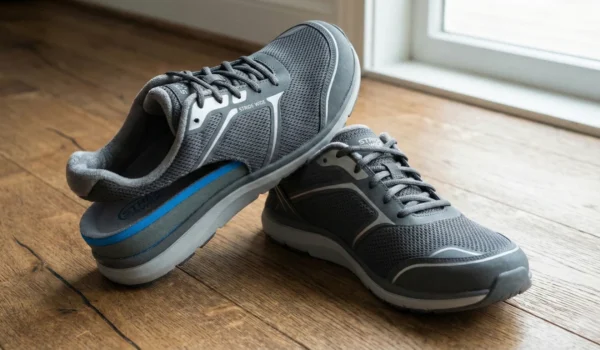
The foundation of any corn on your foot treatment is the shoes you wear every day. To keep your feet healthy, your corn feet shoes should pass the following checklist:
-
Wide Toe Box: High-quality shoes for corns on toes must provide enough room so the toes don’t rub against the top or sides of the shoe.
-
Depth: Look for “extra-depth” shoes if you use custom orthotics; this ensures your foot isn’t pushed against the top of the shoe by the insert.
-
Seamless Interior: Check the inside of the shoe for rough seams or stitching that could act as a “saw” against your skin.
-
Soft Materials: Opt for natural leather or breathable, stretchy fabrics like engineered mesh that conform to the shape of your foot.
Long-Term Management and Prevention
Once a podiatrist has successfully performed a corn on your foot removal, the focus shifts to maintenance. This includes daily moisturizing with urea-based creams (which help dissolve excess keratin) and regular “check-ups” for your orthotics. Just as tires on a car wear out, your walking patterns can shift over time, requiring adjustments to your inserts to keep the pressure off.
Economic Considerations and Insurance Coverage
In the United States, understanding how to pay for your corn on your foot treatment is crucial. While many view corn removal as a “cosmetic” procedure, Medicare and private insurance often cover podiatry services when they are medically necessary. This includes treatments for patients with underlying conditions like diabetes, circulatory issues, or structural deformities that impair mobility. Navigating these requirements with a professional clinic ensures you receive the care you need while maximizing your insurance benefits.
Living with foot pain is not something you have to accept. By combining modern diagnostic tools like pressure mapping with advanced treatments like orthotics and fillers, you can walk comfortably again. If you’ve been struggling with recurring corns, a professional evaluation is the first step toward a pain-free life.
Frequently Asked Questions
How can I tell the difference between a foot corn and a plantar wart?
Is professional corn removal covered by Medicare or private insurance?
Why do my corns keep coming back even after I have them removed?
Removal only addresses the symptom (the thickened skin). If the underlying cause—such as a bone deformity, an abnormal walking pattern, or ill-fitting shoes—isn’t corrected, your body will continue to produce a corn to protect itself. This is why we prioritize Foot Orthotics and gait analysis to provide a permanent solution.
Can I use over-the-counter medicated corn pads if I have diabetes?
Absolutely not. Medicated pads contain strong acids that can damage healthy skin. For people with diabetes or poor circulation, these acids can lead to chemical burns and “silent” ulcers that may not be felt due to neuropathy, leading to serious infections. Always seek professional Wound Care instead.
What is the recovery time for foot surgery to correct corns?
Recovery depends on the type of procedure. Minimalist surgeries for hammertoes or bone spurs often allow patients to walk in a special surgical shoe immediately. However, full healing of the soft tissues and bone usually takes several weeks. Your podiatrist will provide a specific timeline based on your health and activity level.
How often should I have my custom orthotics checked?
We recommend a brief “wear and tear” check-up once a year. Just like the tires on your car, orthotics lose their supportive properties over time. Regular adjustments ensure that the pressure is still being diverted away from your corn-prone areas effectively.
References
- Corns and Calluses: Symptoms, Causes & Treatments https://my.clevelandclinic.org/health/diseases/16896-corns-and-calluses
- Corns and calluses – Symptoms and causes – Mayo Clinic https://www.mayoclinic.org/diseases-conditions/corns-and-calluses/symptoms-causes/syc-20355946
- Corns and Calluses – American Podiatric Medical Association (APMA) https://www.apma.org/patients-and-the-public/conditions-affecting-the-foot-and-ankle/corns-and-calluses/
- Foot Care Coverage – Medicare.gov https://www.medicare.gov/coverage/foot-care-other
- Podiatry Care – Centers for Medicare & Medicaid Services (CMS) https://www.cms.gov/training-education/medicare-learning-networkr-mln/compliance/medicare-provider-compliance-tips/podiatry-care
- Retinopathy, Neuropathy, and Foot Care: Standards of Care in Diabetes https://pmc.ncbi.nlm.nih.gov/articles/PMC10725803/
- Foot Pressure Mapping and Gait Analysis Services https://podiatryfootclinic.com/gait-analysis