

This content is for informational purposes only and does not constitute medical advice. Please consult with a licensed podiatrist for a personalized evaluation and treatment plan. Individual results may vary.
Yes, many common foot problems run in families. What passes down is usually the structure of the foot, not the exact bump or bent toe you see later.
Bunions, hammertoes, flat feet, and high arches all cluster in families. If your parents or grandparents had foot trouble, your feet may be built along the same lines.
This article explains what is actually inherited, what you can influence, and how a podiatrist can help keep an inherited foot type from turning into daily pain.
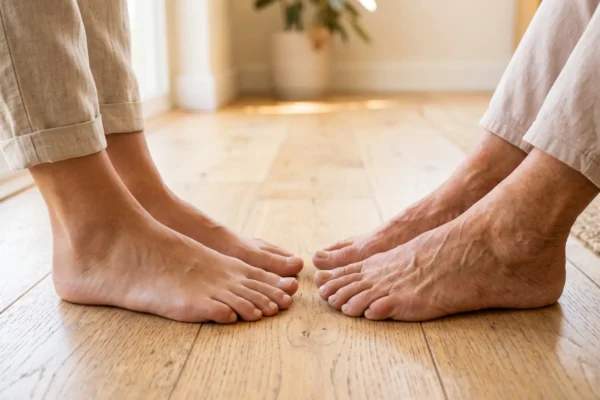
What Foot Problems Are Actually Inherited?
That includes things like arch height, the shape and length of the toe bones, joint flexibility, and the way the foot rolls when you walk. These traits are passed from one generation to the next.
Genes Are Not the Whole Story
Everyday Signs an Inherited Foot Type Is Causing Trouble
Common Pain Patterns
Calluses are another clue. Hard, thick skin tends to build up wherever an inherited foot shape puts extra pressure, such as the ball of the foot, the heel, or the side of a bunion. Where your calluses form can show how your foot is loading.
Changes That Build Over Time
None of this means something is broken. It simply means your feet are built a certain way, and paying attention early gives you more options later. Small adjustments now, like better shoes or an insole, often head off bigger interventions down the line.
Are Bunions Hereditary?
As Mayo Clinic notes, the tendency to get bunions may be due to an inherited problem with the structure or anatomy of the foot. A wide forefoot, loose joints, or a certain toe alignment can set the stage.
A bunion may skip a generation, so not having one does not mean your children will not. Family history raises the odds, but it is not a guarantee in either direction.
Why Some Family Members Get Them and Others Do Not
Everyday factors then decide how far it goes. Shoes, activity, body weight, and how much you are on your feet can all speed up or slow down a bunion in someone who is already prone to one.
Do Hammertoes Run in Families?
According to the Cleveland Clinic, hammertoes happen when the muscles and tendons around a toe fall out of balance, pulling it into a bent position. An inherited foot shape can make that imbalance more likely.
Why Hammertoes and Bunions Cluster
High arches raise the risk too. A rigid, high-arched foot tends to buckle the smaller toes over time, which is why hammertoes and claw toes are common in families with inherited high arches.
Flat Feet and Fallen Arches: Is It Genetic?
How Flat Feet Cascade
Flat feet rarely stay just flat feet. The way the foot rolls inward, called overpronation, adds strain that can lead to arch pain, heel pain, and problems higher up in the knees and hips.
Where Insoles Come In
Insoles do not change your inherited foot type, but they can change how it feels day to day. For many people, that is the difference between painful feet and comfortable ones.
Custom orthotics differ from the pads sold in a store. They are made from a mold or scan of your own foot, so the support lands exactly where your particular arch needs it most.
High Arches, Cavus Foot, and Morton's Foot
The Cleveland Clinic notes that many people are simply born with high arches, though in some cases they can signal an underlying nerve or muscle condition, which is worth checking if arches are getting higher over time.
Morton’s foot, where the second toe is longer than the big toe, is another inherited shape. It can shift pressure toward the ball of the foot and lead to calluses or aching there. Many people have it without ever knowing, since it only matters when it changes how the foot loads. The table sums up the main inherited foot types and what each can lead to.
| Inherited Foot Type | What It Can Contribute To |
|---|---|
| Flat feet and overpronation | Arch and heel pain, tired feet, strain up into the knees |
| High arches (cavus foot) | Ball and heel pressure, ankle instability, claw or hammertoes |
| Morton's foot (long second toe) | Extra pressure on the ball of the foot, calluses, and aching |
| Wide or hypermobile forefoot | A tendency toward bunions and drifting toes |
Can You Prevent Inherited Foot Problems?
The Footwear Debate
Some people favor wide, supportive shoes with a roomy toe box, while others champion minimalist or barefoot-style footwear to strengthen the foot. The honest answer is that the science is still mixed, so comfort and support are safe guides.
Habits That Help
Catching changes early matters too. Watching how a problem develops, rather than ignoring it, gives you the best shot at staying comfortable and active.
Simple exercises help as well. Stretching the calves and the sole, and strengthening the small muscles of the foot, can improve how a foot handles the load your genes hand it, and they cost nothing but a few minutes a day.
What to Do If Foot Problems Run in Your Family
Persistent pain, a bump or bend that is changing, calluses that keep returning, or difficulty finding comfortable shoes are all good reasons to have your feet looked at rather than tough it out. The same goes for a child whose feet look like a parent’s did, since early support can shape how things develop.
A podiatrist can map your foot type, spot how it is loading, and build a plan around orthotics, footwear, and conservative care before surgery is ever on the table. Los Angeles podiatrist Dr. Arkady Kaplansky takes this conservative-first approach with inherited foot conditions.
Frequently Asked Questions
If my parents have bunions, will I definitely get them?
Not necessarily. You may inherit the foot structure that makes bunions more likely, but that does not guarantee one will form. Supportive shoes and early attention can lower the odds of it becoming painful.
Can children inherit flat feet?
Yes, flat feet often run in families. Many young children have flexible flat feet that fill in as they grow, so a podiatrist can tell whether a child’s flat feet are likely to need any support.
Do orthotics correct inherited foot problems?
Orthotics do not permanently change your foot’s structure, but they redistribute pressure and support the arch, which often relieves pain and slows a problem’s progression. Custom versions are shaped to your specific foot.
Are high arches more of a concern than flat feet?
Both can cause problems, but high arches that keep getting higher can occasionally point to a nerve or muscle condition. If your arches are changing or causing instability, it is worth having them evaluated.
Does going barefoot make inherited foot problems better or worse?
It depends on the foot and the surface. Some people benefit from barefoot movement, while others need more support. There is no one-size-fits-all answer, so let comfort and your own foot type guide you.
At what age do inherited foot problems usually appear?
It varies. Some show up in childhood, while bunions and hammertoes often develop gradually through adulthood. Family history simply means it is worth paying attention sooner rather than later.
If inherited foot problems are starting to slow you down, an exam can tell you exactly what you are working with. Book an appointment to get a clear plan for your feet.