

This content is for informational purposes only and does not constitute medical advice. Please consult with a licensed podiatrist for a personalized evaluation and treatment plan. Individual results may vary.
Hammer toes are a progressive orthopedic condition where a toe—most commonly the second, third, or fourth—develops an abnormal bend in the middle joint. This occurs because of a structural imbalance in the tendons and muscles that usually keep the toes flat. Finding effective cures for hammer toes is essential because, without intervention, the toe moves from a flexible state to a rigid, permanent deformity. The most successful treatments today involve a combination of custom-made medical orthotics to stabilize the foot’s mechanics and, for advanced cases, minimally invasive surgery that restores the toe’s natural alignment.
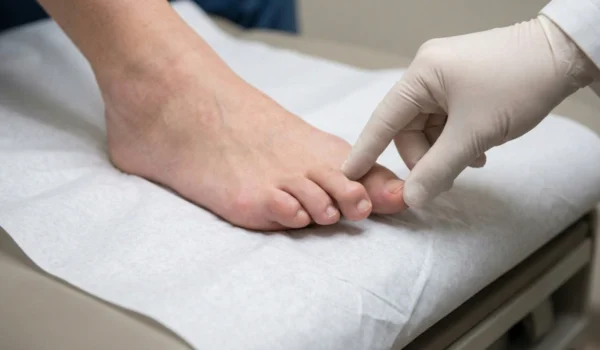
The Anatomy of the ``Toe Tug-of-War``
To understand why a toe begins to curl, we have to look at the delicate “tug-of-war” happening inside the foot. Your toes are controlled by two sets of muscles: the extensors (on top) and the flexors (on the bottom). In a healthy foot, these muscles work in perfect harmony to keep the toes straight. However, when the foot’s biomechanics are off, one group starts to pull harder than the other.
In the world of podiatry, three specific scenarios usually trigger this imbalance:
-
Flexor Stabilization: This is the most common reason people develop this issue, especially those with flat feet. As the arch collapses, the long flexor muscles on the bottom of the foot work overtime to stabilize the foot. This constant pulling eventually forces the toes into a curled position.
-
Extensor Substitution: Common in people with very high arches. To lift the foot properly while walking, the muscles on the top of the foot pull excessively, causing the joints to buckle.
-
Flexor Substitution: This happens when the calf muscles are weak. The deep muscles of the leg try to take over the job of pushing the body forward, which puts a massive strain on the small toe joints.
When this happens, you may notice that my toe joint hurts more after a long day of walking, or you might see a small, red callus forming on the top of the knuckle. These are the first warning signs that the tendons are beginning to tighten.
The Los Angeles Lifestyle: From ``Red Carpet`` to ``Runyon Canyon``
Living in Los Angeles presents a unique set of challenges for your feet. The “LA lifestyle” often demands a high level of physical versatility. One evening, you might be attending a premiere or a dinner in West Hollywood or Beverly Hills, wearing narrow, high-heeled designer shoes that squeeze the toes together. The next morning, you’re out at Runyon Canyon or the Hollywood Hills for a vigorous hike.
These two extremes—constrictive fashion and high-impact activity—are a recipe for disaster if you have mild hammer toes. Narrow dress shoes force the toes into a bent position, while the steep inclines of local hiking trails put immense pressure on the front of the foot. If you’ve ever felt that “my big toe hurts all the time” after a weekend of activity, it’s likely because the pressure on the big toe is forcing the smaller toes to compensate, leading to the development of hammer toes. Seeking early intervention means you can continue to enjoy the best of Los Angeles without the constant shadow of foot pain.
Identifying the Stages: Flexible vs. Rigid
When you visit the toe doctor, the first task is to determine which “stage” your deformity has reached. This classification is vital for deciding which cures for hammer toes will be most effective for you.
Mild Hammer Toes (The Flexible Stage)
In the early stages, the toe joint is still movable. You can manually straighten it with your fingers. At this point, the deformity is primarily a “soft tissue” problem—the tendons are tight, but the joint itself hasn’t changed. This is the ideal time for prevent hammer toes strategies and non-surgical corrections.
Rigid Hammer Toes (The Fixed Stage)
If left untreated, the soft tissues eventually scar and shorten so much that the joint becomes “locked.” In this stage, you cannot straighten the toe, even with pressure. The joint may become extremely painful, and the skin over the knuckle may thicken significantly. Rigid toes often require surgical intervention because the bone and joint structure have fundamentally changed.
The Science of Shoe Selection: Podiatrist-Recommended Guidelines
Most people believe they are wearing the right size, but many are actually wearing shoes that are too narrow or too short. Finding shoes that fit toes properly is the most important step in fixing hammer toes and preventing them from getting worse.
1. The ``Toe Box`` Depth
Most shoes focus on width, but depth is just as important. A shallow toe box will rub against the top of the bent joint, leading to painful corns. Look for comfortable shoes for hammertoes that have a “high” or “deep” toe box, often found in athletic sneakers or specialized orthopedic brands.
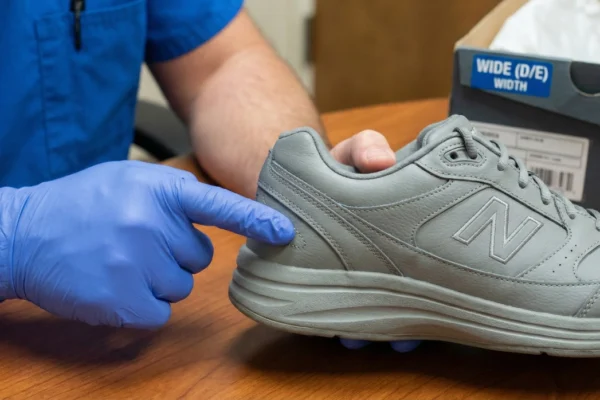
2. Width and Sizing (The US Standard)
US shoe sizing includes width markers like D, E, EE, and 4E. Most standard shoes are a “B” for women and a “D” for men. If you have hammer toes, you almost certainly need a wider fit. Shoes good for hammer toes should allow you to wiggle your toes freely. There should be at least 0.5 inches (about 1.27 cm) of space between your longest toe and the end of the shoe.
3. Avoiding the ``Soft Shoe`` Trap
Many patients think that soft, flimsy cloth shoes or “ballet flats” are better for their feet. This is a common misconception. Without a firm sole and arch support, your foot “slides” inside the shoe, and your toes have to “grip” the bottom to keep you stable. This gripping action actually accelerates the curling of the toes. Instead, choose podiatrist recommended shoes for hammer toes that have a rigid sole and plenty of internal support.
Non-Surgical Interventions: Correcting Toes Without Surgery
If your toes are still flexible, there are several ways to manage the condition and even reverse some of the early changes.
Custom Foot Orthotics
Unlike over-the-counter inserts, medical-grade foot orthotics are made from a 3D scan or cast of your foot. They don’t just “cushion” the foot; they realign it. By supporting the arch and controlling how the heel hits the ground, orthotics take the “pull” off the tendons. This is one of the most effective ways of correcting hammer toes without surgery.

Hammer Toe Support and Pads
To manage daily pain, you can use various hammer toe support devices.
-
Hammer toe pads: These small cushions sit on top of the joint to prevent the shoe from rubbing.
-
Toe Splints: These help hold the toe in a straighter position during the day.
-
Gel Separators: These prevent the toes from overlapping, which is a common complication of advanced hammer toes.
Stretching and Strengthening
Just like any other part of the body, your feet benefit from exercise. “Towel curls” (using your toes to pull a towel toward you) and “marble pickups” can help strengthen the intrinsic muscles of the foot, which helps counteract the pulling of the larger leg muscles.
When Surgery is Necessary: The Evolution of Toe Correction
Minimally Invasive Surgery (MIS)
In our Los Angeles practice, we often utilize minimally invasive techniques. Instead of a large incision that requires stitches and leaves a scar, the procedure is performed through a tiny 3mm opening.
-
Benefits: Less swelling, minimal scarring, and a significantly lower risk of infection.
-
Recovery: Most patients can walk immediately after the procedure in a special surgical shoe.
Permanent Toe Straightening
Special Considerations: Diabetes and Foot Health
For patients living with diabetes, a hammer toe is not just a nuisance—it is a medical emergency waiting to happen. Diabetes often causes “peripheral neuropathy,” which means you may lose sensation in your feet. If you have a hammer toe and it rubs against your shoe, you might not feel the blister or corn forming.
Because blood flow is often reduced in diabetic patients, these small wounds can quickly turn into deep ulcers and serious infections. In the US, the standard of care for diabetic patients with hammer toes often involves “prophylactic” (preventative) surgery to straighten the toe before a wound ever has a chance to form. If you have diabetes and notice my toe joint hurts or looks red, you should see a podiatrist immediately.
What to Expect at Your Appointment
When you visit the toe doctor at our Sunset Blvd location, your visit will be thorough but straightforward. We begin with a physical exam to check the flexibility of your joints and the health of your skin. We also perform a biomechanical analysis to see how your foot structure contributes to the problem.
We may take weight-bearing X-rays right in the office. These images allow us to see the exact angle of the bones and check for any signs of arthritis in the joint. Based on these findings, we will create a personalized “Roadmap to Recovery” that fits your lifestyle and your goals.
Hammer toes are a progressive condition, but they don’t have to define your life or limit your mobility in Los Angeles. Whether you are dealing with mild hammer toes that just need a change in footwear or a rigid deformity that requires surgical correction, there are more options available today than ever before.
By focusing on the right shoes that fit toes, utilizing custom foot orthotics, and seeking professional care early, you can protect your foot health for years to come. Don’t wait until the pain stops you from enjoying a walk through Hancock Park or a shopping trip to The Grove. Expert care is available right here in the heart of Hollywood.
Frequently Asked Questions
How long is the recovery time after minimally invasive surgery?
Can I wear high heels or designer shoes again after treatment?
The goal of treatment is to return you to the lifestyle you love. While we recommend “podiatrist-approved” footwear for daily use to prevent recurrence, many patients are able to wear dress shoes for special occasions once the toe is straightened and the inflammation has subsided.
Do over-the-counter toe spacers actually cure the deformity?
No. While gel spacers and pads can provide temporary relief from rubbing and irritation, they do not address the underlying muscle imbalance. They are a management tool, not a permanent cure. True correction requires changing the foot’s mechanics with custom orthotics or surgical realignment.
What happens if I leave my hammer toe untreated?
Hammer toes are progressive. What starts as a flexible, slightly annoying bend will eventually become a rigid, painful deformity. Over time, this can lead to chronic corns, skin infections, and changes in your gait that can cause secondary pain in your hips, knees, and lower back.
How do I know if I need surgery or just custom orthotics?
If you can still manually straighten your toe with your fingers, custom orthotics and shoe changes are often highly effective. However, if the joint is “locked” or rigid, surgery is usually the only way to restore the toe to its flat, natural position.
References
- Hammertoes: What It Is, Causes, Relief & Treatment – Cleveland Clinic — https://my.clevelandclinic.org/health/diseases/17038-hammertoes
- Hammer Toes – APMA MAIN — https://www.apma.org/patients-and-the-public/conditions-affecting-the-foot-and-ankle/hammer-toes/
- Hammertoe and mallet toe – Symptoms and causes – Mayo Clinic — https://www.mayoclinic.org/diseases-conditions/hammertoe-and-mallet-toe/symptoms-causes/syc-20350839
- Hammer Toe: Comprehensive Guide – OrthoInfo – AAOS — https://orthoinfo.aaos.org/en/diseases–conditions/hammer-toe/
- Hammertoe – StatPearls – NCBI Bookshelf – NIH — https://www.ncbi.nlm.nih.gov/books/NBK559268/
- Postoperative Instructions | Hammertoe Corrections Houston — https://www.jasonahueromd.com/post-operative-instructions-foot-ankle-orthopedic-surgeon-houston-pearland-katy-texas.html
- Procedure Price Lookup for Outpatient Services | Medicare.gov 28285 — https://www.medicare.gov/procedure-price-lookup/cost/28285/