

This content is for informational purposes only and does not constitute medical advice. Please consult with a licensed podiatrist for a personalized evaluation and treatment plan. Individual results may vary.
A primary consultation with a medical podiatrist is an exhaustive diagnostic evaluation of the lower extremities designed to map biomechanical, vascular, and dermatological anomalies. Individuals require a clinical assessment when they notice acute heel pain upon waking, persistent swelling, joint stiffness, or chronic ingrown nails. Early intervention pinpoints the exact mechanical failure, preventing asymmetrical stress on the skeleton and stopping minor friction from causing deep tissue damage.
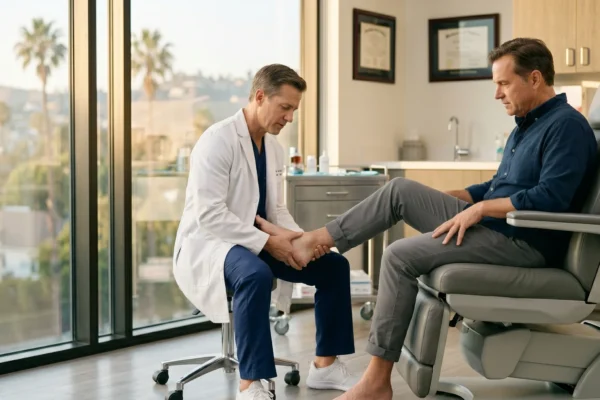
For residents in Los Angeles experiencing structural discomfort, scheduling an evaluation with Dr. Arkady Kaplansky establishes a strict baseline for recovery. A professional physical appointment prevents chronic deterioration of the weight-bearing joints.
How Should Patients Prepare for the Initial Consultation?
A successful evaluation depends on the specific historical data and physical items a patient brings to the clinic. Podiatrist doctors require this evidence to form an accurate timeline of the musculoskeletal decline. Proper preparation eliminates clinical guesswork and accelerates the diagnostic process.
Selecting the Proper Diagnostic Footwear
Compiling Medical Data and Foot Problems
Patients should arrive with a comprehensive medical dossier to ensure accurate diagnostic and treatment planning. This documentation requires specific categories of health information.
- Complete lists of past orthopedic surgeries and joint replacements.
- Detailed histories of endocrine disorders, particularly glucose management levels.
- Records of cardiovascular events or diagnosed peripheral arterial disease.
- Current over-the-counter supplements and joint support regimens.
Strictly Adhering to Pre-Visit Foot Care Protocols
What Does the Multi-System Clinical Examination Entail?
Dermatological and Integumentary Assessments
Vascular Perfusion Screening
Neurological Sensory Mapping
Musculoskeletal Integrity Testing
How Do Specialists Analyze Biomechanics and Motion?
The Stance Phase of the Gait Cycle
The Swing Phase and Kinematic Mechanics
Identifying Specific Gait Abnormalities
| Mechanical Deviation | Visual Presentation | Associated Pathology |
|---|---|---|
| Severe Overpronation | The medial arch collapses completely toward the floor during mid-stance. | Posterior tibial tendon dysfunction. |
| Excessive Supination | Weight remains rigidly on the outside edge of the foot. | High-arched rigid foot type, prone to stress fractures. |
| Early Heel Lift | The heel rises off the ground prematurely before the leg passes over it. | Severe Achilles tendon contracture. |
| Antalgic Gait | An asymmetric limp designed entirely to minimize time spent on one limb. | Acute trauma or severe joint arthritis. |
How Are Advanced Diagnostics Used to Identify Pathologies?
Diagnostic Imaging Technologies
Decoding Common Structural Failures
| Clinical Diagnosis | Anatomical Mechanism | Primary Physical Symptoms |
|---|---|---|
| Plantar Fasciitis | Micro-tearing of the thick fibrous band supporting the longitudinal arch. | Sharp heel pain during the first morning steps. |
| Hallux Valgus | Progressive subluxation of the first metatarsophalangeal joint. | A prominent bony bump at the base of the big toe. |
| Adult Flatfoot | Overuse and elongation of the posterior tibial tendon. | Swelling along the inside of the ankle and arch pain. |
| Neuroma Development | Thickening of the tissue surrounding a digital nerve bundle. | A sensation of walking on a marble with burning toes. |
The Impact of Aging on Foot Mechanics
This loss of natural cushioning exposes bone prominences directly to ground reaction forces, leading to deep bruising. Protocols for geriatric care prioritize fall prevention and tissue preservation.
What Are the Standard Conservative Treatment Frameworks?
Precision Custom Orthotic Casting
Strategic Footwear Modifications
Clinical footwear modifications focus on specific structural support. These engineered elements ensure the foot operates within safe physiological limits.
- Rocker-bottom soles to reduce pressure on the forefoot during the push-off phase.
- Deep heel cups to gather the natural fat pad beneath the heel bone for extra cushioning.
- Seamless internal linings to prevent friction ulcers in patients with sensory neuropathy.
- Rigid shanks that prevent the shoe from bending anywhere except the exact ball of the foot.
Targeted Physical Rehabilitation Protocols
Conclusion: Securing Long-Term Lower Extremity Health
By utilizing advanced diagnostic imaging and precise biomechanical mapping, podiatrist doctors pinpoint the exact origin of complex foot problems. Implementing conservative therapies early guarantees a faster return to normal daily activities without chronic joint pain.