

This content is for informational purposes only and does not constitute medical advice. Please consult with a licensed podiatrist for a personalized evaluation and treatment plan. Individual results may vary.
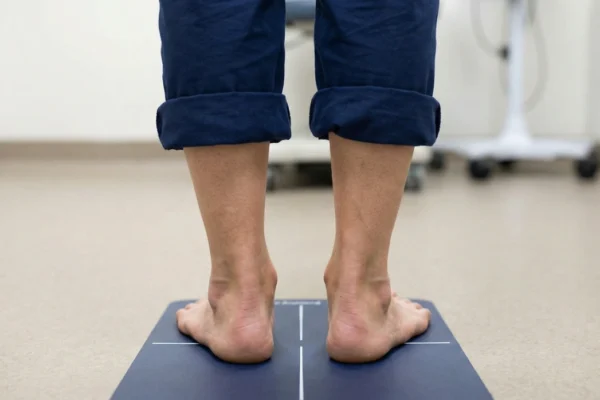
Flat feet (pes planus) occur when the structural arch on the inside of the foot collapses, causing the entire sole to touch the ground. In 2026, medical professionals categorize this under Flat Feet Symptoms & Treatment as a condition that often progresses if ignored. It is time to see a specialist if you notice a flat foot no arch appearance, experience sharp or dull pain in the midfoot, or feel your ankles “rolling in” toward each other. Left untreated, this condition can lead to a total foot arch collapse, causing chronic pain that radiates from the feet up to the lower back.
For those living in Los Angeles and dealing with foot discomfort, Dr. Arkady Kaplansky provides expert evaluation and advanced care. The clinic specializes in modern biomechanical corrections designed to keep the city’s residents active and pain-free. To explore treatment options or to book a consultation in Los Angeles.
Why the Arch Fails: Understanding the Causes
The Role of the Posterior Tibial Tendon
Other Contributing Factors
-
Genetic Predisposition: Some people are born with no arches in feet, which may not cause pain until later in life when the ligaments begin to tire.
-
Ligamentous Laxity: This is a natural looseness in the tissues that connect bones. It can be worsened by pregnancy, hormonal changes, or certain health conditions.
-
Injury and Trauma: A sudden tear in the “spring ligament”—the tissue that literally forms the floor of the arch—can cause the foot to flatten almost overnight.
-
Tarsal Coalition: This is a condition where foot bones grow together, creating a rigid flat foot that is often painful for teenagers and young adults.
Many patients realize they have a problem when they look down and think, “I have no arch in my foot,” even when they aren’t standing. This is a sign that the foot’s structure has changed significantly.
Symptoms and the ``Domino Effect`` on the Body
Common Patient Complaints
People dealing with arch failure usually report a very specific set of sensations:
-
My feet hurt after walking: A heavy, tired feeling that makes you want to take your shoes off immediately.
-
Pain in the soles of my feet: A sharp or burning pain that feels like it’s stretching the bottom of the foot too far.
-
Foot arch hurts after walking: Intense soreness right where the curve of the foot used to be.
-
Sole pain after walking: A lingering tenderness that makes the first steps out of bed the next morning very painful.
-
My feet pain when i walk: Discomfort with every single step, which often leads to a less active lifestyle.
-
Foot soreness causes: Most often, this is “hyperpronation,” where the foot rolls too far inward, putting extra strain on the muscles and nerves.
Problems Caused by Flat Feet
When the foundation of the body is uneven, the rest of the skeleton has to adjust. These problems caused by flat feet often include:
-
Shin Splints: Pain along the front of the lower leg.
-
Knee Pain: Because the foot rolls in, the knee is forced to twist inward, causing “runner’s knee.”
-
Hip and Back Pain: An uneven gait forces the spine out of its natural alignment, leading to chronic lower back issues.
2026 Clinical Data and Statistics in the USA
Recent data for 2025–2026 shows that flat feet are incredibly common, affecting between 20% and 37% of people in the United States. In an urban environment like Los Angeles, where hard surfaces are everywhere, the impact on the population is notable.
| Population Group | Prevalence (2025-2026) | Observations |
|---|---|---|
| General US Adults | ~25% | A mix of inherited and acquired cases. |
| Women (Aged 45+) | 18% | Often linked to “Adult Acquired Flatfoot Deformity.” |
| LA Athletes | 14% | Linked to high-impact training on hard surfaces. |
| Children | 30% | Many resolve with age, but 10% need medical support. |
Breakthrough Treatments in 2026
Modern podiatry in Los Angeles has moved beyond simple “store-bought inserts.” We now use high-tech, targeted solutions that treat the root cause of the pain.
1. Custom Foot Orthotics
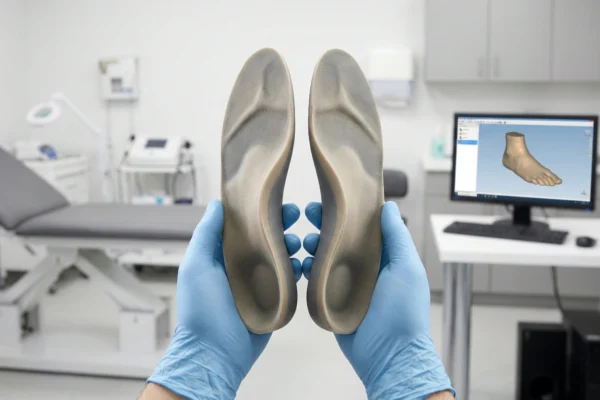
In 2026, arch support for foot pain is a high-precision tool. Dr. Arkady Kaplansky uses 3D digital scanning to map the foot’s unique shape. These custom-made orthotics act as a “brace” from the inside of the shoe, realigning the heel and providing the lift that the arch can no longer provide on its own. They stop the deformity from getting worse and provide immediate relief.
2. Remy Laser Pain Treatment
For those whose foot arch hurts after walking, the Remy Laser is a game-changer. This high-intensity laser uses light energy to go deep into the foot’s tissues. It reduces the inflammation in the tendons and tells the body to start healing at a cellular level. It is fast, painless, and helps patients avoid taking long-term pain medication.
3. Platinum Biologics
This is the cutting edge of regenerative medicine. Platinum Biologics involves injecting natural growth factors into the damaged ligaments and tendons of the foot. Instead of just managing the pain, this treatment helps the body actually repair the “wear and tear” that caused the arch to drop in the first place.
4. Foot and Ankle Surgery
In cases where the foot has become “rigid” or the pain is too severe for other treatments, surgical reconstruction is an option. Modern surgery in Los Angeles is very precise. Surgeons can move the heel bone back into its proper place (osteotomy) or move a healthy tendon to do the work of a damaged one, effectively rebuilding the arch.
Strength and Recovery: Exercises for Flat Feet
While technology helps correct the structure, exercise helps the foot stay strong. Strengthening the “intrinsic” muscles—the small muscles inside the foot—is vital for long-term health.
Recommended Daily Routine
-
Stretching exercises for flat feet: Most flat-footed people have very tight calf muscles. Stretching the Achilles tendon reduces the “pulling” force that tries to flatten the foot.
-
Exercises to correct fallen arches: The “Short Foot Exercise” is a favorite in 2026. You try to pull the ball of your foot toward your heel without curling your toes. It’s like a “bicep curl” for your arch.
-
Physical therapy exercises for feet: Using resistance bands to strengthen the muscles that pull the foot upward and inward helps stabilize your walk.
Flat feet are a manageable condition, and no one in Los Angeles should have to live with the constant refrain of “my feet pain when i walk.” By utilizing the diagnostic skills of Dr. Arkady Kaplansky and the power of 2026 technologies like the Remy Laser and Platinum Biologics, you can restore your foot’s health. Taking action early—before the arch collapse becomes rigid—is the best way to protect your knees, hips, and back for years to come.
Frequently Asked Questions
Do I really need custom orthotics, or are store-bought inserts enough?
Can my flat feet be the cause of my constant knee and back pain?
Yes, because flat feet cause your ankles to roll inward (overpronation), forcing your knees and hips out of their natural alignment. This “domino effect” puts extra stress on your entire skeleton, often leading to chronic lower back pain that won’t improve until your foot foundation is corrected.
How do I know when it is time to see a specialist like Dr. Arkady Kaplansky?
You should schedule an evaluation if you notice your feet look completely flat when standing, if you have swelling around the inner ankle, or if your feet hurt after short walks. Dr. Arkady Kaplansky can use advanced diagnostics to see if your tendons are weakening and if you need high-tech help to prevent permanent damage.
Are there non-surgical ways to treat flat feet pain in 2026?
Absolutely. Modern clinics in Los Angeles now use the Remy Laser to quickly reduce inflammation and Platinum Biologics to help repair damaged tendons at a cellular level. These treatments, combined with custom-made supports, allow many patients to live pain-free without ever needing surgery.
Can I fix my fallen arches just by doing exercises at home?
Exercises like “Short Foot” movements and calf stretches are excellent for strengthening the muscles, but they usually cannot “fix” a structural collapse on their own. They are most effective when used as part of a complete plan that includes professional biomechanical support and modern therapy.
References
- Flatfeet Symptoms and causes – Mayo Clinic — https://www.mayoclinic.org/diseases-conditions/flatfeet/symptoms-causes/syc-20372604
- Progressive Collapsing Foot Deformity – OrthoInfo – AAOS — https://orthoinfo.aaos.org/en/diseases–conditions/posterior-tibial-tendon-dysfunction/
- Pes Planus – StatPearls – NCBI Bookshelf — https://www.ncbi.nlm.nih.gov/books/NBK430802/
- Risk Factors of Flatfoot in Children: A Systematic Review and Meta-Analysis – PMC — https://pmc.ncbi.nlm.nih.gov/articles/PMC9319536/
- Flat Feet (Pes Planus): Types, Symptoms & Treatment – Cleveland Clinic — https://my.clevelandclinic.org/health/diseases/flat-feet-pes-planus
- Posterior Tibial Tendon Dysfunction – HSS Foot & Ankle — https://www.hss.edu/health-library/conditions-and-treatments/posterior-tibial-tendon-dysfunction
- The Prevalence and Factors Associated with Low Back Pain Among People with Flat Feet – PMC — https://pmc.ncbi.nlm.nih.gov/articles/PMC8312604/
- Short foot exercises for flatfoot therapy: Status and prospects – PMC — https://pmc.ncbi.nlm.nih.gov/articles/PMC12775274/
- New CPT Code Set: January 1, 2026 – American Podiatric Medical Association (APMA) — https://www.apma.org/about-apma/news/news-releases/2025/new-cpt-code-set/
- 2026 MPFS Proposed Rule and Its Impact for Podiatry – APMA — https://www.apma.org/about-apma/news/news-releases/2025/2026-mpfs-proposed-rule-and-its-impact-for-podiatry/