

This content is for informational purposes only and does not constitute medical advice. Please consult with a licensed podiatrist for a personalized evaluation and treatment plan. Individual results may vary.
Aging feet undergo severe structural and vascular modifications after the age of 70, primarily characterized by protective fat pad atrophy, decreased bone mineral density, and compromised arterial blood flow.
These physiological shifts lead to diminished shock absorption and an increased susceptibility to chronic ulcers, joint inflammation, and traumatic falls. Immediate medical evaluation is strictly required when an older adult experiences sudden foot swelling, persistent numbness, open dermal lesions that fail to close within 48 hours, or acute pain that prevents weight-bearing activity. These clinical indicators suggest critical vascular or structural failure requiring prompt intervention.
Residents of Los Angeles seeking specialized geriatric assessment can find comprehensive local support with Dr. Arkady Kaplansky. Establishing a preventative maintenance routine helps preserve independence for older adults navigating these complex physical transitions.
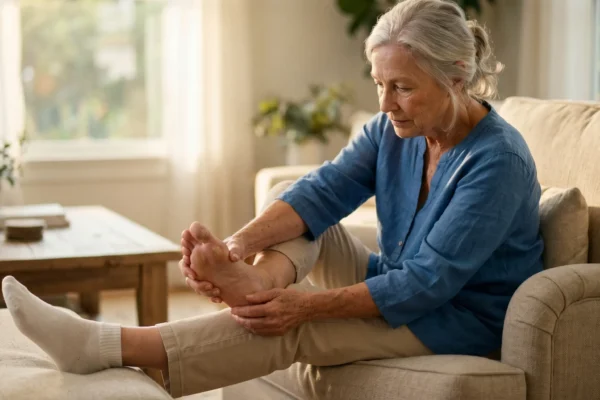
The Biological Reality of the Aging Foot
The onset of osteopenia reduces mineral density across the entire skeletal system, rendering delicate toe bones exceptionally fragile.
This brittleness dramatically elevates the probability of stress fractures occurring from minimal daily impact. Simultaneously, the connective ligaments holding these bones together lose their natural elasticity over decades of use.
This physiological laxity leads to a gradual flattening of the arch, clinically referred to as adult-acquired flatfoot. As the central arch collapses, the physical dimensions of the foot expand in both length and width.
Footwear that fits perfectly a decade prior often becomes restrictive, causing harmful friction against the delicate epidermis. According to research published by the National Institutes of Health, proper spatial accommodation in footwear is the single most critical factor in preventing pressure-induced ulcers in the elderly.
The Impact of Fat Pad Atrophy
Consequently, walking forces direct mechanical pressure onto the bare skeletal framework. The resulting impact trauma makes basic locomotion highly uncomfortable. It serves as a primary catalyst for secondary complications like deep tissue bruising and localized joint inflammation.
Managing Calluses and Mechanical Stress
Every step taken drives this hardened keratin deeper, leading to internal bruising and eventual tissue death beneath the callus. Safe reduction involves soaking the extremities briefly in temperate water to soften the upper layers of the epidermis. This is followed by light physical abrasion using finely textured tools, strictly avoiding sharp implements.
Vascular Decline: Recognizing Poor Circulation in Feet
Instead, visual clinical indicators of arterial insufficiency include an absence of hair growth on the lower legs and a distinctly pale skin tone when the leg is elevated. A deep, congested red coloration when the leg is suspended downwards also indicates severe vascular pooling. The systemic impact of vascular disease often causes older adults to report an extreme sensitivity to cold temperatures.
Restricted blood flow profoundly impairs the cellular healing process. Tissues deprived of optimal oxygen levels cannot regenerate efficiently, allowing minor abrasions from tight shoes to escalate into chronic ulcers. Systemic fluid retention also frequently manifests as noticeable feet swelling around the ankles. This fluid accumulation stretches the skin tightly across the top of the foot, making the dermal layer highly susceptible to tearing under normal mechanical pressure.
Neurological Risks: What Tingling in Feet Indicates
The American Podiatric Medical Association stresses that sensory loss is the leading contributor to unnoticed foot trauma in the senior population. Neuropathy fundamentally alters how the body perceives and reacts to its immediate environment.
Sensory and Motor Neuropathy
Motor neuropathy triggers the atrophy of the small, intrinsic muscles within the foot. This muscle loss actively pulls the toes into contracted, claw-like positions that rub violently against the interior lining of standard shoes.
Autonomic Neuropathy
Dermatological Defense: Managing Dry Feet and Cracked Heels
Cracked heels represent a serious medical vulnerability rather than a cosmetic flaw. These structural fissures penetrate deep into the underlying dermal layers, creating direct entry points for environmental bacterial pathogens. If left untreated, these open pathways frequently lead to severe localized infections, such as cellulitis, which require immediate systemic intervention.
Managing this condition requires applying heavy moisturizing creams containing humectants to maintain skin elasticity. However, these hydrating agents must never be applied between the toes, where trapped moisture breeds harmful bacteria.
Structural Changes and Nail Fungus in Seniors
Accidental ingrown toenails and traumatic injury to the sensitive nail bed occur frequently during improper grooming attempts. Thickened, distorted nails are exceptionally susceptible to onychomycosis, a widespread nail fungus that thrives in the compromised tissue matrix of older adults.
Fungal infections cause severe yellow discoloration, a crumbling texture, and painful separation of the hard nail plate from the underlying fleshy bed. Addressing fungal proliferation requires specialized topical management to control the spread across adjacent digits and prevent secondary bacterial infections.
Mobility Maintenance: Foot Exercises and Stretches
Movement routines actively improve circulation by encouraging the development of collateral blood vessels. These new micro-vessels create alternative physiological pathways for blood to bypass narrowed main arteries and successfully nourish vulnerable tissues. A structured mobility program for adults over 70 should incorporate 150 minutes of weekly activity alongside specific local movements.
Recommended Daily Stretches
- Ankle Rotations: Moving the foot in slow, controlled circles maintains range of motion and prevents stiffness in the ankle complex.
- Towel Gathers: Placing a small towel on the floor and using bare toes to crumple and pull the fabric inward maintains strength in the intrinsic arch muscles.
- Calf Extensions: Gentle lengthening of the Achilles tendon while facing a wall maintains the flexibility required for a normal, stable walking stride.
The Foundation of Senior Care: Protective Footwear
Walking barefoot indoors is strictly contraindicated for the elderly population. The total absence of protective barriers exponentially increases the risk of lacerations, unseen puncture wounds, and severe thermal injuries. This rule applies especially to individuals exhibiting diminished sensory feedback from neuropathy.
Structural Requirements for Protective Geriatric Footwear
| Footwear Element | Physical Requirement | Functional Purpose |
|---|---|---|
| Outsole Base | Non-slip, textured rubber compound | Prevents sliding accidents on wet or highly polished interior surfaces |
| Heel Counter | Rigid structural reinforcement at the rear | Stabilizes the heel bone upon impact and prevents lateral ankle sprains |
| Toe Box | Expanded width and extra vertical depth | Eliminating friction on contracted digits, hammertoes, and arthritic joints |
| Fastening System | Adjustable hook-and-loop closures | Accommodates daily physical volume changes resulting from localized edema |
| Interior Lining | Seamless, soft synthetic fabric | Prevents internal abrasive rubbing that leads to dangerous blister formation |
Establishing a Daily Observation and Maintenance Protocol
Utilizing a shatterproof mirror placed on the floor greatly aids in viewing difficult angles. This simple tool helps detect hidden structural abnormalities or small abrasions before they escalate into severe medical events.
Safe Hygiene Practices
Thorough physical drying is imperative, paying precise attention to the interdigital spaces to eliminate moisture pockets. Socks serve as an indispensable secondary protective layer and must be manufactured from moisture-wicking synthetic blends or light, breathable cotton.
Eliminating Restrictive Clothing
Frequently Asked Questions
Why do feet become increasingly painful as individuals age?
What are the visual signs of poor circulation in the lower extremities?
Indicators of restricted arterial blood flow include an absence of hair growth on the lower legs, chronic cold sensitivity, and a pale skin tone when the leg is elevated. Poor circulation in feet severely delays cellular healing, allowing minor shoe abrasions to escalate into chronic ulcers. Low-impact physical activity and targeted foot exercises help develop alternative pathways for blood delivery.
How should seniors safely manage severe dry skin on their heels?
Effectively managing dry feet requires the daily application of heavy moisturizing creams containing humectants to rebuild the broken lipid barrier. These hydrating agents treat dangerous cracked heels by restoring tissue elasticity, but they must strictly be kept away from the narrow spaces between the toes. This careful application prevents the trapped moisture that frequently breeds severe nail fungus.
Does aging naturally cause fluid to accumulate around the ankles?
What medical condition causes an abnormal loss of sensation in the toes?
References
- What do we actually know about a common cause of plantar heel pain? A scoping review of heel fat pad syndrome – PMC
- What Are the Symptoms of PAD? | American Heart Association
- Older Adults and Balance Problems | National Institute on Aging
- Age-Related Reduction of Foot Intrinsic Muscle Function and the Relationship with Postural Stability in Old Adults – PMC
- Changes in functional characteristics of heel fat pad with age – PubMed
- 12. Retinopathy, Neuropathy, and Foot Care: Standards of Care in Diabetes—2025