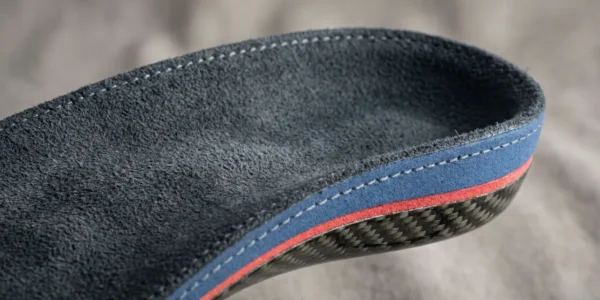
Foot orthotics flat feet are medical-grade, custom-tailored shoe inserts designed to provide structural support to the longitudinal arch, correcting the “fallen” position of the foot and realigning the entire lower extremity. In Los Angeles, these specialized devices are the primary non-surgical intervention for individuals with pes planus (flat feet), as they prevent the inward collapse of the ankle and distribute weight evenly across the sole to eliminate chronic pain in the feet, knees, and lower back.
The foundation of your health starts at the ground level
Why Los Angeles is the Hub for Custom Orthotics Innovation
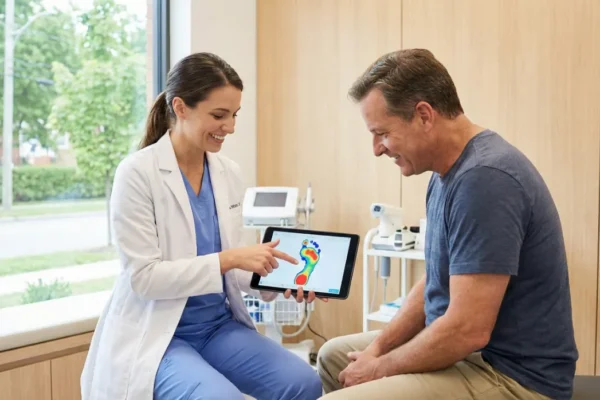
Los Angeles serves as a premier center for biomechanical research, offering patients access to custom orthotics Los Angeles that are far superior to standard retail options. While drugstore inserts provide temporary cushioning, professional custom insoles Los Angeles are built using high-precision digital casting. This ensures that the unique geometry of each foot is captured, allowing for a level of correction that generic products cannot achieve.
Understanding the Therapeutic Impact on Common Conditions
Custom-engineered orthotics are not merely for comfort; they are essential for treating various pathologies that affect the citizens of a fast-paced city like LA. Clinical evidence supports their use for:

Plantar Fasciitis
The integration of plantar fasciitis and custom orthotics is widely recognized as the gold standard for treatment. By using specific orthotics for plantar relief, the tension on the fascia ligament is reduced, allowing inflammation to subside.
Heel Spurs
These devices feature specialized “recessed zones” to offload pressure from the calcaneal growth, making them the best inserts for heel pain caused by bone spurs.
Metatarsalgia and Neuroma (Morton’s)
By incorporating metatarsal pads, these inserts spread the forefoot bones, relieving pressure on the nerves and the balls of the feet.
Posterior Tibial Dysfunction
For those with progressive arch collapse, custom arch supports for flat feet provide the necessary rigid stabilization to support the failing tendon.
Tarsal Coalition
Specialized orthotics for tarsal coalition are designed to restrict painful movements in the fused bones of the midfoot.
Ankle and Foot Pain
By correcting the “foot strike,” orthotics prevent the micro-trauma that leads to chronic heel and ankle discomfort.
Addressing Common Concerns: Are Orthotics Good or Bad for Your Feet?
Many patients ask: are orthotics good for your feet, or do they act as a crutch? When prescribed by a professional, they are highly beneficial. They function similarly to corrective lenses for eyes, ensuring that the musculoskeletal system operates within its intended mechanical parameters.
Do Orthotics Weaken the Feet?
A frequent worry for active individuals is: do orthotics weaken your feet? Current podiatric research suggests that because orthotics place the foot in its neutral, optimal position, the muscles actually fire more efficiently. They aren’t resting; they are working correctly. However, if a device is poorly made or incorrectly fitted, some might feel are orthotics bad for your feet. This underscores the importance of seeking professional custom insoles rather than guessing with over-the-counter options.
Advanced Solutions for the Active Lifestyle
Comparing Retail vs. Custom Arch Support Insoles
| Feature | Over-the-Counter (OTC) | Custom Arch Support Insoles |
|---|---|---|
| Material | Soft foam or gel | Carbon fiber, polypropylene, EVA |
| Accuracy | Based on shoe size | Based on 3D laser scanning |
| Longevity | 3–6 months | 3–5 years |
| Corrective Power | Minimal (cushioning only) | Structural realignment |
By utilizing custom arch support insoles, a patient ensures that the support is firm enough to hold the arch in place under the full weight of the body—something soft, store-bought foam simply cannot do.
The Manufacturing Process in LA Clinics