

This content is for informational purposes only and does not constitute medical advice. Please consult with a licensed podiatrist for a personalized evaluation and treatment plan. Individual results may vary.
The spot where a foot hurts often points straight to the cause. Pain on the top of the foot usually comes from tendons or bones. Pain in the arch or the middle of the bottom of the foot often traces back to the plantar fascia. Ball-of-foot pain tends to involve the long bones behind the toes, while pain on the inner or outer side points to tendons and joints along the edges. Knowing the exact location helps narrow down the problem before an exam even begins.
Most short-lived foot pain settles with rest, better shoes, and ice. But pain that lasts more than two weeks, follows an injury, or comes with numbness, spreading redness, or a fever needs a professional look. Residents across Los Angeles can get a hands-on evaluation from podiatrist Dr. Arkady Kaplansky, who diagnoses the source of foot pain and builds a treatment plan around it.
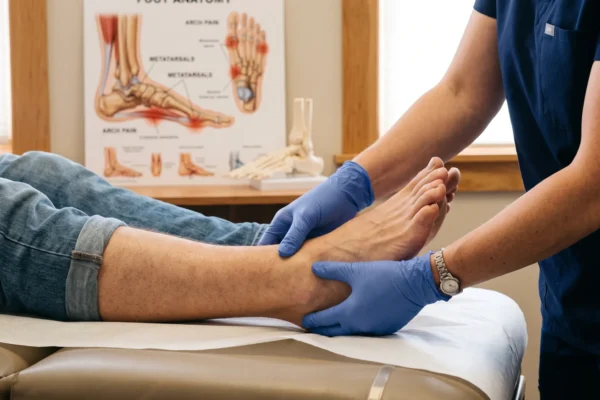
Reading a Foot Pain Location Chart
The chart is a starting point, not a diagnosis. Two people with pain in the same spot can have different causes, and some problems, such as nerve irritation, can send pain to places that feel far from the real source. Still, mapping the pain by location makes the next steps clearer and helps a podiatrist ask the right questions.
Pain on the Top of the Foot
Tendonitis on Top of the Foot
Bones, Gout, and Arthritis
Swelling, bruising, or pain that appears right after a fall or twist points more toward a bone or ligament injury. Pain that builds slowly over days or weeks is more typical of tendonitis or arthritis. The pattern of how the pain started is one of the most useful clues a podiatrist can gather.
Arch and Bottom-of-Foot Pain
Plantar Fasciitis and Arch Pain
Because the fascia supports the whole arch, plantar fasciitis frequently causes pain in the middle of the bottom of the foot as well as at the heel. Flat feet, a high arch, tight calves, long-distance running, and jobs that keep a person on hard floors all raise the risk. Most cases improve with stretching, supportive shoes, and rest, though stubborn cases may need custom orthotics or physical therapy.
Pain on the Inner Side of the Foot Near the Arch
A firm lump felt in the middle of the arch can also be a plantar fibroma, a benign knot of tissue within the fascia. It is usually not dangerous, but it can make standing uncomfortable and is worth checking if it grows or hurts.
Ball-of-Foot Pain
Metatarsalgia and Morton's Neuroma
A related problem is Morton’s neuroma, a thickening of tissue around a nerve between the toes, usually between the third and fourth. It can create a burning pain plus numbness or the odd feeling of a pebble stuck in the shoe. Because these conditions overlap, a podiatry exam helps tell them apart.
Severe Pain in the Ball of the Foot and Big Toe
Pain on the Side of the Foot
Pain Along the Outer Side of the Foot
A burning pain on the outer side of the foot that comes with tingling or an electric-shock feeling points more toward a nerve than a tendon or bone. Nerve-related foot pain can come from a pinched nerve, tarsal tunnel syndrome, or a condition affecting the nerves themselves. When burning is the main symptom, the cause and the treatment are usually different from a simple strain.
When Side Pain Signals Something More
When Foot Pain Needs a Podiatrist
A podiatrist starts by pinpointing the painful spot, then asks how long it has been there and what makes it better or worse. A physical exam and, when needed, X-rays or other imaging fill in the rest. From there the treatment is matched to the exact cause instead of guesswork.
Treatment and Relief Options
- Rest and activity changes: pausing the activities that trigger flare-ups until the pain settles.
- Ice and elevation: applying ice packs and keeping the foot raised to lower pain and swelling.
- Supportive footwear: choosing shoes with a wide toe box and good arch support that fit the specific problem.
- Orthotics: using shoe inserts to spread pressure away from a sore spot such as the arch or the ball of the foot.
- Stretching and physical therapy: loosening tight calves and strengthening the muscles that support the foot.
When these steps are not enough, a podiatrist may add steroid injections, custom orthotics, splints or casts for a broken bone, or, in a small number of cases, surgery. The right mix depends on the cause and how long the pain has lasted. For people across Los Angeles, an in-person evaluation is the fastest way to move from a foot pain location chart to a clear diagnosis and a plan that actually fits the problem.
Frequently Asked Questions
Why do the arch and ball of my foot hurt?
Arch pain usually comes from the plantar fascia, the band of tissue that supports the arch, while ball-of-foot pain often comes from metatarsalgia, an irritation of the long bones behind the toes. Tight calves, flat or high arches, hard training, and shoes with poor support can stress both areas at once. If the pain lasts more than a couple of weeks, a podiatrist can find the exact cause.
What causes the outer side of the foot to hurt?
Common causes of outer-edge pain include peroneal tendonitis, cuboid syndrome, and a stress fracture of the fifth metatarsal. Overuse and worn or poorly fitting shoes often play a role. Burning or tingling on the outer side may signal a nerve issue rather than a tendon or bone, which is worth checking.
How do you fix pain on the side of your foot?
Early relief usually starts with rest, ice, and switching to supportive shoes that take pressure off the sore edge. Orthotics and targeted stretches can help once the cause is clear. Pain that does not improve, or that comes with numbness or swelling, should be evaluated by a podiatrist.
What is a red flag for plantar fasciitis?
Warning signs that arch or heel pain needs professional care include pain that lasts more than two weeks, pain that follows an injury, numbness or tingling, and any redness, swelling, or fever. These can point to a fracture, nerve problem, or infection rather than simple plantar fasciitis. A hands-on exam sorts out the difference.
Is side-of-foot pain related to diabetes?
It can be. Diabetes can damage the nerves in the feet, causing burning, tingling, or numbness along the sides and bottom of the foot. Because reduced feeling and blood flow let small problems turn serious, anyone with diabetes should have new foot pain checked promptly.