

This content is for informational purposes only and does not constitute medical advice. Please consult with a licensed podiatrist for a personalized evaluation and treatment plan. Individual results may vary.
A heel spur is a small, bony growth that forms on the bottom or back of the heel bone. This condition is a primary reason why many people search for professional Heel Spurs treatment, as it can cause a sharp, stabbing pain—especially when taking those first few steps in the morning or after sitting for a long time. Professional medical advice is necessary if the pain lasts more than a week, makes it hard to walk, or forces a person to change their posture. In most cases, finding a solution early can prevent long-term damage to the feet and legs.
Residents of Los Angeles can find expert help for this condition through Dr. Arkady Kaplansky. As a specialist in foot and ankle health, Dr. Kaplansky uses the newest medical tools to help patients get back to their normal activities without pain. Whether a patient is an active athlete or someone who works on their feet all day, getting a personal evaluation is the first step toward healing.
Understanding the Basics: Heel Spurs What Are They?
When someone asks, “heel spurs what are they?”, it helps to think of them as the body’s way of trying to protect itself. A heel spur is not actually the cause of the pain, but a sign that the foot has been under too much stress for a long time.
How the Body Builds a Spur
Underneath the foot, there is a thick band of tissue called the “fascia.” This band acts like a shock absorber. If a person has flat feet, wears bad shoes, or carries extra weight, this band is pulled too tight. Every time it pulls on the heel bone, it creates tiny, microscopic tears.
To “fix” these tears, the body sends calcium to the area to make the connection stronger. Over several months, this calcium hardens into a bony spike. While the spike itself isn’t always painful, it often rubs against the soft tissues around it, leading to heel inflammation and pain.
Who is Most at Risk in 2026?
New studies from 2025 and 2026 show that heel pain is becoming more common in the United States. About 11.1% of all adults deal with this issue at some point.
-
Women: Statistics show that women represent nearly 58% of cases. This is often linked to footwear that lacks support or changes in the body during different stages of life.
-
The “Golden” Age: Most people notice the first signs of a spur between the ages of 50 and 65.
-
The Weight Factor: Carrying extra weight puts constant pressure on the heel. Research shows that people with a high BMI are nearly three times more likely to develop these bony growths.
-
The Big City Effect: Living in a place like Los Angeles means walking on hard concrete or standing for long hours. This “city stress” is a major trigger for foot problems.
Recognizing the Symptoms of a Heel Spur
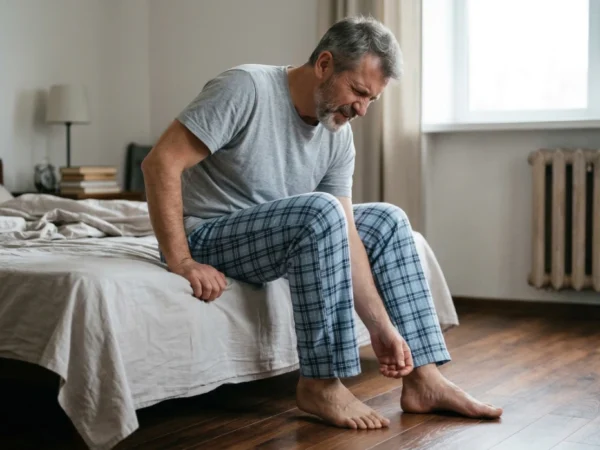
The most famous sign of a problem is morning heel pain. This is that unmistakable “ouch!” moment when the foot hits the floor after a night’s rest.
Common signs and heel spur symptoms include:
-
Sharp pain in heel: A poking or stabbing feeling that is strongest during the first few steps of the day.
-
Pain in heel when stepping: A dull, deep ache that happens while walking on hard surfaces or when standing up after a long movie or car ride.
-
Heel burning pain: A warm, throbbing sensation that suggests the area is very inflamed.
-
Bone spur on side of foot: While most spurs are on the bottom, some grow on the side or the back near the Achilles tendon, making shoes feel tight and uncomfortable.
If a patient ignores these foot spur symptoms, the body may try to compensate by walking differently. This often leads to new pains in the knees, hips, or lower back.
How Doctors Check for Spurs
To find the best way to treat heel spurs, a doctor in Los Angeles will use a mix of technology and a physical exam.
-
Physical Exam: The doctor will press on the heel to find the exact spot of the pain. They may also ask the patient to flex their foot to see how tight the tissue is.
-
X-rays: This is the standard way to see the actual bony spike. It helps the doctor see how big the spur is and exactly where it is located.
-
Ultrasound: This allows the doctor to see the soft tissue. If the tissue is thicker than 4mm, it usually means there is a lot of inflammation that needs to be treated.
Modern Medical Treatment for Heel Spurs (Non-Surgical)
The good news is that about 90% of people get better without ever needing surgery. In 2026, the focus of medical treatment for heel spurs is on “biological healing”—helping the body fix itself.
1. Custom Orthopedic Insoles for Heel Spurs
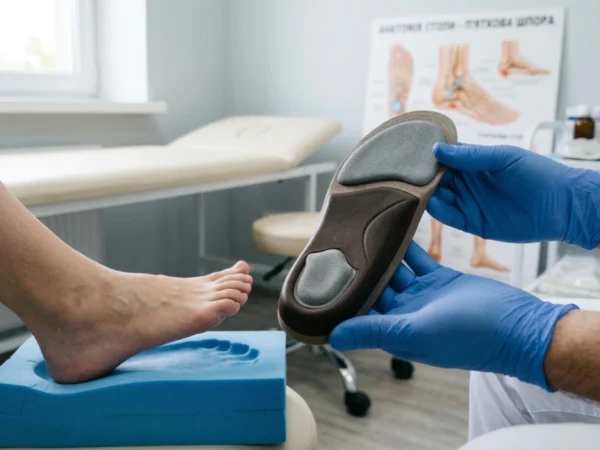
One of the most effective tools is a set of orthopedic insoles for heel spurs. Unlike the cheap pads found in grocery stores, these are custom-made to fit the patient’s unique foot shape.
-
They lift the arch to stop the “pulling” on the heel.
-
They provide a soft “nest” for the spur so it doesn’t poke the surrounding tissue.
-
They help people in Los Angeles walk comfortably on hard streets.
2. The Remy Laser: A California Breakthrough
Remy Laser treatment has become a go-to option in many top clinics. This is a special high-power laser that doesn’t burn. Instead, the light goes deep into the heel to:
-
Speed up cell repair.
-
Quickly lower heel inflammation and pain.
-
Provide relief without the need for steroid shots or pills.
3. Shock Wave Therapy for Pain
In shock wave therapy for pain, a small device sends sound pulses into the heel. It sounds loud, but it is very effective. The pulses “wake up” the body’s healing system and help break down the hard, painful scar tissue around the spur. This plantar treatment is considered one of the best ways to fix long-term heel pain.
4. Onyfix and Whole-Foot Health
While tools like Onyfix are often used for nail care, they are part of a larger trend in 2026: painless, non-invasive foot care. Modern podiatrists look at the whole foot to make sure everything is working together correctly.
The Role of Regenerative Medicine
For patients who have had pain for a long time, doctors may suggest “regenerative” therapies. One popular choice is PRP (Platelet-Rich Plasma). The doctor takes a small amount of the patient’s own blood, spins it to collect the “healing cells,” and injects it back into the heel. This tells the body to focus all its energy on fixing the damaged tissue.
When is it Time for Bone Spur Removal Heel Surgery?
Surgery is usually the last resort. It is only considered if a person has tried all the other treatments for 6 to 12 months and still cannot walk without pain.
What Happens During Modern Surgery?
In 2026, the process to get rid of heel spurs is much gentler than it used to be. Most surgeons in Los Angeles now use “minimal access” or “keyhole” surgery.
-
Small Cuts: The surgeon makes a tiny opening, often less than an inch long.
-
Endoscopic Tools: A tiny camera and a small burr (like a very fine dental tool) are used to smooth down the bone spur.
-
Quick Recovery: Because the cuts are so small, patients can usually start walking in a special boot within a few days.
This bone spur removal heel process focuses on removing the physical irritation while also releasing the tight ligament that caused the problem in the first place.
Heel Spurs Treatment at Home: What You Can Do Today
While you wait for your appointment with Dr. Kaplansky, you can start managing the pain yourself. A good heel spurs treatment at home plan is the key to a faster recovery.
-
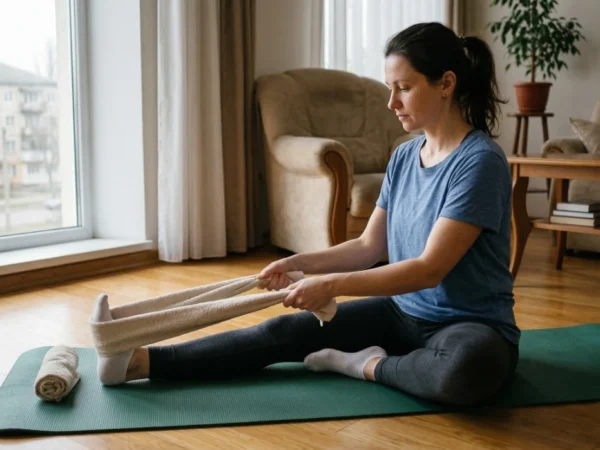
Exercises for heel spurs: The most important exercise is the “Towel Stretch.” Before you get out of bed, loop a towel around your foot and gently pull your toes toward your body. Hold this for 30 seconds. This stretches the tissue before you put weight on it, which stops that “first-step” pain.
-
Ice Massage: Instead of just putting an ice pack on your heel, roll your foot over a frozen water bottle for 15 minutes every night. This massages the tissue and reduces swelling at the same time.
-
The “Good Shoe” Rule: If you can bend your shoe in half, it’s a bad shoe for heel spurs. Look for shoes that are stiff in the middle and have a little bit of a cushion in the heel. Avoid walking barefoot on hard floors at home.
-
Home remedy for heel spurs: Using over-the-counter heel cups can provide some temporary relief, but remember that they are just a “band-aid”—they don’t fix the underlying problem like custom orthotics do.
Final Thoughts on Recovery in 2026
The goal for every patient is to get rid of heel spurs symptoms and return to the things they love, whether that’s hiking in the Hollywood Hills or simply walking to get coffee. By using a combination of high-tech tools like the Remy Laser and simple habits like daily exercises for heel spurs, most people find they can live a pain-free life.
Frequently Asked Questions
Why does my heel hurt the most when I take my first steps in the morning?
During the night, the band of tissue under your foot (the fascia) tightens and shortens while you rest. When you step down in the morning, this tissue stretches suddenly and pulls on the heel bone, causing that sharp, stabbing sensation known as “first-step pain.”
Can I get rid of the pain without having surgery?
Yes, the vast majority of patients find relief through non-invasive treatments like custom shoe inserts or the Remy Laser. These modern methods focus on healing the damaged tissue and stopping the inflammation so you can walk comfortably again without an operation.
How does the Remy Laser actually help with heel pain?
The Remy Laser uses a special type of light that goes deep into your heel to “turn on” your body’s natural healing process. It increases blood flow and repairs damaged cells, which quickly reduces swelling and pain without the use of needles or drugs.
When should I stop trying home remedies and see a specialist?
If your heel pain lasts for more than a week or makes you change the way you walk, it is time to seek professional help. Consulting with an expert like Dr. Arkady Kaplansky is important to get a correct diagnosis and a treatment plan that addresses the root cause of your pain.
Are there specific exercises I can do to help my heel at home?
Simple stretches, such as pulling your toes back toward your shin with a towel for 30 seconds, are very effective when done before getting out of bed. Pair these stretches with a “frozen water bottle massage” in the evening to help manage daily swelling and discomfort.
References
- Prevalence, characteristics, and associated risk factors of plantar heel pain — https://pmc.ncbi.nlm.nih.gov/articles/PMC11604014/
- 2025 Foot Pain Trends Report | KURU Footwear — https://www.kurufootwear.com/pages/reports-foot-pain-2025
- Products – Data Briefs – Number 518 – November 2024 – CDC — https://www.cdc.gov/nchs/products/databriefs/db518.htm
- The prevalence of plantar spurs in men and women by age category — https://www.researchgate.net/figure/The-prevalence-of-plantar-spurs-in-men-and-women-by-age-category-Note-that-the_fig3_260839648
- Bone spurs – Symptoms and causes – Mayo Clinic — https://www.mayoclinic.org/diseases-conditions/bone-spurs/symptoms-causes/syc-20370212
- Comparison of corticosteroid injections and conservative treatments for plantar fasciitis — https://pmc.ncbi.nlm.nih.gov/articles/PMC12004601/
- Plantar Fasciitis With a Calcaneal Spur – PMC – NIH — https://pmc.ncbi.nlm.nih.gov/articles/PMC10821782/
- Plantar fasciitis – Symptoms and causes – Mayo Clinic — https://www.mayoclinic.org/diseases-conditions/plantar-fasciitis/symptoms-causes/syc-20354846
- Bone spurs – Diagnosis and treatment – Mayo Clinic — https://www.mayoclinic.org/diseases-conditions/bone-spurs/diagnosis-treatment/drc-20370216
- Treatment of Plantar Fasciitis in Patients with Calcaneal Spurs: Radiofrequency Thermal Ablation or Extracorporeal Shock Wave Therapy? — https://pubmed.ncbi.nlm.nih.gov/37892641/
- Clinical Study of a Four‐Step Program for the Treatment of Plantar Fasciitis with Bone Spurs — https://pmc.ncbi.nlm.nih.gov/articles/PMC11144503/
- Comparison of Short-Term efficacy between endoscopic approaches for spur resection — https://pmc.ncbi.nlm.nih.gov/articles/PMC12320369/
- How Plantar Fasciitis Exercises Can Help My Pain — https://www.bodiempowerment.com/5-plantar-fasciitis-exercises-plantar-fasciitis-exercises-for-pain/