

This content is for informational purposes only and does not constitute medical advice. Please consult with a licensed podiatrist for a personalized evaluation and treatment plan. Individual results may vary.
If you have ever stepped out of bed and felt the rough, thickened skin on the bottom of your foot catch on the carpet, you already know how uncomfortable calloused heels can be. For many residents of Los Angeles, from those walking the sun-baked sidewalks of Silver Lake to professionals spending long shifts on hard floors in Downtown, heel calluses are not just a cosmetic concern. They are a sign that your feet are under chronic mechanical stress and need attention.
The good news is that effective heel callus treatment does not always require a clinic visit. However, understanding the difference between a surface-level fix and a lasting solution is what separates temporary relief from genuine healing.
If your heels are causing persistent pain, limiting your mobility, or showing signs of deep cracking and bleeding, it is time to consult Dr. Arkady Kaplansky, a podiatrist in Los Angeles who specializes in biomechanical foot health and long-term recovery.
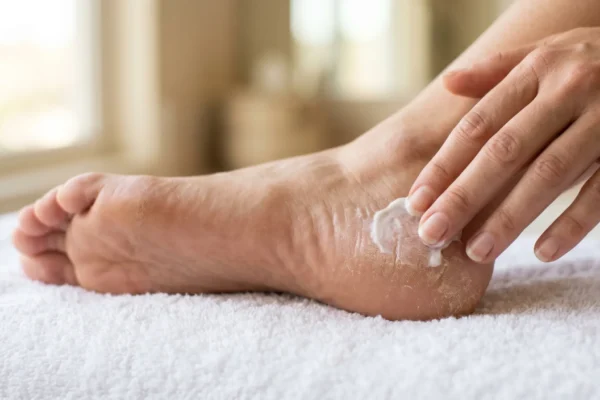
What Are Calloused Heels and Why Do They Form?
A callus is a thickened, hardened layer of skin that develops as a protective response to repeated friction, pressure, or irritation. On the heels, this buildup occurs in the stratum corneum, the outermost layer of the epidermis. The skin essentially “armors” itself against ongoing stress, but when that armor grows too thick, it loses flexibility and begins to crack.
Understanding the cracked heels causes is the first step toward preventing recurrence.
Primary Cracked Heels Causes
| Cause | How It Damages the Heel |
|---|---|
| Hard surfaces | Constant impact on concrete dries and compresses heel skin |
| Open-back footwear | Flip-flops allow the heel fat pad to spread and crack |
| Prolonged standing | Sustained pressure accelerates skin thickening |
| Low humidity | Los Angeles’s dry climate pulls moisture from exposed skin |
| Improper footwear | Shoes without arch support shift weight to heel edges |
| Obesity | Increases vertical load and fat pad compression |
| Age | Natural reduction in skin elasticity and oil production |
| Diabetes | Impairs circulation and nerve sensation in the feet |
The dry climate of Los Angeles is a particularly significant factor. Unlike humid coastal environments, the region’s low ambient moisture means that unprotected skin loses hydration rapidly, making the formation of severe cracked heels far more likely for locals who spend time outdoors.
The Difference Between a Callus and a Heel Fissure
These two terms are often used interchangeably, but they represent different stages of the same problem.
A callus is the initial buildup of thick, yellowish skin. It is firm, dry, and usually painless at first.
A heel fissure is what happens when a neglected callus becomes so rigid that it splits under pressure. Heel fissures treatment becomes more urgent at this stage because deep cracks can reach the dermis, causing pain, bleeding, and an open pathway for bacterial infection.
Think of it this way: a callus is a warning sign, and a fissure is the consequence of ignoring it.
Cracked Heels Treatment at Home: A Step-by-Step Protocol
For mild to moderate cases, a consistent cracked heels treatment at home routine can produce significant results within two to four weeks. The key is layering mechanical removal with deep hydration in the correct sequence.
Step 1: Soak and Soften
Begin by soaking your feet in warm water for 10 to 15 minutes. You can add a small amount of liquid soap or Epsom salt. This process softens the hardened skin and prepares it for safe mechanical removal. Avoid soaking for longer than 20 minutes, as this can over-hydrate and further dry out the skin after the soak ends.
Step 2: Use a Pumice Stone for Heels
After soaking, while the skin is still soft, gently use a pumice stone for heels in circular motions across the thickest areas. A pumice stone is volcanic rock with a naturally abrasive surface that safely files away dead skin without cutting into healthy tissue.
Important technique notes:
- Apply light, even pressure — never scrape aggressively
- Work in one direction to avoid creating micro-tears
- Rinse the stone after each use and allow it to dry completely
- Replace it every one to three months to prevent bacterial buildup
Do not use a pumice stone on broken or bleeding skin, or on diabetic feet without first consulting a podiatrist.
Step 3: Apply a Urea Based Cream
This is the most critical step and the one most people skip or underestimate. Standard moisturizers hydrate the surface, but urea based creams work differently. Urea is a keratolytic agent, meaning it actively breaks down the protein bonds in thickened skin cells, allowing the cream to penetrate deeply and dissolve callused tissue from within.
For heel callus treatment, look for formulations containing:
- 10-25% urea for general maintenance and moderate calluses
- 40% urea for severe cracked heels and established fissures
Apply the cream immediately after drying your feet, while the pores are still open from the soak. Massage it thoroughly into the heel and arch, paying extra attention to the edges where fissures typically begin.
Step 4: Lock in Moisture Overnight
Put on a pair of clean cotton socks immediately after applying your foot cream for cracked heels. This “sock occlusion” technique prevents the cream from evaporating and forces the active ingredients to stay in contact with the skin throughout the night. Patients who follow this step consistently report noticeably softer heels within seven to ten days.
Comparing Home Treatment Options
| Treatment Method | Best For | Expected Timeline |
|---|---|---|
| Pumice stone for heels | Surface-level callus removal | Immediate smoothing; ongoing maintenance |
| Urea based creams (10-25%) | Daily hydration and prevention | 2 to 4 weeks of consistent use |
| Urea based creams (40%) | Severe cracked heels and fissures | 1 to 2 weeks for deep cases |
| Foot cream for cracked heels (standard) | Mild dryness and prevention | Ongoing use required |
| Overnight sock occlusion | Maximizing cream absorption | Visible results within 7 to 10 nights |
When Home Remedies Are Not Enough: Professional Heel Fissures Treatment
For a significant portion of Los Angeles residents, particularly those with diabetes, peripheral neuropathy, or circulatory issues, home-based cracked heels treatment is not sufficient and can even be risky. In these cases, professional intervention is not a luxury — it is a medical necessity.
Dr. Arkady Kaplansky offers professional heel callus treatment that goes beyond surface management. Clinical debridement, performed with specialized instruments, removes accumulated dead skin safely and precisely in a single appointment, without the risk of cutting too deep or introducing infection. This is particularly important for patients who cannot safely use a pumice stone at home due to reduced sensation in their feet.
Additionally, gait analysis can identify the biomechanical root cause of the callus. If your callus keeps returning despite consistent home care, it is almost certainly caused by an underlying structural issue such as overpronation, a high arch, or an uneven stride. Custom orthotics, fitted professionally, redistribute your body weight and eliminate the repetitive friction that drives callus formation in the first place.
Environmental Factors Unique to Los Angeles
Living in Los Angeles presents specific challenges for heel health that residents of other cities may not face:
- Year-round sandal season: The warm climate encourages open-back footwear nearly every month of the year, which means the heel fat pad is constantly exposed and unsupported.
- Dry Santa Ana winds: Seasonal wind events dramatically lower humidity, pulling moisture out of exposed skin almost overnight.
- Hard urban surfaces: The concrete of the Hollywood Hills, the paved paths of Griffith Park, and the tile floors of the city’s many restaurants and retail spaces provide minimal shock absorption.
- Active outdoor lifestyle: Hiking trails in the Angeles National Forest and beach boardwalks in Santa Monica subject the feet to prolonged, high-impact activity.
Switching to supportive footwear, applying a foot cream for cracked heels every morning as part of your routine, and carrying a small tube of urea based cream for reapplication throughout the day can dramatically reduce the impact of these environmental factors.
Prevention: Keeping Heels Soft Year-Round
Once you have resolved an active callus, the goal shifts to prevention. These habits will help maintain smooth, healthy heel skin in the long term:
- Moisturize daily — apply a urea based cream every morning before putting on shoes.
- Choose enclosed footwear for long walks and high-impact activities.
- Replace athletic shoes every 400 to 500 miles — worn-out cushioning stops absorbing shock.
- Use a pumice stone for heels weekly as maintenance, not just when calluses become severe.
- Stay hydrated — internal hydration directly affects skin elasticity.
- Schedule annual podiatry check-ups to catch structural issues before they cause skin problems.
Frequently Asked Questions
What is the fastest heel callus treatment at home?
The fastest results come from combining a 15-minute warm soak with a pumice stone for heels followed immediately by a high-concentration urea based cream (40%) and an overnight sock. This layered approach softens, exfoliates, and deeply hydrates in one session, with most patients noticing a significant difference within three to five days of consistent use.
Are urea based creams safe for daily use?
What causes severe cracked heels even with regular moisturizing?
Can I use a pumice stone for heels if I have diabetes?
How is heel callus treatment different from heel fissures treatment?
References
- AAD — How to Treat Corns and Calluses: https://www.aad.org/public/everyday-care/injured-skin/burns/treat-corns-calluses
- AAD — How to Care for Dry, Cracked Heels: https://www.aad.org/news/how-to-care-dry-cracked-heels
- Cleveland Clinic — Corns and Calluses: https://my.clevelandclinic.org/health/diseases/16896-corns-and-calluses
- APMA — Heel Pain: https://www.apma.org/patients-and-the-public/conditions-affecting-the-foot-and-ankle/heel-pain/
- PMC — Urea in Dermatology (comprehensive review): https://pmc.ncbi.nlm.nih.gov/articles/PMC8611129/