

This content is for informational purposes only and does not constitute medical advice. Please consult with a licensed podiatrist for a personalized evaluation and treatment plan. Individual results may vary.
An ingrown toenail is a condition where the sharp edge of the nail plate grows into the soft skin of the nail fold, causing pain, swelling, and redness. It is important to see a specialist as soon as the toe becomes painful to walk on or sensitive to shoes. If you notice pus, overgrown skin (granulation tissue), or if you have a pre-existing condition like diabetes, medical help is required immediately to prevent the infection from spreading to the bone.
For residents of Los Angeles, elite clinical care and specialized toe nail services are available through Dr. Arkady Kaplansky. He treats complex ingrown nails using advanced 2026 technologies, including the Onyfix correction system and laser nail root treatments.
These methods are vital for high-risk patients with diabetes or vascular disease to prevent severe complications like MRSA or ulcers. Dr. Kaplansky ensures a rapid return to an active lifestyle. Most patients recover quickly, resuming daily routines with minimal downtime.
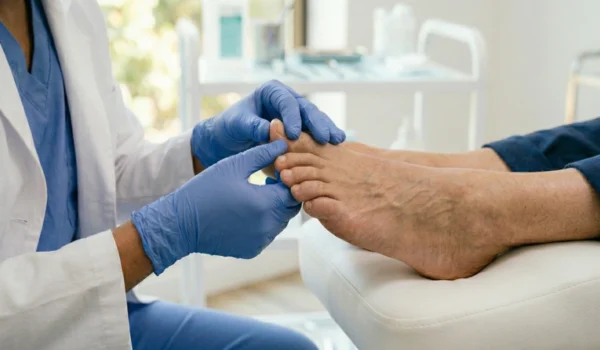
Causes and Clinical Symptoms
In the fast-paced Los Angeles lifestyle, nails on feet problems often arise from a combination of several factors. The most common causes include:
-
Trimming Errors: Many people make a mistake when they try to cut my toenails by trimming the corners too deeply. Safe cutting toenails to avoid ingrown issues requires a straight cut across. If a sharp edge (a spicule) is left deep in the corner, it will inevitably pierce the skin as the nail grows.
-
Mechanical Pressure: Constantly wearing tight shoes or high heels squeezes the toes together. Podiatrists recommend choosing proper shoes to prevent ingrown toenails that feature a wide toe box and allow the foot to maintain its natural position.
-
Athletic Activity: Runners and soccer players frequently experience a big toe nail growing into skin due to constant micro-impacts of the toes against the front of the shoe.
-
Anatomy: Some people are born with an inward toenail shape, where the edges of the nail plate naturally curve deeply into the skin from birth.
While feet are most commonly affected, medical practices in Los Angeles also see cases of an ingrown hand nail, which requires the same professional antiseptic care and attention.
Understanding the Process: Pathophysiology
When the hard edge of a nail damages the skin, the body treats it like a foreign object. The immune system sends protective cells—macrophages and neutrophils—to the site. These cells release inflammatory signals, causing blood vessels to widen, which leads to swelling and throbbing pain.
If the problem is not addressed, the body begins to grow excess tissue known as “proud flesh” (granulation tissue). This tissue is filled with tiny blood vessels, which is why an ingrown nail bleeds so easily even from a light touch. Without treatment, this can lead to fibrosis—permanent scarring that changes the shape of the nail bed forever.
High-Risk Groups: Diabetes and Vascular Health
In a city like Los Angeles, with a large population of seniors and people with chronic conditions, this section is critical:
-
Diabetic Foot: In patients with diabetes, the immune system is less effective and blood flow is often slower. Even a minor inflammation can quickly turn into a serious ulcer.
-
Loss of Sensation (Neuropathy): A patient may not even feel that a nail has pierced the skin. In these cases, the infection is often discovered far too late.
-
Amputation Prevention: Timely professional ingrown nails removal and matrixectomy are vital steps in saving a limb from gangrene or more severe complications.
Ingrown Nails in Children and Teenagers
Teenagers in Los Angeles are a frequent group at podiatry clinics due to high physical activity and hormonal changes.
-
Hyperhidrosis: Excessive foot sweating in teens makes the skin soft and fragile, allowing the nail to penetrate the nail fold more easily.
-
Psychological Comfort: For children who are afraid of needles or surgery, the Onyfix system is an ideal solution as it requires no anesthesia and is completely non-invasive.
Advanced Treatment Technologies in 2026
While many try home remedies for ingrown nails, only clinical methods provide long-term results and effective ingrown prevention.
The Onyfix System
This is essentially “braces for nails.” A special composite material is applied to the nail plate to fix its shape and force it to grow out straight. It is entirely painless and allows the patient to return to walking immediately.
Foot and Ankle Surgery
For chronic or severe cases, a professional ingrown nails removal procedure is performed. It includes:
-
Local Anesthesia: The toe is completely numbed.
-
Partial Avulsion: A thin strip of the ingrown nail is removed.
-
Matrixectomy: The growth zone (matrix) is treated with phenol or a laser to ensure that specific edge never grows back.
Wound Care and Platinum Biologics
If an ingrown nail has caused a deep wound, the podiatrist uses next-generation dressings and biological products like Platinum Biologics. These contain growth factors that help the skin heal several times faster than traditional methods.
Remy Laser and Foot Orthotics
Remy Laser therapy helps instantly reduce swelling and pain by stimulating cells with light energy. Additionally, custom Foot Orthotics help redistribute body weight correctly, taking the extra pressure off the big toes.
Debunking Myths and ``Bathroom Surgery``
Podiatrists strongly advise against self-treatment for several reasons:
-
The V-Cut Myth: Cutting a “V” shape in the middle of the nail does not make the edges “pull inward.” This is a myth that has no effect on how the nail grows from the root.
-
Dangerous Tools: Using non-sterile clippers or needles at home often leads to dangerous infections like MRSA.
-
Epsom Salts: While salt soaks can temporarily soften the skin and provide minor relief, they cannot pull an ingrown nail fragment out from deep within the tissue.
Recovery and Lifestyle in Los Angeles
Recovery time after modern laser procedures is minimal. Patients can usually return to light gym workouts or walks in Griffith Park within 2-3 days. However, surfing in Malibu or swimming in a pool should wait until the skin has fully healed to prevent infection.
In the warm California climate, hygiene is key. Dust and sand from open-toed shoes can easily irritate a healing toe. For hiking in Runyon Canyon, always choose high-quality footwear with good support.
Long-Term Outlook: 5–10 Years
If an ingrown nail is ignored for years, the nail’s shape can become permanently distorted (dystrophy). Chronic inflammation may eventually spread to the bone (osteomyelitis) or lead to chronic pain that changes how you walk. This shift in gait can eventually cause hip, knee, and back pain. Proper treatment today is an investment in your mobility for decades to come.

Frequently Asked Questions
Can I treat an ingrown toenail at home by myself?
Does the treatment for an ingrown toenail hurt?
Modern treatments are designed to be as comfortable as possible. The Onyfix system is a completely painless, needle-free option for many patients, while advanced Remy Laser therapy helps reduce swelling and pain almost instantly.
How long does it take to recover after a procedure?
Most patients are back to their normal routine and light activities within 2 to 3 days. Using high-tech treatments like Remy Laser or Platinum Biologics helps the skin heal much faster than traditional methods.
Why does my toenail keep growing into the skin repeatedly?
This usually happens because of the nail’s natural shape or improper trimming habits. To stop this for good, a specialist can perform a minor procedure to treat the nail root (matrixectomy), ensuring the sharp edge never grows back.
When should I consider an ingrown toenail an emergency?
You should seek immediate care if you notice pus, red streaks, or if you have diabetes and any foot redness. These are signs of a serious infection that requires professional treatment from a podiatrist to prevent it from spreading to the bone.
References
- Ingrown toenails – Symptoms & causes – Mayo Clinic — https://www.mayoclinic.org/diseases-conditions/ingrown-toenails/symptoms-causes/syc-20355903
- Ingrown Toenails – StatPearls – NCBI Bookshelf – NIH — https://www.ncbi.nlm.nih.gov/books/NBK546697/
- Surgical Strategies for Ingrown Toenails: A Comprehensive Review of Techniques, Outcomes, and Advancements – PMC — https://pmc.ncbi.nlm.nih.gov/articles/PMC10874229/
- Amputation and diabetes: How to protect your feet – Mayo Clinic — https://www.mayoclinic.org/diseases-conditions/diabetes/in-depth/amputation-and-diabetes/art-20048262
- 12. Retinopathy, Neuropathy, and Foot Care: Standards of Care in Diabetes—2026 — https://diabetesjournals.org/care/article/49/Supplement_1/S261/163919/12-Retinopathy-Neuropathy-and-Foot-Care-Standards
- Ingrowing toenails in children and adolescents: is nail avulsion superior to nonoperative treatment? – PMC — https://pmc.ncbi.nlm.nih.gov/articles/PMC6395834/
- CPT® Code 11750 – Surgical Procedures on the Nails – Codify by AAPC — https://www.aapc.com/codes/cpt-codes/11750
- Onychocryptosis Is Associated with Low Income in a Matched Cohort — https://pmc.ncbi.nlm.nih.gov/articles/PMC11460834/