

The most direct answer for anyone struggling with pain in ankle is that it typically stems from ligament instability, tendon inflammation, or joint degeneration, all of which require a specialized diagnostic approach to ensure long-term mobility. While temporary relief can be found through rest, permanent recovery requires addressing the underlying structural issues—whether through advanced regenerative medicine, custom support, or precision surgery.

Identifying the Source: Why Patients Experience Ankle Pain When Walking
For many people, the first sign of trouble is a persistent ankle pain when walking that doesn’t seem to go away with rest. This discomfort is often the result of poor biomechanics or a past injury that never fully healed. When the complex network of bones and ligaments is misaligned, every step creates micro-trauma within the joint.
Athletes and weekend warriors frequently report a sharp pain in the ankles after running, which usually signals an overuse injury like Achilles tendonitis or stress reactions. Ignoring this type of pain in the ankles and feet can lead to compensatory movements, eventually causing secondary issues in the knees, hips, and lower back.
Understanding Medial Issues: Pain on the Inner Side of the Ankle
Pain located on the medial (inner) part of the foot requires specific attention, as it often involves the posterior tibial tendon or the deltoid ligament. Patients commonly describe these sensations as:
-
Pain on the inner side of the ankle that worsens during physical activity.
-
A chronically painful inner ankle bone that feels tender to the touch.
-
Localized pain and swelling inside the ankle, often most visible after a long day on one’s feet.
-
A sharp pain inside the ankle when walking, which can make even short distances feel like a challenge.
-
In some cases, a burning pain inside the ankle, which may indicate nerve compression known as Tarsal Tunnel Syndrome.
Deep Dive: The Biomechanics of Chronic Dysfunction
To understand why the ankle fails, one must look at the Subtalar Joint. This joint sits just below the ankle and is responsible for the side-to-side motion of the foot. When this joint is hypermobile (moving too much), it causes the arch to collapse, forcing the ankle to tilt inward. This mechanical failure is a leading cause of chronic pain and swelling inside the ankle.
Furthermore, the Achilles Tendon plays a critical role. If the calf muscles are excessively tight—a condition known as equinus—the ankle cannot flex upward properly during a stride. This lack of range of motion forces the midfoot and ankle to “break” or over-rotate to compensate, leading to the common pain in the ankles and feet reported by office workers and athletes alike.
Advanced Treatment Technologies
1. Remy Laser Pain Treatment
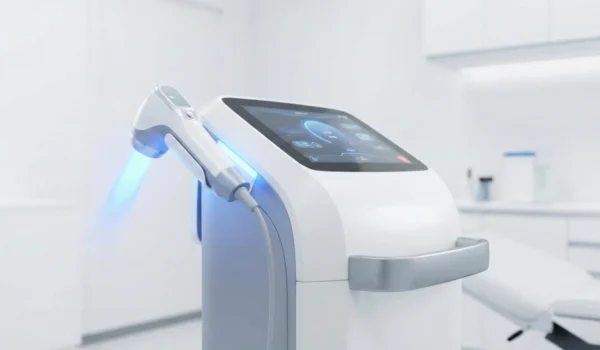
2. Custom Foot Orthotics
3. Platinum Biologics
4. Foot and Ankle Surgery
Specialized Diagnostic Protocols in Modern Podiatry
A successful recovery starts with an accurate diagnosis. Beyond a physical exam, a specialized podiatrist in Los Angeles, California, will utilize:
-
Weight-Bearing Digital X-Rays: Unlike standard X-rays, these capture the foot and ankle under the stress of gravity, revealing structural collapses that disappear when sitting.
-
Diagnostic Ultrasound: This allows the doctor to see “live” images of tendons and ligaments, identifying tears or inflammation that an X-ray might miss.
-
Computerized Gait Analysis: By walking across a pressure-sensitive mat, patients can see exactly where their weight is distributed, helping to explain why they feel pain inside the ankle when walking.
Finding Specialized Care: Your Foot Doctor in Los Angeles, CA
Finding the right specialist is crucial when dealing with complex joint issues. If you are searching for podiatry doctors near me, you need a provider who combines clinical expertise with state-of-the-art diagnostic tools.
As a premier ankle specialist in Los Angeles, Dr. Arkady Kaplansky is dedicated to helping patients navigate their recovery journey. Whether you are looking for the best foot doctor in Los Angeles for a second opinion or need a trusted podiatrist for a comprehensive evaluation, our clinic offers the personalized care you deserve. Choosing an experienced foot doctor ensures that your treatment plan is as unique as your feet.
The Role of Physical Rehabilitation
While technology like the Remy Laser and Platinum Biologics accelerates healing, long-term success often requires “re-training” the ankle. A comprehensive plan typically includes:
-
Proprioceptive Training: Exercises on unstable surfaces (like balance boards) to improve the brain-to-ankle connection, preventing future sprains.
-
Eccentric Loading: Specific movements designed to lengthen and strengthen the Achilles tendon, which is vital for those experiencing pain in the ankles after running.
-
Range of Motion (ROM) Drills: Targeted stretches to ensure the joint can move freely without “catching” on bone spurs or scar tissue.
Comparison of Recovery Paths
| Treatment Type | Best For… | Recovery Expectation |
|---|---|---|
| Remy Laser | Inflammation, acute pain | Immediate (no downtime) |
| Foot Orthotics | Biomechanics, prevention | Ongoing (2-week break-in) |
| Platinum Biologics | Tissue tears, degeneration | 4-6 weeks (natural repair) |
| Surgery | Structural failure, fractures | Varies (weeks to months) |
When to Seek Professional Help
Medical intervention is recommended if you experience:
-
An inability to bear weight on the foot.
-
Swelling that persists for more than 48–72 hours.
-
Numbness or a “pins and needles” sensation.
-
Pain that interferes with your daily work or exercise routine.
Frequently Asked Questions
Why do I experience sharp ankle pain when walking or after running?
How does the Remy Laser treatment work for chronic ankle pain?
Are custom foot orthotics significantly better than over-the-counter inserts?
Yes. While store-bought inserts provide generic cushioning, medical-grade custom orthotics are engineered from a 3D scan or mold of your foot. They are designed to correct your specific skeletal alignment, such as a misaligned subtalar joint. This precise correction is what actually stops the “wear and tear” that leads to chronic pain in the ankles and feet.
What exactly are Platinum Biologics, and can they help avoid surgery?
Platinum Biologics involve the use of advanced regenerative tissues, such as growth factors and cellular matrices, to stimulate the body’s natural healing response. By injecting these concentrated “repair cells” into a partially torn ligament or a degenerated joint, we can often facilitate healing that the body couldn’t achieve on its own, potentially delaying or entirely removing the need for surgical intervention.
What are the warning signs that my ankle pain requires a surgical consultation?
Surgery is usually considered when conservative treatments (like lasers, orthotics, and biologics) have not restored stability or relieved pain after several months. Specific signs include persistent mechanical “locking” or “catching” in the joint, chronic instability where the ankle frequently “gives way,” or severe structural deformities that make wearing shoes or walking a daily struggle.