

This content is for informational purposes only and does not constitute medical advice. Please consult with a licensed podiatrist for a personalized evaluation and treatment plan. Individual results may vary.
Metatarsalgia is a clinical condition characterized by painful inflammation in the ball of the foot, specifically affecting the metatarsal bones and the surrounding soft tissues. While often a result of overuse or high-impact activities, the condition indicates that the weight distribution across the forefoot is uneven. Medical attention is recommended if a sharp pain in the ball of the foot persists despite rest, or if the discomfort interferes with daily activities, sports, or mobility.
Patients in Southern California experiencing persistent foot discomfort can receive a comprehensive evaluation and specialized care from Arkady Kaplansky, DPM to address the root cause of their symptoms.
The Clinical Metatarsalgia Definition and Common Symptoms
Patients often report that the ball of the foot hurts most during weight-bearing activities, such as walking, running, or standing on hard surfaces for extended periods. The discomfort may manifest as a dull, consistent ache or a sharp pain in the ball of the foot that feels like an electric shock. In many cases, a sore ball of foot feels as though there is a small stone or pebble inside the shoe. Symptoms may also include tingling or numbness in the toes, which occurs when the digital nerves between the metatarsal heads become compressed or irritated by surrounding inflammation.
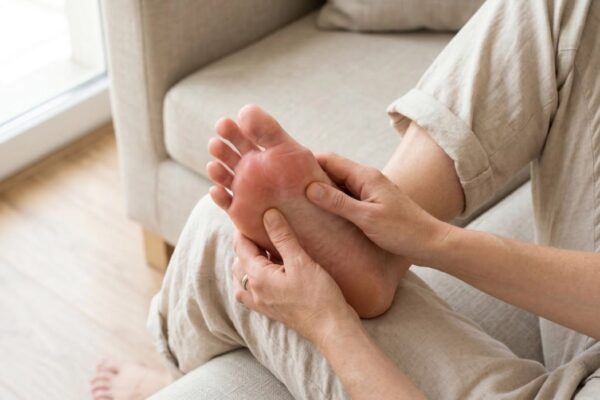
The Biomechanics of Forefoot Pressure
Because these bones are thinner and less equipped for heavy weight-bearing, repetitive stress leads to chronic inflammation of the periosteum (the bone’s outer layer) and the surrounding joint capsules. In Los Angeles, where many residents navigate hard concrete sidewalks or engage in high-intensity coastal hiking, these biomechanical irregularities are often amplified, turning a minor ache into a debilitating condition.
Differential Diagnosis: Comparing Forefoot Conditions
| Condition | Primary Sensation | Key Differentiator | Common Diagnostic Tool |
|---|---|---|---|
| Metatarsalgia | Generalized ache or burning in the ball of the foot. | Pain is directly under the metatarsal heads. | Physical exam & Gait analysis |
| Morton’s Neuroma | Shooting pain, numbness, or “electric” zaps. | Pain is felt between the toes (usually 3rd & 4th). | Mulder’s Click Test |
| Metatarsal Stress Fracture | Sharp, localized pain on top of the foot. | Pain is present during rest and tender to touch. | Foot x-ray or MRI |
| Sesamoiditis | Pain specifically under the big toe joint. | Inflammation of the two tiny bones under the 1st metatarsal. | Clinical palpation |
Primary Causes of Metatarsal Pain
- Foot Overpronation: When the foot rolls inward excessively during a stride, the weight is not distributed evenly. This mechanical flaw places undue stress on the metatarsal heads, particularly the second and third.
- High-Impact Activity: Athletes, particularly runners and jumpers in the Los Angeles area, are susceptible to metatarsalgia due to the repetitive force absorbed by the forefoot.
- Improper Footwear: High heels or shoes with narrow toe boxes squeeze the forefoot and shift the body’s weight forward, aggravating the metatarsal region.
- Foot Deformities: Conditions such as hammertoes or bunions can change the way the foot strikes the ground, leading to localized inflammation.
- Tight Achilles Tendon: A tight calf muscle limits the ankle’s range of motion, forcing the foot to prematurely shift weight onto the forefoot during a step, which increases metatarsal loading.
Differentiating Metatarsalgia from a Metatarsal Stress Fracture
A diagnostic foot x ray is frequently utilized to rule out fractures and assess the alignment of the metatarsal bones. While early-stage stress fractures may not always appear on an initial radiograph, the x-ray is vital for ruling out bone tumors, infections, or severe joint misalignment. If the pain is localized to a very specific point on the bone and increases with direct pressure or persists at night, further imaging like an MRI or bone scan may be necessary to ensure the integrity of the skeletal structure.
Advanced Clinical Treatments for Metatarsalgia
Custom Foot Orthotics for Biomechanical Correction
Remy Laser Pain Treatment
Radiesse Filler for Fat Pad Atrophy
Platinum Biologics and Regenerative Medicine
Foot and Ankle Surgery for Structural Realignment
Conservative Management and Foot Exercises
- Immediate Relief: The RICE protocol (rest, ice, compression, and elevation) is a standard starting point. Utilizing metatarsal pads—placed just behind the ball of the foot—can help lift the metatarsal heads and offload pressure.
- Foot Exercises: Strengthening the intrinsic muscles is vital for recovery. Foot exercises such as towel curls (scrunching a towel with toes) or marble pickups improve toe flexibility and arch support.
- Stretching: Stretching the Achilles tendon and calf muscles is also beneficial. Tight calves are a major contributor to forefoot pressure, as they limit the ankle’s ability to flex, forcing more weight onto the ball of the foot during the “push-off” phase of walking.
Metatarsalgia Prevention and Lifestyle Adjustments
Replacing worn-out athletic shoes regularly (every 300–500 miles) and avoiding excessive use of high heels or flat, unsupportive sandals can significantly reduce the risk of recurrence. For individuals with structural issues like overpronation, custom-molded orthotics prescribed by a specialist can provide the necessary alignment to prevent future instances of ball of foot pain. Additionally, maintaining a healthy weight reduces the total load placed on the metatarsal heads with every step taken.
Frequently Asked Questions
What is the most common metatarsalgia meaning in daily life?
Can I continue running with metatarsal pain?
How does a foot x-ray help with diagnosis?
Is foot overpronation always the cause of ball of foot pain?
When should I consider foot and ankle surgery?
References
- Mayo Clinic — https://www.mayoclinic.org/diseases-conditions/metatarsalgia/symptoms-causes/syc-20354790
- OrthoInfo (AAOS) — https://orthoinfo.aaos.org/en/diseases–conditions/metatarsalgia/
- Cleveland Clinic — https://my.clevelandclinic.org/health/diseases/15890-metatarsalgia
- Remy Laser — https://remylaser.com/podiatry/