

This content is for informational purposes only and does not constitute medical advice. Please consult with a licensed podiatrist for a personalized evaluation and treatment plan. Individual results may vary.
Morton’s neuroma is a painful thickening of the tissue surrounding the digital nerve leading to the toes, most commonly occurring between the third and fourth metatarsal heads. This condition results from chronic compression and irritation, causing sharp pain, burning sensations, or numbness in the ball of the foot. Immediate podiatric evaluation is recommended if these symptoms persist for more than a few days, interfere with daily mobility, or fail to resolve with footwear modifications.
The Pathophysiology of Foot Neuromas
A foot neuroma is not a tumor in the traditional sense; rather, it is a reactive enlargement of a nerve. In the forefoot, the common plantar digital nerves pass beneath the deep transverse metatarsal ligament. When the metatarsal bones are compressed—due to restrictive footwear or structural abnormalities—the nerve becomes pinched.
The body responds to this repetitive mechanical stress by producing excess fibrous tissue to protect the nerve, a process known as perineural fibrosis. However, this increased mass occupies the already limited intermetatarsal space, leading to further entrapment. This creates a self-perpetuating cycle where the enlarged nerve is more easily irritated, resulting in worsening morton neuroma pain and potential long-term nerve damage. While it most frequently affects the third interspace, it can also manifest between the second and third toes.
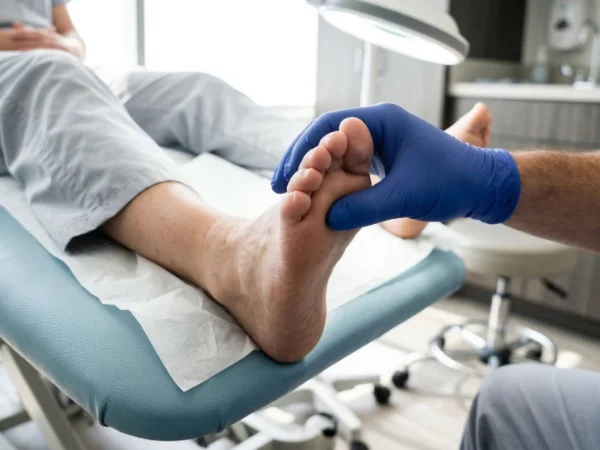
Critical Indicators: When to Seek a Professional Evaluation
Prompt intervention is the most effective way to prevent the progression of a neuroma into a chronic, debilitating condition. Individuals should monitor for the following clinical signs:
-
Persistent Sharp Pain: Feeling a sharp pain on ball of foot when walking, particularly during the push-off phase.
-
Foreign Object Sensation: A subjective feeling of standing on a pebble, a marble, or a fold in a sock.
-
Neuropathic Heat: Experiencing a consistent burning pain in feet that radiates from the ball toward the toes.
-
Sensory Disturbances: Noticing a tingling sensation on bottom of foot or areas of complete numbness under toes.
-
Footwear Restrictions: Pain that intensifies specifically when wearing narrow, closed-toe shoes or high heels.
-
Activity Interference: Discomfort that forces a cessation of running, walking, or standing after short intervals.
Primary Symptoms and Neuropathic Progression
The symptoms of Morton’s neuroma are internal and neurological. Unlike other foot injuries, a neuroma rarely presents with external swelling, redness, or bruising.
Mechanical Sensation
The “pebble in the shoe” sensation is the hallmark of this condition. As the nerve thickens, it becomes a physical mass that is mechanically compressed between the metatarsal heads during the gait cycle. This physical bulge is what patients feel when they describe the sensation of an object inside their footwear.

Radiating Pain and Paresthesia
As the compression increases, the nerve’s ability to transmit signals correctly is compromised. This leads to morton neuroma pain, which often manifests as a hot or searing sensation. Patients frequently describe a “pins and needles” or tingling sensation on bottom of foot that worsens after prolonged weight-bearing.
Acute Shooting Sensations
During the “toe-off” phase of walking, the metatarsal bones are pressed together with the greatest force. This results in a sudden, electric-like sharp pain on ball of foot when walking. The intensity of this pain often requires the individual to remove their shoe and massage the area immediately to achieve temporary neuroma relief.
Investigating Foot Neuroma Causes
The development of a neuroma is typically the result of cumulative mechanical stress. Several factors contribute to the irritation of the intermetatarsal nerve.
Impact of Restrictive Footwear
Footwear is the most significant external contributor. High-heeled shoes shift the center of gravity forward onto the forefoot, while shoes with a narrow, pointed toe box squeeze the metatarsals together. This mechanical “vice” effect is why the condition is significantly more prevalent in women.
Structural and Biomechanical Predispositions
Individual foot anatomy plays a critical role in foot neuroma causes:
-
Flat Feet (Pes Planus): A collapsed arch causes the foot to roll inward (overpronation), which destabilizes the metatarsal joints and crowds the nerve.
-
High Arches (Pes Cavus): This structure places excessive pressure on the ball of the foot.
-
Bunions and Hammertoes: These deformities shift the weight-bearing load, often narrowing the intermetatarsal spaces.
Repetitive Stress and Athletics
High-impact activities, such as distance running or tennis, subject the forefoot to repetitive micro-trauma. Athletes who do not utilize proper morton’s neuroma running shoes—which feature wide toe boxes and specialized cushioning—are at a higher risk of developing persistent nerve inflammation.
Diagnostic Procedures: MRI and Clinical Exams
A precise diagnosis is the foundation of effective morton neuroma management. Since the symptoms of a neuroma can mimic other conditions such as stress fractures or bursitis, a clinical exam is paramount.
-
Mulder’s Click Test: A clinician performs this test by squeezing the metatarsals together while applying pressure to the affected interspace. A palpable “click” or a reproduction of the pain confirms the presence of a neuroma.
-
Diagnostic Ultrasound: This allows for a dynamic view of the nerve and measurement of the fibrotic mass.
-
Morton neuroma mri: An MRI provides high-resolution images of the soft tissues. It is particularly useful for identifying small neuromas or for planning morton’s neuroma surgery options if conservative measures fail.
-
X-ray: While a neuroma is not visible on an X-ray, this imaging rules out bone-related issues like arthritis or fractures.
Treatment Comparison: Conservative vs. Surgical Intervention
Deciding on the appropriate neuroma in the foot treatment depends on the size of the neuroma and the patient’s lifestyle requirements.
| Feature | Conservative Management | Surgical Intervention (Neurectomy) |
|---|---|---|
| Primary Goal | Decompression and healing of the nerve. | Complete removal of the damaged nerve. |
| Recovery Time | Immediate; no downtime required. | 2–6 weeks of restricted activity. |
| Pain Level | Non-invasive and painless. | Post-surgical soreness; involves incisions. |
| Risk Profile | Extremely low risk. | Risk of infection, scarring, or stump neuroma. |
| Sensory Outcome | Preserves all sensation in the toes. | Results in permanent numbness between toes. |
| Best For | Early to mid-stage neuromas. | Chronic cases failing conservative care. |
Advanced Medical Technologies in Podiatry
Modern podiatry focuses on non-invasive and regenerative techniques to resolve nerve compression without resorting to surgery.
Remy Laser Pain Treatment
The Remy Laser Pain Treatment utilizes Class IV laser technology to deliver concentrated light energy to the deep tissues. This process, known as photobiomodulation, stimulates cellular repair, increases blood flow to the ischemic nerve, and reduces the production of pain-signaling chemicals. It is a painless, non-invasive option for managing chronic nerve inflammation.
Platinum Biologics and Regenerative Injections
Platinum Biologics represents the forefront of regenerative medicine. These treatments involve the injection of specialized growth factors into the area surrounding the neuroma. These biologics work to suppress the fibrotic process and encourage the body to heal the damaged nerve tissue naturally, providing long-term neuroma relief.
Radiesse Filler for Feet
A unique approach to treatment involves the use of Radiesse Filler for Feet. In many patients, the natural fat pad under the ball of the foot thins over time (atrophy). By injecting Radiesse, a podiatrist can “re-pad” the foot, providing an internal cushion that protects the nerve from being crushed between the bone and the ground.
Custom Foot Orthotics
Individualized Foot Orthotics are engineered to correct underlying biomechanical issues. By incorporating a metatarsal pad, the orthotic lifts and spreads the metatarsal bones, opening the space where the nerve is trapped. This is an essential component of morton’s metatarsalgia treatment.
Supportive Care and Nutritional Management
While mechanical and medical treatments are primary, systemic support can assist in neurological recovery.
-
Supplements for Morton’s Neuroma: Vitamin B12 and B6 are critical for nerve repair and the maintenance of the myelin sheath. Alpha-Lipoic Acid, a potent antioxidant, has shown efficacy in reducing neuropathic pain.
-
Footwear Modification: Transitioning to morton’s neuroma running shoes with a zero-drop profile and a wide toe box allows the toes to splay naturally, reducing pressure.
Morton's Neuroma Surgery Options
If a patient’s quality of life remains severely impacted after exploring all non-surgical avenues, surgery may be considered.
-
Nerve Decompression: The surgeon releases the tight ligament that connects the metatarsal bones. This creates more space for the nerve, allowing it to function without being compressed. This approach preserves the nerve and its sensation.
-
Neurectomy (Nerve Resection): This involves the surgical removal of the enlarged portion of the nerve. While effective at eliminating the source of the pain, it results in permanent numbness between the affected toes. A potential complication is the development of a “stump neuroma,” where the cut end of the nerve becomes irritated.
Summary of Recovery Pathways
Morton’s neuroma is a manageable condition that responds well to a tiered treatment approach. By combining mechanical corrections like Foot Orthotics with advanced medical interventions like Remy Laser or Platinum Biologics, the majority of patients can achieve full recovery without surgery. Addressing the initial signs of burning pain in feet or the tingling sensation on bottom of foot at their onset ensures the best long-term outcome.
For those in the Los Angeles area, a professional consultation is the first step toward a personalized recovery plan. Specialized care tailored to the unique biomechanics of each patient remains the gold standard for morton neuroma management.
Frequently Asked Questions
Can Morton’s neuroma go away on its own without medical treatment?
While the pain may fade temporarily if you stop wearing tight shoes, the thickened nerve tissue typically remains. To achieve lasting relief and prevent permanent damage, it is important to use custom orthotics or advanced treatments like Remy Laser therapy to reduce the underlying inflammation.
What is the fastest way to get relief from the sharp pain in my foot?
The quickest way to reduce pressure is to switch to shoes with a wide toe box and use a metatarsal pad to spread the foot bones apart. For a more permanent solution, Dr. Arkady Kaplansky offers regenerative options like Platinum Biologics that help heal the nerve without the need for invasive surgery.
How do I know if my foot pain is a neuroma or something else?
A neuroma often feels like you are standing on a pebble or have a burning sensation that shoots into your toes, which is different from a dull muscle ache. If you feel a “click” between your toes or experience numbness, you should seek a professional diagnosis to rule out stress fractures or joint inflammation.
Is surgery the only way to fix a foot neuroma?
No, surgery is considered a last resort. Most patients find success with non-surgical methods such as Radiesse fillers, which provide an internal cushion for the ball of the foot, or laser treatments that stop pain signals and promote natural healing.
What should I look for when buying shoes for Morton’s neuroma?
Choose shoes that have a wide “foot-shaped” toe box to prevent your toes from being squeezed together and a flat, cushioned sole. Avoid high heels or pointed shoes, as these force your weight onto the sensitive nerve and make the condition much worse.
References
-
Morton’s interdigital neuroma: Instructional review (NIH/PMC) — https://www.ncbi.nlm.nih.gov/pmc/articles/PMC6362341/
-
Morton neuroma: Symptoms and causes (Mayo Clinic) — https://www.mayoclinic.org/diseases-conditions/mortons-neuroma/symptoms-causes/syc-20351935
-
Cost-Effectiveness Analysis for Morton Neuroma (AJR Online) — https://doi.org/10.2214/AJR.21.26419