

This content is for informational purposes only and does not constitute medical advice. Please consult with a licensed podiatrist for a personalized evaluation and treatment plan. Individual results may vary.
Osteoarthritis (OA) is a progressive, degenerative joint disease involving the breakdown of articular cartilage, the smooth tissue that cushions the ends of bones within a joint. In the foot and ankle—complex structures containing 26 bones and over 30 joints—this degradation leads to bone-on-bone friction, persistent inflammation, and significant structural changes. If foot joints feel stiff for more than 30 minutes in the morning or if aching persists after a short walk, it indicates a need for professional evaluation to prevent irreversible joint damage and maintain long-term mobility.
For residents in Los Angeles seeking specialized care, Dr. Arkady Kaplansky offers advanced diagnostic and therapeutic solutions to manage pain and restore functional movement.
Biomechanics and the Progression of Joint Degradation
As the protective layer thins, the underlying bone reacts by thickening and producing osteophytes, or bone spurs. These growths can physically block joint movement and irritate surrounding soft tissues. In a high-activity environment like Southern California, where residents frequently engage in hiking, beach sports, and long-distance walking, the mechanical demands on these compromised joints often accelerate the progression of oa symptoms.
Classifying Primary and Secondary Osteoarthritis
- Primary Osteoarthritis: This is often associated with the cumulative effect of decades of weight-bearing. It typically appears in individuals over age 50 and is influenced by genetics, natural aging, and minor biomechanical misalignments that have persisted for years.
- Secondary Osteoarthritis: This form develops as a direct consequence of a specific event or condition. It is highly prevalent among the active population in Los Angeles, often following sports injuries, ankle fractures, or severe sprains. Systemic factors, such as metabolic disorders or obesity, also contribute to secondary osteoarthritis by increasing the chemical markers of inflammation throughout the body.
Common Locations of Foot and Ankle Osteoarthritis
The First Metatarsophalangeal Joint (Big Toe)
The Midfoot Joints (Midtarsal Joints)
The Ankle Joint (Talocrural Joint)
Diagnostic Protocols for Evaluating Joint Soreness Causes
- Gait Analysis: Observing how the foot strikes the ground and moves through the stride to identify mechanical compensations that may be aggravating the joint.
- Weight-Bearing X-rays: Standard imaging is performed while the patient is standing to see how the joints react under the pressure of body weight. This reveals narrowed joint spaces and the presence of bone spurs.
- Advanced Imaging: If the diagnosis is unclear or surgery is considered, an MRI or CT scan may be used to assess the health of the subchondral bone and surrounding ligaments.
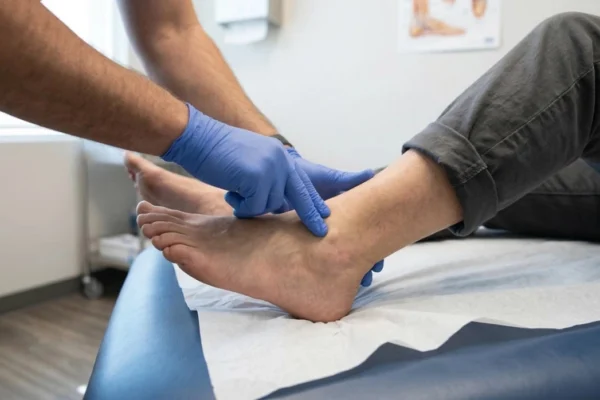
- Physical Palpation: Checking for localized warmth, swelling, and “crepitus”—the grinding sensation felt when a damaged joint moves.
Comprehensive Conservative OA Treatment
Mechanical Support and Custom Foot Orthotics
Footwear Modifications
Physical Therapy and Strengthening
Advanced Medicine for Aching Joints
Topical and Oral Medications
Corticosteroid and Viscosupplementation Injections
Platinum Biologics and Regenerative Medicine
Non-Invasive Remy Laser Pain Treatment
Surgical Interventions and Recovery
- Arthrodesis (Joint Fusion): The damaged cartilage is removed, and the bones are fused together using pins or plates. This eliminates the source of pain (the friction) but results in a permanent loss of motion in that specific joint.
- Arthroplasty (Joint Replacement): For the ankle joint, replacement with an artificial implant is an option for certain patients. This preserves motion while removing the painful, arthritic surfaces.
Post-surgical recovery involves a structured rehabilitation program to regain strength and ensure the successful integration of the surgical site.
Preventive Measures and Long-term Management
- Weight Management: Maintaining a healthy BMI is the single most effective way to reduce the load on the foot joints.
- Early Injury Care: Properly treating ankle sprains and fractures reduces the risk of developing secondary osteoarthritis later in life.
- Cross-Training: Varying physical activities (e.g., swimming instead of high-impact running) helps avoid repetitive stress on a single joint group.
- Osteoarthritis Supplements: While evidence varies, many patients find that supplements like glucosamine, chondroitin, and omega-3 fatty acids help maintain general joint health.
Addressing Joint Inflammation in the Los Angeles Lifestyle
Summary of Treatment Options for Osteoarthritis
| Treatment Category | Specific Modality | Primary Goal |
|---|---|---|
| Conservative | Custom Foot Orthotics | Pressure redistribution & alignment |
| Therapeutic | Remy Laser Pain Treatment | Reduced inflammation & cellular repair |
| Biological | Platinum Biologics | Growth factor modulation |
| Pharmacological | Topical NSAIDs | Localized pain and swelling relief |
| Surgical | Joint Fusion or Replacement | Permanent pain elimination |
Osteoarthritis is a manageable condition, but it requires a proactive approach. Understanding the osteoarthritis causes and recognizing early oa symptoms can mean the difference between maintaining an active lifestyle and facing significant mobility restrictions. If you are struggling with persistent foot pain or finding that your joints feel stiff daily, a comprehensive evaluation is the first step toward a personalized treatment plan.
Frequently Asked Questions
What are the most common osteoarthritis symptoms in the feet?
What is the most effective treatment for aching joints in the ankle?
How can a person effectively reduce joint swelling at home?
What is the difference between primary and secondary osteoarthritis?
When is foot and ankle surgery the right option?
Can lifestyle changes help prevent arthritis from worsening?
References
- Mayo Clinic: Osteoarthritis – Symptoms and Causes — https://www.mayoclinic.org/diseases-conditions/osteoarthritis/symptoms-causes/syc-20351925
- Arthritis Foundation: Foot and Ankle Osteoarthritis — https://www.arthritis.org/diseases/osteoarthritis
- American Academy of Orthopaedic Surgeons: Arthritis of the Foot and Ankle — https://orthoinfo.aaos.org/en/diseases–conditions/arthritis-of-the-foot-and-ankle/
- CDC: Osteoarthritis (OA) — https://www.cdc.gov/arthritis/basics/osteoarthritis.htm