

This content is for informational purposes only and does not constitute medical advice. Please consult with a licensed podiatrist for a personalized evaluation and treatment plan. Individual results may vary.

Pediatric flat feet occur when the longitudinal arch of the foot remains in contact with the ground during weight-bearing activities. This is a standard physiological stage of development, as nearly 97% of children under the age of two demonstrate flat feet due to a protective fat pad and naturally flexible ligaments. 

For the majority of children, this condition resolves without intervention by age 6 to 10 as the musculoskeletal system matures and the medial arch develops its final shape. Medical treatment is only necessary when the condition is “symptomatic,” meaning it causes persistent pain in the foot or calf, rapid fatigue during physical play, or if the foot remains rigid even when the child is not standing.

For parents in the Los Angeles area seeking a professional gait analysis or developmental screening for their child, a clinical evaluation with Dr. Arkady Kaplansky offers a clear path toward understanding foot health and long-term alignment.
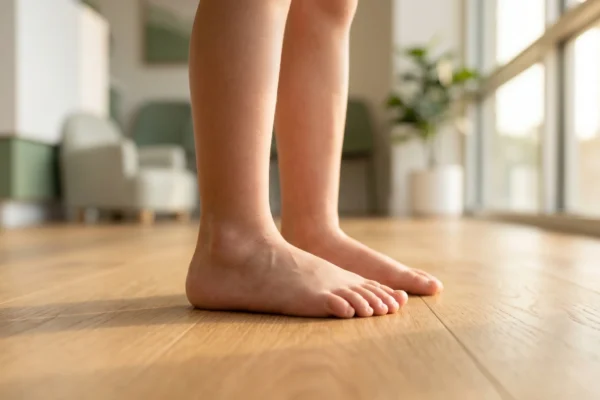
A low-angle photograph capturing bare human legs and feet standing side-on on light-colored wood floorboards. The warm, natural light coming from a large window in the background creates soft shadows and a sun-drenched atmosphere. The depth of field is very shallow, making the modern chairs and potted plant in the background softly blurred. The focus is sharp on the feet and the wood grain.
Image created with AI assistance for illustrative purposes.

Is Pediatric Flatfoot a Normal Developmental Stage?

The human foot is a complex structure that is not born with a fully formed arch. At birth, the foot is composed largely of flexible cartilage and a thick layer of fat on the sole. This fat pad serves a critical protective function, providing a wide, stable base of support as a child learns to navigate their environment and take their first steps.

As a child grows, the ligaments – the strong tissues connecting the bones – begin to tighten and lose their initial laxity. Simultaneously, the muscles in the foot and lower leg grow stronger, pulling the skeletal architecture into the classic arch shape. This process is highly individual and occurs at varying speeds depending on genetics, physical activity levels, and overall growth patterns.

Research shows that the prevalence of flat feet decreases significantly as children reach school age. While more than half of toddlers show no visible arch, the majority will develop one naturally by the end of their first decade. According to the American Academy of Pediatrics, most children with flexible flat feet do not require treatment or special shoes.

Age of Child Prevalence of Flat Feet
2 Years Old 97%
3 Years Old 54%
6 Years Old 24%
12-15 Years Old 12% – 15%

Understanding the Medial Longitudinal Arch

The medial longitudinal arch is the primary shock-absorbing structure of the human body. It is supported by a network of structures including the plantar fascia, the posterior tibial tendon, and various small intrinsic muscles. In pediatric patients, these structures are often highly elastic, leading to what clinicians call “hypermobility.”

What Are the Clinical Signs That Fallen Arches Require Treatment?

Most cases of pediatric flat feet are categorized as “flexible.” This means the arch is present when the child sits or stands on their toes but disappears when they stand flat. Flexible flatfoot is rarely a cause for medical concern unless it produces significant physical discomfort or alters the child’s movement patterns.

Pathological flatfoot, or “rigid” flatfoot, is a different clinical entity entirely. In these cases, the arch is absent regardless of the foot’s position. This often stems from a structural abnormality, such as tarsal coalition, where two or more bones in the foot grow together. This condition is detailed extensively by the American College of Foot and Ankle Surgeons, noting that rigid flatfoot requires specialized diagnostic imaging and often corrective intervention.

Identifying Symptomatic Fallen Arches Symptoms

When a child’s foot structure interferes with their quality of life, it is classified as symptomatic. Parents should monitor for specific behavioral and physical changes that suggest the feet are struggling to support the body’s weight effectively. These signs are often subtle at first but become more pronounced as the child becomes more active.

Common symptoms requiring a professional evaluation include:

  • Deep pain or tenderness in the arch, heel, or along the inside of the ankle.
  • Frequent “leg aches” at night, often centered in the calf muscles or shins.
  • A visible tilting of the heel bone away from the midline of the body (valgus).
  • A sudden withdrawal from sports or play because the child tires more quickly than peers.

The Impact of Pronated Feet on the Body

When the arch collapses, it often causes the foot to roll inward excessively, a state known as pronated feet. This movement creates a “knock-knee” appearance and forces the entire leg bone (tibia) to rotate internally. Over time, this biomechanical misalignment can lead to secondary pain in the knees, hips, and even the lower back as the body tries to compensate.

How Do Podiatrists Manage Symptomatic Flat Feet in Children?

Treatment for pediatric flat feet is focused strictly on improving function and eliminating pain rather than “creating” an arch for cosmetic reasons. Clinical guidelines provided by the Mayo Clinic emphasize that if flat feet cause no pain, treatment is generally not necessary.

The primary goal of conservative care for symptomatic children is to stabilize the foot and reduce mechanical strain. This is achieved through a combination of muscle strengthening, physical therapy, and external structural support to prevent excessive pronation.

The Role of Supportive Footwear for Flat Feet

Proper shoe construction is the most effective daily intervention for children with symptomatic arches. High-quality supportive footwear for flat feet provides a stable platform that prevents the foot from rolling inward and helps distribute weight more evenly across the foot.

Key features to look for in pediatric footwear include:

  1. A Rigid Heel Counter: The back of the shoe should be firm enough to prevent the heel bone from tilting outward.
  2. Torsional Rigidity: The shoe should not be easy to twist; the middle of the sole must remain firm and supportive.
  3. Appropriate Flex Point: The shoe should only bend at the toes, where the foot naturally flexes, rather than in the middle of the arch.

Orthotics and Physical Therapy

In cases where supportive shoes alone are insufficient, podiatrists may recommend orthotic inserts. These devices are placed inside the shoes to reposition the foot into a more neutral alignment. Research indexed by the National Institutes of Health (NIH) suggests that while orthotics improve comfort, they do not “cure” flat feet or permanently change the shape of the arch in flexible cases. Physical therapy focuses on stretching a tight Achilles tendon, which is a common contributing factor to arch collapse.

Are Complications Like Sever's Disease Linked to Flat Feet?

Children with flat feet are often more susceptible to overuse injuries due to the inefficient way their feet absorb impact. Because the arch does not provide a spring-like mechanism, the force of each step is transferred directly to other parts of the foot and leg, leading to inflammation.

One common association is with pigeon toe (intoeing), where the feet point toward each other. While intoeing often originates in the hip or shin bone, it can exacerbate the appearance and symptoms of a collapsed arch by shifting the child’s center of gravity forward.

Understanding Sever's Disease and Heel Pain

Sever’s disease is a frequent complication in active children between the ages of 8 and 14. It is an inflammation of the growth plate located in the heel. When a child has flat feet, the Achilles tendon often becomes tight, pulling excessively on the heel bone and worsening the inflammation during physical activity.

When Is Minimally Invasive Surgery Necessary for Pediatric Patients?

Surgery is strictly considered a method of last resort. It is typically reserved for children older than age 8 who have failed to find relief through a full year of physical therapy and orthotics. Modern surgical techniques have moved away from major bone reconstruction in favor of minimally invasive options that preserve joint mobility.

A highly successful contemporary procedure is the Subtalar Extra-articular Arthroereisis (SESA). This involves the insertion of a small titanium implant into a space in the ankle called the sinus tarsi. The implant acts as a physical “block,” preventing the ankle bone from sliding off the heel bone and maintaining a functional arch during movement.

Feature of SESA Procedure Clinical Details
Procedure Type Minimally invasive, 20-40 minute duration
Recovery Time Walking usually resumes within 7 to 10 days
Success Rate Approximately 94% improvement in symptoms
Long-term Goal Correct alignment during the remaining growth years

The Relationship Between Body Mass and Foot Health

Body weight is a significant factor in pediatric foot development. Clinical studies have shown that children with a high Body Mass Index (BMI) are significantly more likely to experience a collapse of the medial arch. This is due to the increased mechanical load on the ligaments that are still maturing.

Statistical evidence regarding weight and foot health:

  • Obese children are 2.3 times more likely to develop symptomatic flat feet.
  • Increased weight places approximately 15% more stress on the posterior tibial tendon.
  • Weight management is often a core component of a comprehensive podiatric treatment plan to reduce pain.

Practical Steps for Parents to Support Foot Health

While most children will outgrow their flat feet naturally, parents can take proactive steps to ensure healthy musculoskeletal development. Observation and early intervention are key to preventing long-term alignment issues and chronic pain.

Recommended daily practices include:

  • Barefoot Play: Walking on varied surfaces like sand, grass, or carpet helps strengthen the intrinsic muscles of the foot.
  • Regular Stretching: If a child has tight calves, performing gentle wall stretches can prevent the Achilles tendon from pulling the arch down.
  • Monitoring Shoe Wear: Check the soles of a child’s shoes; if the inside edge of the sole is significantly more worn than the outside, it may indicate excessive pronation that requires a professional gait analysis.

Summary of Pediatric Arch Development

In conclusion, pediatric flat feet are almost always a normal part of growing up. If a child is active, pain-free, and meeting their developmental milestones, no treatment is required. However, if pain interferes with their ability to play or participate in daily activities, a consultation with a podiatric specialist can provide the necessary support to ensure a healthy, active future.

Frequently Asked Questions

At what age do a child’s arches usually develop?

Most children are born with a natural fat pad that hides the arch, making the foot appear flat until roughly age two. The medial longitudinal arch typically begins to take its permanent shape between the ages of three and six, with most development finalizing by age ten.

How can I tell if my child’s flat feet require medical treatment?

Treatment is generally unnecessary if the foot is flexible and the child remains active and pain-free. Clinical intervention is recommended only if the child experiences persistent fallen arches symptoms, such as arch pain, nighttime leg cramps, or visible fatigue during physical activities.

Can flat feet cause pain in other parts of the body like the knees or hips?

Yes, because pronated feet cause the lower leg to rotate inward, they can place excessive strain on the entire kinetic chain. This misalignment often leads to secondary discomfort in the knees and hips and may exacerbate conditions like Sever’s disease or gait abnormalities like pigeon toe.

Does my child need specialized orthopedic shoes for flat feet?

If a child is symptomatic, supportive footwear for flat feet is a primary recommendation to provide stability and reduce strain. These shoes should feature a rigid heel counter and a firm midsole to prevent the foot from rolling inward excessively during movement.

Are orthotic inserts a permanent cure for pediatric flat feet?

While orthotics are excellent for managing pain and stabilizing the foot’s position, they do not permanently change the skeletal structure of a flexible arch. They serve as a functional tool to improve comfort and alignment while the child’s musculoskeletal system continues to mature.

When is surgery considered for a child with flat feet?

Surgery is a last resort typically reserved for children over age eight who suffer from rigid deformities or severe pain that does not respond to physical therapy. Modern, minimally invasive procedures can realign the bones and restore function with significantly shorter recovery times than traditional methods.