

This content is for informational purposes only and does not constitute medical advice. Please consult with a licensed podiatrist for a personalized evaluation and treatment plan. Individual results may vary.
Plantar warts, corns, and calluses can all look like rough, thickened spots on the bottom of the foot, but their causes are very different. Plantar warts are skin growths caused by a virus, while corns and calluses are thickened skin that forms from pressure and friction. The fastest way to tell them apart is to look for tiny black dots and check what hurts: warts often have dark specks and sting when pinched from the sides, while corns and calluses hurt with direct downward pressure. A growth that bleeds, spreads, or stays painful usually needs a podiatrist’s care.
Anyone in Los Angeles who is unsure whether a sore spot is a wart, a corn, or a callus can get a clear diagnosis and the right treatment from the foot care team led by Dr. Arkady Kaplansky. Correct identification matters, because the treatments are not the same.
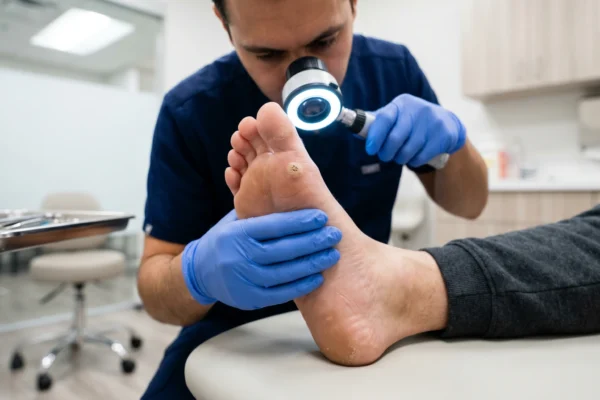
What Plantar Warts Are
Plantar warts are small, rough growths that appear on the soles of the feet. They are human papillomavirus warts, meaning they are caused by certain strains of HPV that enter the skin through tiny cuts or breaks. According to Cleveland Clinic, common strains behind plantar warts include HPV types 1, 2, 3, 4, 27, and 57. Because they grow on weight-bearing skin, they often press inward and feel like a pebble in the shoe.
How Plantar Warts Spread
The virus thrives in warm, damp places. People often pick it up by walking barefoot in locker rooms, around public pools, or in shared showers. Human papillomavirus warts on feet can also spread from one part of the foot to another, or to other people, through direct contact or shared towels and shoes. Small breaks in the skin make infection more likely, which is why warts on feet are common in active people and children.
What Plantar Warts Look Like
A key clue is the surface. Plantar warts interrupt the normal lines and ridges of the skin, almost like a pebble dropped into a fingerprint. Many show tiny black dots, sometimes called wart seeds, which are actually small clotted blood vessels. Cleveland Clinic describes these brown or black specks as a hallmark of plantar warts. The warts are often grainy or cauliflower-like and may grow in clusters.
What Corns and Calluses Are
Corns: Small and Deep
Calluses: Broad and Flat
Key Differences Between Warts, Corns, and Calluses
- Skin lines: warts interrupt them; corns and calluses preserve them
- Black dots: common in warts; absent in corns and calluses
- Pain on a side-to-side pinch: typical of a wart
- Pain on direct downward pressure: typical of a corn or callus
- Spread: warts can multiply; corns and calluses do not
No single sign is perfect, and some growths share features. When the cause is unclear, a professional exam settles the question quickly.
Different Types of Warts and Skin Growths
When to See a Podiatrist in Los Angeles
A podiatrist can confirm whether a spot is a wart, a corn on the foot, or a callus, and rule out other skin problems that can mimic them. In Los Angeles, that evaluation is available through Dr. Arkady Kaplansky’s practice, where the goal is an accurate diagnosis before any treatment begins.
Treatment Options That Work
Treating Plantar Warts
Treating Corns and Calluses
What Causes These Foot Growths to Form
Why Warts Take Hold
Why Corns and Calluses Build Up
How to Prevent Plantar Warts, Corns, and Calluses
- Wear sandals or shower shoes in locker rooms, pools, and public showers
- Keep feet clean and dry, and change damp socks promptly
- Choose well-fitting shoes with enough room in the toe box
- Use cushioned insoles or pads over high-pressure spots
- Avoid sharing towels, socks, or shoes to limit virus spread
- Moisturize thick, dry skin to keep calluses from cracking
For people with diabetes or numb feet, a daily foot check is especially important. Catching a new wart, a corn on the foot, or a cracked callus early prevents bigger problems down the road. When something looks off, a podiatrist’s exam is the safest next step.
Frequently Asked Questions
How Can Someone Tell if It’s a Plantar Wart or a Callus?
A plantar wart usually interrupts the skin lines and may show tiny black dots, while a callus keeps the skin lines intact and has no dots. A wart often hurts when pinched from the sides, but a callus hurts with direct pressure. When the difference is unclear, a podiatrist can confirm it.
How Are Plantar Warts and Corns Different?
Plantar warts are caused by a virus and can spread, while corns come from pressure and do not spread. Warts may have black specks and disrupt the skin’s surface, whereas a corn has a hard central core surrounded by thickened skin. Their treatments are also different.
What Is the Squeeze Test for Plantar Warts?
The squeeze test means pinching the growth from side to side rather than pressing straight down. Plantar warts tend to be painful when squeezed sideways, while corns and calluses hurt more with direct downward pressure. It is a quick clue, though not a final diagnosis.
How Do Corns and Calluses on the Foot Differ?
A corn is small and round with a hard center, and it usually forms on or between the toes. A callus is larger, flatter, and more spread out, often on the heel or ball of the foot. Corns are more likely to be painful because the core presses on nerves.
Are Plantar Warts Contagious?
Yes. Plantar warts come from HPV, which spreads in warm, damp places like pool decks and locker rooms. The virus can pass through direct contact or shared items such as towels and shoes. Covering the wart and avoiding barefoot walking in public areas lowers the risk.
Can Plantar Warts Go Away on Their Own?
Some plantar warts clear up without treatment, especially in children, but this can take months or years. Painful, spreading, or stubborn warts usually need professional treatment. People with diabetes or circulation problems should seek care rather than wait.