

This content is for informational purposes only and does not constitute medical advice. Please consult with a licensed podiatrist for a personalized evaluation and treatment plan. Individual results may vary.
Brachymetatarsia is a clinical condition characterized by an abnormally short metatarsal bone, which results in one toe shorter than the rest. While frequently affecting the fourth toe, this condition can involve any of the metatarsals and often leads to functional imbalance, localized pain, and significant aesthetic concerns. Professional intervention is required when the deformity causes transfer metatarsalgia, persistent calluses, or difficulty in finding appropriate footwear.
Medical consultations with a specialist for feet like Dr. Arkady Kaplansky in Los Angeles provide patients with access to advanced diagnostic imaging and customized correction plans tailored to the severity of the bone shortening.
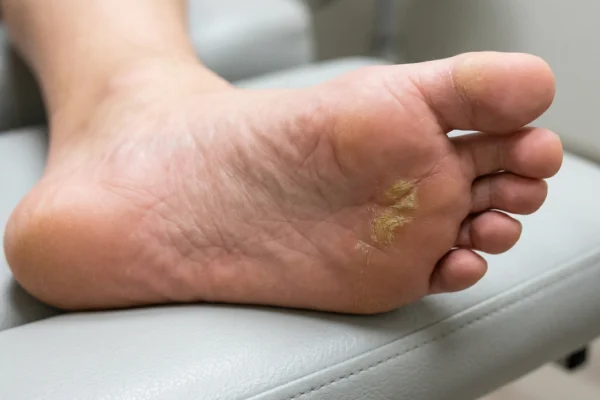
Understanding Brachymetatarsia Causes and Bone Development
- Physical Trauma: Fractures or injuries to the growth plate during early childhood.
- Bone Infection: Osteomyelitis that damages the growth center of the metatarsal.
- Systemic Conditions: Genetic or endocrine disorders, such as Down syndrome or Turner syndrome.
- Surgical Complications: Previous foot surgeries that inadvertently affected the bone’s growth potential.
The human foot relies on a “metatarsal parabola”—a specific alignment where the first and second metatarsals are roughly equal in length, followed by a gradual decrease in the third, fourth, and fifth. When one bone is significantly shorter, this parabola is broken, shifting the weight-bearing responsibilities of the foot to bones that are not designed to handle the extra load.
Clinical Symptoms and Functional Implications
1. Transfer Metatarsalgia
2. Painful Callus Formation
3. Digital Deformities (Cock-up Toe)
Comprehensive Treatment Options in Los Angeles
Non-Surgical Management and Symptom Relief
| Service Name | Purpose | Clinical Benefit |
|---|---|---|
| Foot Orthotics | Mechanical correction | Redistributes weight away from overworked metatarsals. |
| Radiesse Filler for Feet | Fat pad augmentation | Provides a biological cushion where the short bone fails to support. |
| Remy Laser Pain Treatment | Inflammation control | Stimulates cellular repair and reduces chronic nerve pain. |
| Custom Shoe Padding | Friction reduction | Prevents the formation of corns on the elevated toe. |
Advanced clinics also utilize Platinum Biologics to manage secondary soft tissue injuries. These regenerative therapies involve growth factors that help heal inflamed tendons and ligaments stressed by the foot’s structural imbalance.
Advanced Brachymetatarsia Surgery and Bone Lengthening
1. Acute Lengthening (Bone Grafting)
- The Procedure: The surgeon cuts the short metatarsal and inserts a bone graft (autograft or allograft) to bridge the gap.
- Fixation: A titanium plate and screws are used to stabilize the structure while the bone fuses.
- Advantage: Recent 2026 studies published in the Journal of Foot and Ankle Surgery confirm that acute corrections exceeding 15mm are safe and effective, with a mean consolidation time of under 10 weeks.
2. Gradual Lengthening (Distraction Osteogenesis)
- The Procedure: An external fixator, such as a Mini-Rail, is attached to the metatarsal using small pins.
- The Distraction Phase: The patient or doctor turns a dial on the device daily (usually 1mm per day). This tension triggers the body to fill the widening gap with new bone tissue.
- Modification: Modern techniques now incorporate trans-articular K-wires to prevent joint subluxation during the stretching phase, ensuring better structural stability.
Why Consult a Specialist for Feet in Los Angeles?
By utilizing high-resolution digital X-rays and 3D gait analysis, a specialist can determine exactly how many millimeters of lengthening are required to restore the metatarsal parabola. This precision prevents “over-lengthening,” which can lead to stiff joints, or “under-lengthening,” which fails to resolve the underlying pain.
Frequently Asked Questions
Why is one of my toes significantly shorter than the rest?
Can brachymetatarsia be treated effectively without surgery?
What are the main types of surgery for metatarsal lengthening?
How long is the recovery period after brachymetatarsia surgery?
Is toe lengthening surgery considered a cosmetic or medical procedure?
Will I be able to wear normal shoes and exercise after the procedure?
References
- Journal of Foot and Ankle Surgery (2026) — https://pubmed.ncbi.nlm.nih.gov/40953797/
- Journal of Orthopaedic Case Reports (2025) — https://jocr.co.in/wp/wp-content/uploads/19-7801-10.13107jocr.2025.v15.i08.5898-96-101-1.pdf
- Journal of Orthopaedics (2024) — https://www.researchgate.net/publication/376064205_What’s_the_evidence_on_surgical_treatment_for_congenital_brachymetatarsia_A_systematic_review_and_meta-analysis
- EFORT Open Reviews (2024) — https://pmc.ncbi.nlm.nih.gov/articles/PMC11044089/
- FootHealthFacts (ACFAS) — https://www.foothealthfacts.org/footconditions/brachymetatarsia
- The Paley Orthopedic & Spine Institute —https://paleyinstitute.org/brachymetatarsia/