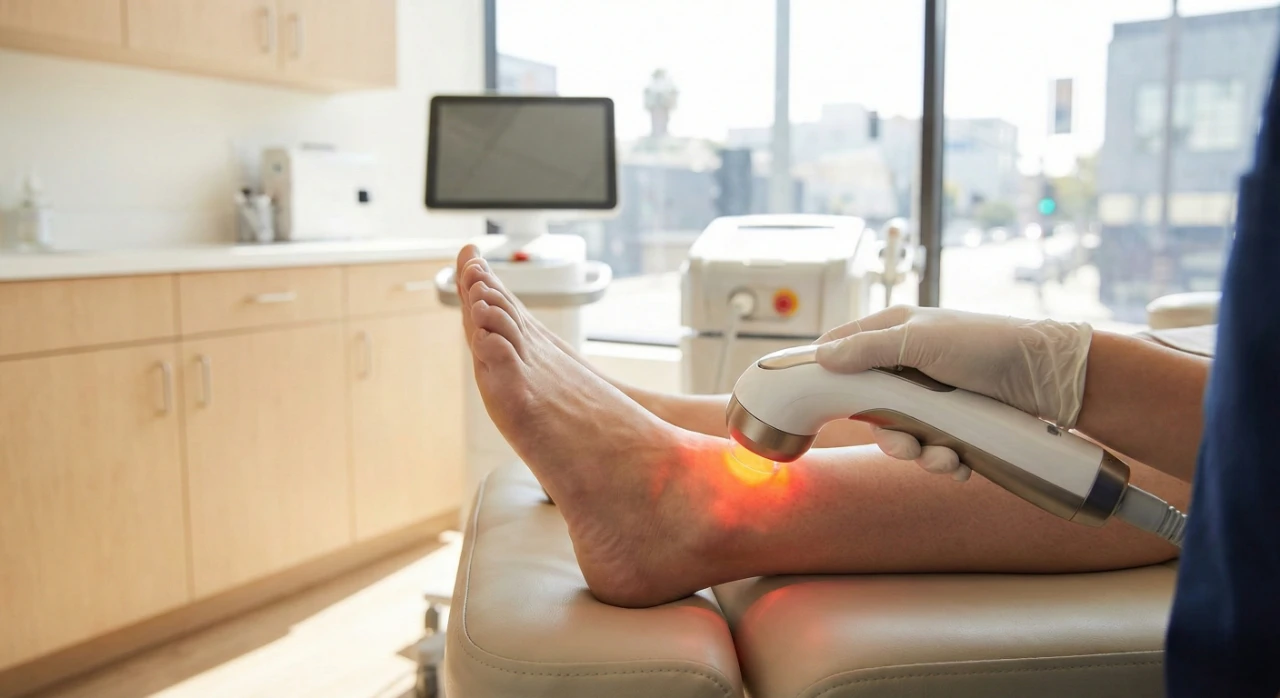
Remy Laser pain treatment in Los Angeles is a state-of-the-art, Class IV high-intensity therapy designed to eliminate chronic inflammation and repair damaged musculoskeletal tissue at the cellular level. By utilizing specific wavelengths of light to trigger photobiomodulation, this non-invasive medical procedure stimulates the production of adenosine triphosphate (ATP), which significantly accelerates natural healing, reduces pain, and restores mobility without the risks of surgery or the side effects of long-term medication.
Schedule Your Consultation in Los Angeles Today

Therapeutic Scope: Addressing Complex Foot and Ankle Conditions
Relief for Acute Injuries and Structural Strains
Living in a city as active as Los Angeles often leads to physical setbacks. This therapy is highly effective for:
-
Turned Ankle Foot Pain: Rapidly reducing the swelling and ligamentous distress that follow a typical sprain.
-
Plantar Fascia Knot: Breaking down the localized tension and discomfort associated with a stubborn plantar fascia knot.
-
Inflamed Heel Pain: Cooling the intense, inflamed heel pain that often makes the first steps of the morning unbearable.
-
PTTD Foot Pain: Stabilizing the tendons and managing pttd foot pain to restore a healthy arch and gait.
-
Walking Discomfort: Addressing sharp pain inside the ankle when walking and localized pain at the middle of the foot.
Advanced Care for Bone and Joint Conditions
Structural changes and autoimmune issues often require deep-penetrating energy that traditional physical therapy cannot easily provide:
-
Painful Heel Spurs: Successfully managing cases where bone spurs in the heel are painful during weight-bearing activities.
-
Foot Pain from Osteoarthritis: Providing long-term relief for chronic foot pain from osteoarthritis by slowing cartilage degradation and reducing friction-induced inflammation.
-
Rheumatoid Arthritis in the Ball of the Foot: Reducing the systemic swelling and joint tenderness characteristic of rheumatoid arthritis in the ball of the foot.
-
Foot Sesamoid Pain: Healing the small bones under the big toe joint to resolve chronic foot sesamoid pain.
Addressing Nerve Pain and Forefoot Discomfort
When a patient describes a sensation where the ball of the foot feels like a lump or a pebble is stuck in their shoe, it is often a sign of nerve compression or bursitis. The Remy Laser is designed to penetrate these sensitive areas to decompress nerves and restore normal sensation.
-
Nerve Pain on the Foot Bottom: Stimulating the regeneration of damaged nerve fibers to eliminate burning and nerve pain on the foot bottom.
-
Tarsal Tunnel Heel Pain: Relieving the pressure of the tibial nerve to resolve radiating tarsal tunnel heel pain.
-
Painful Ball Under the Foot: Cooling the heat and pressure of a painful ball under the foot, often associated with metatarsalgia or Morton’s neuroma.
Technical Superiority: The Science of Photobiomodulation
The efficacy of the Remy Laser stems from its simultaneous use of multiple wavelengths (810nm, 980nm, and 1064nm). This process, known as photobiomodulation, triggers a cascade of positive cellular changes that provide both immediate and long-term benefits.
-
Metabolic Acceleration: The light energy increases the production of $ATP$, providing cells with the “fuel” needed for rapid repair of ligaments and nerves.
-
Enhanced Circulation: The laser stimulates angiogenesis (the formation of new capillaries), which is critical for healing areas like the Achilles tendon that naturally have poor blood supply.
-
Natural Analgesia: The therapy suppresses pain-conducting fibers and stimulates the release of endorphins, the body’s natural painkillers.
Comparison: Remy Laser vs. Traditional Interventions
| Feature | Corticosteroid Injections | Traditional Surgery | Remy Laser Therapy |
|---|---|---|---|
| Invasiveness | Medium (needles) | High (incisions) | Zero (non-invasive) |
| Downtime | 1–2 days | Weeks to months | None (instant activity) |
| Side Effects | Risk of tissue atrophy | Scarring, infection | Virtually none |
| Primary Goal | Symptom masking | Mechanical correction | Cellular regeneration |
What to Expect During Treatment in Los Angeles
The treatment process is designed to be comfortable and easily fits into a busy metropolitan schedule.
-
The Session: During the procedure, the practitioner moves the laser handpiece over the affected area. The patient feels a pleasant, deep warming sensation.
-
Duration: A single session typically lasts between 5 and 15 minutes.
-
Results: Most patients report significant improvement after just 3 to 6 visits, as the cumulative effects of cellular repair take hold.