

This content is for informational purposes only and does not constitute medical advice. Please consult with a licensed podiatrist for a personalized evaluation and treatment plan. Individual results may vary.

Sports medicine is a specialized branch of healthcare dedicated to the prevention, diagnosis, and treatment of injuries related to physical activity and athletic participation. Within the field of podiatry, professional intervention is required when foot or ankle pain persists for more than 48 hours, involves significant swelling, or results in a decreased range of motion that impairs daily activities or athletic performance. Seeking immediate care from a specialist is critical for diagnosing underlying structural issues such as stress fractures, ligament tears, or chronic tendonitis to prevent long-term joint degradation and permanent mobility limitations.

Receiving expert podiatric care in Los Angeles from Dr. Arkady Kaplansky ensures a precise diagnosis and an accelerated return to peak physical activity.
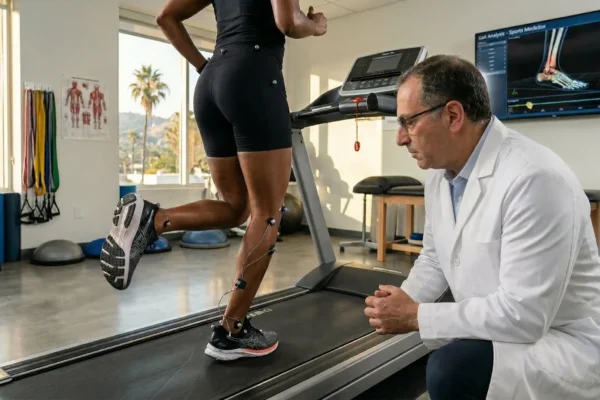
A dynamic, interactive photograph capturing a modern sports medicine gait analysis session bathed in warm natural light from a large window. The medium shot features a female athlete in black athletic wear running on a treadmill on the left, viewed from the rear-side, with motion-capture sensors and intricate wires attached to her lower legs. She is focused forward. On the right, a male doctor in a clean white lab coat with a visible name badge ("Dr. Kaplansky") kneels, observing her attentively. The composition balances the active runner and the observant physician. The background on the right is dominated by a large wall-mounted monitor displaying vibrant blue and green data visualizations, a 3D foot model, pressure maps, and clear text: "Gait Analysis - Sports Medicine". To the left is a metal rack with colorful resistance bands and various medical equipment, including BOSU balls, with a blurry view of palm trees and hills through the window. The focus is sharp in the foreground on the doctor and athlete, with a gradual softening into the background.
Image generated with AI for illustrative purposes only

The Intersection of Sports and Medicine in Modern Podiatry

The relationship between sports and medicine has evolved into a highly technical discipline that prioritizes biomechanical efficiency. In a city like Los Angeles, where the culture of fitness ranges from professional athletics to recreational hiking in the Santa Monica Mountains, the demands on the feet and ankles are immense. A sports physician focusing on podiatry does more than treat symptoms; the objective is to analyze the kinetic chain and identify why a specific injury occurred.

Athletes often overlook minor discomfort, assuming it is a natural byproduct of training. However, the specialized field of sports orthopedic care highlights that localized pain in the foot is frequently a symptom of broader mechanical imbalances. Whether a patient is a marathon runner or a weekend basketball player, understanding the physiological demands placed on the lower limbs is the first step toward sustained health.

The Value of a Comprehensive Sport Physical

Before engaging in high-intensity training or a new competitive season, a sport physical serves as a mandatory baseline for safety. This evaluation goes beyond a standard check-up, focusing specifically on the musculoskeletal integrity of the patient. During these assessments, a sport doctor examines joint laxity, muscle strength, and the alignment of the foot and ankle. Identifying issues like hypermobility or rigid high arches early can prevent the onset of conditions such as plantar fasciitis or Achilles tendinopathy.

Assessment Component Purpose in Sports Podiatry
Gait Analysis To identify overpronation or supination during movement
Range of Motion Testing To ensure the ankle and subtalar joints move without restriction
Strength Evaluation To check for muscle imbalances that lead to compensatory injuries
Footwear Inspection To determine if current equipment provides adequate support

Common Athletic Injuries of the Lower Extremities

The foot and ankle are susceptible to a wide array of traumatic and overuse injuries. Because these structures bear the entirety of the body’s weight during dynamic movement, even a minor misalignment can lead to significant trauma.

Stress Fractures and Bone Health

Unlike acute fractures caused by a single impact, stress fractures are tiny cracks in the bone resulting from repetitive force. These are common in sports involving running or jumping. A sport doctor often identifies these in the metatarsals or the navicular bone. If left untreated, these micro-fractures can progress to complete breaks, requiring surgical intervention and months of immobilization.

Ligamentous Strains and Sprains

Ankle sprains are perhaps the most frequent injury encountered in sports orthopedic clinics. These occur when the foot rolls or twists beyond its normal range, stretching or tearing the ligaments that stabilize the joint. Proper management is essential; a poorly rehabilitated sprain often leads to chronic ankle instability, making the athlete prone to recurrent injuries.

Chronic Tendonitis

Overuse injuries such as Achilles tendonitis or posterior tibial tendon dysfunction occur when the tendons are pushed beyond their capacity for repair. Sports therapy protocols are designed to manage the inflammation and gradually strengthen the tendon through eccentric loading, ensuring it can once again handle the stresses of explosive movement.

Multidisciplinary Care: The Role of the Athletic Recovery Team

Recovery is not a passive process. It requires a coordinated effort between the medical provider and the patient. In many cases, an athletic trainer plays a pivotal role in the day-to-day management of an injury. These professionals work under the guidance of a sports physician to implement specific exercises and monitor progress.

The Integration of Physical Therapy

Physical therapy is a cornerstone of non-surgical treatment. In Los Angeles, athletes have access to advanced rehabilitation techniques that focus on restoring proprioception-the body’s ability to sense its position in space. After an injury, this sense is often diminished, increasing the risk of re-injury. A structured physical therapy program uses balance boards, resistance training, and manual therapy to retrain the nervous system and the muscles simultaneously.

Advanced Sports Therapy Modalities

Modern sports therapy has expanded to include technologies that accelerate tissue healing. Some of the most effective non-invasive treatments include:

  • Extracorporeal Shockwave Therapy (ESWT): Uses acoustic pulses to stimulate blood flow and healing in chronic tendon issues.
  • Custom Orthotic Intervention: Precision-engineered inserts that correct the foot’s position to offload pressure from injured areas.
  • Laser Therapy: High-intensity light energy that reduces inflammation at a cellular level without the need for systemic medication.

Proactive Strategies for Sports Injury Prevention

The most effective way to manage an injury is to prevent it from occurring. Sports injury prevention is a science that combines education, equipment, and conditioning.

Footwear and Equipment

In Los Angeles, the variety of terrain-from asphalt streets to sandy beaches-requires specific footwear. A sport physician can provide recommendations based on an individual’s foot type and the specific demands of their sport. Shoes should be replaced every 300-500 miles of use, as the structural integrity of the midsole degrades long before the outer tread shows significant wear.

Athletic Recovery Protocols

True athletic recovery involves more than just rest days. It includes active recovery sessions, proper hydration, and myofascial release. When an athlete prioritizes recovery as much as training, the risk of overuse injuries drops significantly. This proactive approach is what separates high-performing athletes from those who are sidelined by preventable pain.

Recovery Technique Benefit Frequency
Dynamic Stretching Prepares muscles for the demands of exercise Pre-workout
Cryotherapy/Ice Baths Reduces systemic inflammation and muscle soreness Post-intense training
Compression Garments Improves blood flow and reduces edema in the lower limbs Post-workout/Travel
Professional Massage Breaks down adhesions and improves tissue elasticity Weekly/Bi-weekly

Localized Medical Support and Innovation

For residents of Los Angeles, navigating the complexities of medical care should be as seamless as possible. While specialized clinics offer deep expertise, the modern healthcare landscape also includes mobile solutions for those with demanding schedules or limited mobility during an acute injury phase.

When to Contact a Sports Orthopedic Specialist

It is a common misconception that one must be a professional athlete to seek care from a sports doctor. Anyone who engages in regular physical activity can benefit from this level of expertise. Immediate consultation is recommended if any of the following symptoms occur:

  1. Inability to Bear Weight: If the foot or ankle cannot support the body’s weight immediately following an injury.
  2. Visible Deformity: Any unusual protrusion or misalignment of the bones or joints.
  3. Night Pain: Pain that persists or worsens when the body is at rest or during sleep.
  4. Persistent Numbness: A “pins and needles” sensation that may indicate nerve compression or vascular issues.
  5. Recurrent “Giving Way”: A feeling that the ankle is unstable or may collapse during normal walking.

The Path Forward

The goal of sports medicine in the Los Angeles area is to empower individuals to move without fear of pain. By combining the diagnostic precision of a sports physician, the rehabilitative expertise of physical therapy, and the daily support of an athletic trainer, patients can achieve a level of function that often exceeds their pre-injury state.

Maintaining foot and ankle health is a lifelong commitment. Through a combination of regular sport physical examinations, adherence to sports injury prevention techniques, and utilizing modern medical resources, athletes of all levels can protect their foundation. Whether through advanced in-clinic diagnostics or a mobile consultation, provided by Dr. Kaplansky, the main sense is designed to meet patients where they are — and get them back to moving. Los Angeles athletes at every level deserve care that matches their ambition.

Frequently Asked Questions

What is the primary focus of sports and medicine regarding foot health?

This specialized field focuses on the prevention, diagnosis, and treatment of musculoskeletal injuries caused by intense physical activity. A qualified sport doctor uses advanced diagnostics to identify biomechanical issues and create a recovery plan that restores full mobility to the lower limbs.

When should I consult a sports physician for an ankle injury?

You should seek professional help if you experience persistent swelling, an inability to bear weight, or recurring instability in the joint. Early intervention from a sports physician prevents chronic conditions like tendonitis or long-term ligament damage that could sideline your training.

How does physical therapy assist in athletic recovery?

Dedicated physical therapy helps rebuild strength and proprioception through targeted exercises and specialized manual techniques. This process, often supervised by an athletic trainer, ensures the foot and ankle can handle the stresses of high-impact movement without the risk of re-injury.

Why is a sport physically important before starting a new training program?

A comprehensive sport physical allows a medical professional to evaluate your joint alignment, flexibility, and muscle symmetry. Identifying these structural factors early helps in effective sports injury prevention and ensures your equipment and training habits match your specific foot type.

What is the difference between general podiatry and sports therapy?

While general podiatry covers all aspects of foot health, sports therapy specifically targets functional performance and the rapid return to athletic activity. It utilizes advanced modalities in sports orthopedic care, such as shockwave therapy or custom orthotics, to optimize the body’s kinetic chain.