

This content is for informational purposes only and does not constitute medical advice. Please consult with a licensed podiatrist for a personalized evaluation and treatment plan. Individual results may vary.
Women develop certain kinds of foot pain far more often than men, and footwear is a leading reason why. The shape of many women’s shoes concentrates pressure on the toes and the ball of the foot. Over years, that pressure drives conditions like Morton’s neuroma, bunions, and ball-of-foot pain. This guide, from the perspective of a podiatrist, explains why women’s foot pain can differ and what can be done about it.
Understanding the pattern is the first step toward relief. Dr. Arkady Kaplansky, a foot and ankle specialist practicing in Los Angeles since 1994, treats these problems every week. His approach favors conservative, non-surgical care first, with surgery reserved for cases that truly need it.
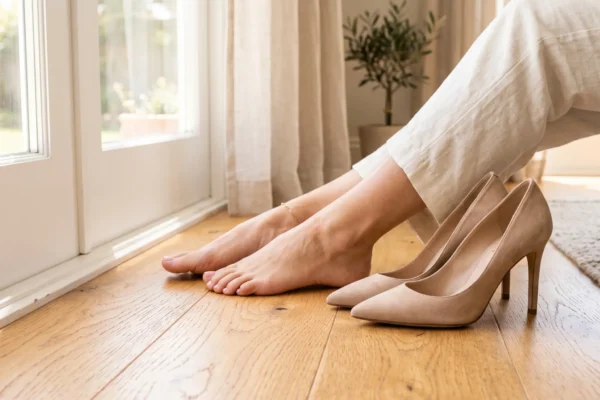
Why Do Women Get More Foot Pain Than Men?
Style is not the enemy here. The issue is how often and how long these shoes are worn. Small adjustments can protect the feet without giving up the shoes you like.
The evidence backs this up. A 2024 study in Scientific Reports found that pain in habitual high-heel wearers rose over time and became significant after about three and a half hours of wear. A heel height near 7.5 centimeters was the point at which overall body pain became significant.
In other words, both time and heel height matter. A lower heel worn for a shorter stretch is much easier on the feet. These are practical levers women can adjust.
Footwear and Foot Shape
A raised heel tips the body forward as well. To stay balanced, the forefoot presses harder into the shoe. That extra force, repeated daily, adds up over the years.
Foot shape plays a role too. A longer second toe, sometimes called Morton’s toe, changes how weight lands. That small difference can push more load onto the ball of the foot.
Women also tend to have looser ligaments than men. This can make the arch and forefoot more flexible. Flexibility helps in some ways, but it can also let the foot spread and strain under pressure.
Hormonal Changes: Pregnancy and Menopause
Many women find their shoe size changes after pregnancy. Supportive shoes during and after those months help. It is a common change, and it is not a sign of doing anything wrong.
Around menopause, shifting hormones can affect bone and soft tissue. Some women notice new aches or changes in shoe size. These shifts help explain why foot pain can appear at different stages of life.
None of this means women are destined for foot pain. It means the risks are different and worth knowing. With the right shoes and early care, most problems can be managed well.
What Is Morton's Neuroma, and Why Is It Common in Women?
It most often develops between the third and fourth toes. The squeezed nerve becomes irritated and swollen. That is why roomier shoes so often bring relief.
It is strongly linked to women. OrthoInfo, from the American Academy of Orthopaedic Surgeons, reports that Morton’s neuromas are around eight times more common in women than men. They typically affect people between the ages of 30 and 60.
The classic clue is a sharp or burning pain that eases when you take your shoe off. Some people feel numbness in the nearby toes. Rubbing the foot may bring brief relief.
A podiatrist can usually diagnose it from the exam and your history. Imaging is sometimes used to rule out other causes. Treatment then targets the pressure on the nerve.
Relief often starts with simple changes. Wider shoes, lower heels, and padding can take pressure off the nerve. When symptoms persist, a foot and ankle specialist can offer more targeted care.
Left alone, a neuroma can grow more painful over time. The nerve stays irritated as long as the pressure continues. Acting early usually means simpler, more effective treatment.
Why Does the Ball of the Foot Hurt After Wearing Heels?
The Mayo Clinic explains that high heels are a common cause of metatarsalgia, since they push extra weight onto the front of the foot. A second toe longer than the big toe can add to the load. The pain often eases with rest and worsens with standing.
People often describe it as walking on a stone or a bunched-up sock. A callus may form where the pressure is highest. These are signs the forefoot is taking too much load.
Cushioning and better shoes usually help. Custom orthotics and foot care can redistribute pressure across the foot. The goal is to spread the load so no single spot bears too much.
Metatarsalgia often overlaps with other forefoot problems. Neuromas, bunions, and calluses can appear together. A careful exam sorts out what is driving the pain.
Simple habits help too. Rotating shoes, lowering heel height, and resting sore feet all reduce strain. When the ache lingers for weeks, an exam can find the cause.
What Causes Bunions in Women?
OrthoInfo notes that bunions are more common in women, and that up to 70 percent of people who develop them have a family history. Narrow, pointed, and high-heeled shoes can make the problem worse over time. So both genes and footwear play a part.
A bunion tends to grow slowly over years. The bump can rub inside shoes and turn red or sore. Smaller shoes then feel tighter, which keeps the cycle going.
Early care focuses on comfort and slowing the change. Roomier shoes, padding, and orthotics can ease pressure on the joint. Surgery is considered only when pain limits daily life.
Bunions do not go away on their own, but pain can be controlled. The aim of early care is to keep you comfortable and active. A specialist can advise when, if ever, surgery makes sense.
Can High Heels Cause Permanent Foot Damage?
Occasional heel wear is unlikely to cause lasting harm. The concern is years of daily wear in narrow, high shoes. Over time, that can contribute to lasting changes in the foot.
Very high heels also shorten the calf muscles over time. This can make flat shoes feel uncomfortable later. Gentle stretching helps keep the calves and feet flexible.
Heel and arch pain is one example. OrthoInfo reports that about two million people are treated for plantar fasciitis each year, most often between the ages of 40 and 60. The good news is that more than 90 percent improve with non-surgical care.
Flat, unsupportive shoes can strain the arch just as heels strain the forefoot. Balance matters more than any single shoe. Variety in footwear gives the feet a break.
If morning heel pain sounds familiar, this overview of heel pain that hurts more in the morning may help. The key point is that early care usually works well. Waiting often makes treatment longer and harder.
The classic sign is a stab of heel pain with the first steps of the day. It often eases as you move, then returns after rest. Supportive shoes and stretching are usually the first steps in care.
How Is Women's Foot Pain Treated?
Good shoe choices go a long way on their own. Look for a wide toe box, a low heel, and firm support. These simple features take pressure off the parts that hurt.
A proper exam is what makes the difference. An experienced foot and ankle specialist can pinpoint the exact source of pain and tailor treatment to it. Guessing at the cause often leads to the wrong shoes or inserts.
Treatment is rarely one-size-fits-all. The same symptom can have different causes in different feet. Matching the fix to the cause is what brings lasting relief.
For persistent or worsening pain, a professional evaluation is worth it. Dr. Kaplansky and his practice focus on relieving pain while keeping treatment as simple as possible. When you are ready, you can book an appointment for a full assessment.
The earlier a foot problem is addressed, the easier it usually is to treat. Small steps, taken early, often prevent bigger problems later. Your feet carry you all day, and they are worth that care.
Frequently Asked Questions
Why do women get more foot pain than men?
Footwear and foot anatomy are the main reasons. Narrow, high-heeled shoes push weight onto the forefoot for hours at a time. Hormonal changes during pregnancy and menopause can also affect the feet.
What is Morton’s neuroma, and what does it feel like?
Morton’s neuroma is a thickening of tissue around a nerve between the toes. It often feels like standing on a pebble, with burning or tingling in the ball of the foot. It is about eight times more common in women than men.
Why does the ball of my foot hurt after wearing heels?
That pain is often metatarsalgia, an ache or burning under the ball of the foot. High heels are a common cause because they push extra weight onto the forefoot. It usually eases with rest and better footwear.
What causes bunions in women?
Bunions come from a mix of genetics and footwear. Up to 70 percent of people who get them have a family history, and narrow, high-heeled shoes can make them worse. They are more common in women.
Can high heels cause permanent foot damage?
Occasional wear is unlikely to cause lasting harm, but years of daily wear in narrow, high shoes can. Over time this may contribute to bunions, neuromas, and heel or arch pain. Early care and better footwear lower the risk.
How is metatarsalgia (ball-of-foot pain) treated?
Treatment usually starts with rest, cushioning, and supportive shoes. Custom orthotics can spread pressure more evenly across the foot. If pain continues, a podiatrist can offer more targeted care.