

Smelly feet come from bacteria on your skin feeding on the sweat trapped inside your shoes. Sweat on its own has almost no odor.
The medical term for the problem is bromodosis, and it is extremely common. Most cases improve once the feet get drier and the shoes get a chance to dry out between wearings. A smaller group of cases involves a fungal or bacterial infection, or a sweating disorder, and those need a different approach.
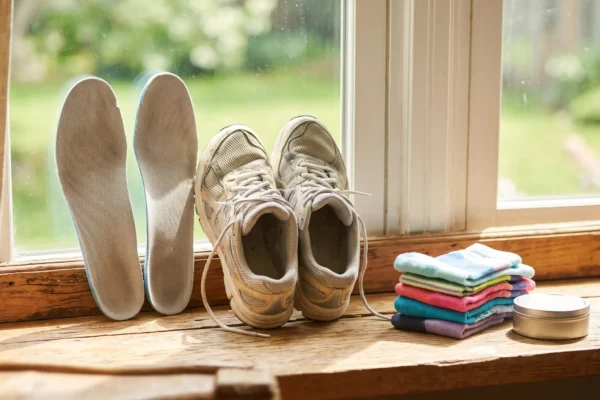
What Causes Smelly Feet in the First Place?
That explains why the problem is so stubborn. You can wash your feet perfectly and still put them back into a shoe that is holding yesterday’s sweat and bacteria. The shoe is half the problem and it rarely gets treated.
How Much Do Your Feet Actually Sweat?
How much you sweat depends on the weather, how hard you exercise, your footwear, your genetics, your age and sex, hormonal changes, your general health and your stress level. Puberty, pregnancy and menopause all shift sweat production, which is why odor can appear in someone who never had it before.
Why Shoes Make the Smell Worse
Wearing the same pair every day never lets the shoe dry. Rotating two pairs and cleaning them regularly cuts down the buildup, and choosing socks in cotton or a moisture-wicking wool or synthetic keeps less sweat against the skin.
Is It Athlete's Foot or Just Sweaty Feet?
What Athlete's Foot Looks Like
The risk goes up if you wear closed shoes, especially plastic-lined ones, keep your feet wet for long periods, sweat heavily, or pick up a small skin or nail injury. It spreads through direct contact and through shoes, socks, and shower or pool surfaces.
The table below lines up the signs that usually separate the two. Many people have both at once, which is worth keeping in mind.
| What You Notice | Points More to Sweating | Points More to a Fungal Infection |
|---|---|---|
| How the skin looks | Normal skin, sometimes damp or pale after long hours in shoes | Cracked, flaking or peeling skin, often between the toes |
| Itch and sting | Usually none | Red, itchy skin, sometimes burning or stinging |
| The smell | Often sharp and vinegar-like | Often foul, cheesy or yeasty |
| After a thorough wash | Smell clears for a while | Smell and skin changes stay |
| Toenails | Unchanged | May turn discolored, thick or crumbly |
| What usually helps | Drier socks and shoes, antiperspirant made for feet | Treatment aimed at the fungus, plus keeping feet dry |
A Quick Check You Can Do at Home
What Does Hyperhidrosis Have to Do With Foot Odor?
Mayo Clinic (2024) describes the common form, which affects the hands, feet, underarms or face, as causing at least one episode of heavy sweating a week while you are awake, usually on both sides of the body. Primary hyperhidrosis comes from faulty nerve signals that make the sweat glands overactive, and it often runs in families.
When Something Else Drives the Sweating
The practical reason this matters: sweating that heavy does not respond well to a change of socks alone. Mayo Clinic notes that treatment usually starts with antiperspirants and moves on to other options when those are not enough. Mayo Clinic also points out that people who sweat a lot are more prone to skin infections, which closes the loop back to odor.
Can Smelly Feet Be a Sign of Diabetes or Something Serious?
What Diabetes Changes About Your Feet
This is why a new foul smell matters more for someone with diabetes than for anyone else. Cleveland Clinic notes that diabetes can also raise sweating, and that an unnoticed, untreated foot injury can turn into a foul-smelling infection. Daily foot checks are the standard advice for exactly this reason, even when the feet feel fine.
Other Conditions That Change How Feet Smell
Some common medicines list increased sweating as a side effect, which can change foot odor without anything being wrong with the feet. If you suspect that, raise it with the provider who prescribed it rather than stopping anything on your own.
One caution worth stating plainly. In a person with diabetes, a sweet or fruity smell on the breath or body can signal diabetes-related ketoacidosis, which Cleveland Clinic describes as a life-threatening complication requiring emergency care. That is a different situation from an ordinary case of foot odor.
What Actually Fixes Smelly Feet at Home?
- Washing and, more importantly, drying the feet properly
- Managing socks and shoes so neither stays damp
- Reducing how much the feet sweat in the first place
Together they resolve a large share of cases, and they cost almost nothing to try. The order matters less than doing all three at once, since each one undoes the others when skipped.
Washing and Drying
Socks and Shoes
In shared spaces, wear sandals. The CDC (2026) lists using public showers or locker rooms without protective footwear, wearing tight shoes and socks, and excessive sweating among the risk factors for fungal foot infections, and recommends keeping skin clean and dry and not sharing towels or socks.
Antiperspirants and Powders
If over-the-counter products are not getting you anywhere, prescription-strength options exist, and a podiatrist can tell you which category fits your situation. Cleveland Clinic’s guidance when home measures fail is to ask about a prescription treatment aimed at foot moisture.
Why Does the Smell Come Back a Few Hours After You Wash?
Pull the insoles out and let the shoe open and dry for a full day before wearing it again. Keep two pairs in rotation. Wash socks in hot water and replace the thin, worn ones that stopped wicking anything a year ago.
There is also a stubborn group where none of this is enough. Repeat athlete’s foot, a bacterial skin condition such as pitted keratolysis, or genuine hyperhidrosis will keep producing odor through a flawless routine. That is where a diagnosis saves time.
What Can a Podiatrist Do That Drugstore Products Cannot?
Testing Instead of Guessing
There is also a warning worth repeating. The CDC advises against using steroid-containing creams on a rash that could be ringworm, because they can make a fungal infection worse. Treating a foot rash with whatever is in the medicine cabinet is a common way for a simple problem to drag on for months.
Care in Hollywood and Central Los Angeles
Foot odor rarely sits by itself either. Nail changes, recurring infections, and skin that cracks between the toes often show up together, and the full range of foot and ankle care is where those get sorted out as one problem rather than four.
Some of this runs in the family, which we cover in our post on whether foot problems run in families, and women dealing with footwear-driven foot trouble may want to read about how foot pain differs in women. The earlier a foot problem is looked at, the simpler it usually is to treat, so if the smell has outlasted several months of careful washing, that is reason enough to book a visit and find out what is behind it.
Antiperspirants and Powders
If over-the-counter products are not getting you anywhere, prescription-strength options exist, and a podiatrist can tell you which category fits your situation. Cleveland Clinic’s guidance when home measures fail is to ask about a prescription treatment aimed at foot moisture.
Frequently Asked Questions
Can I put my shoes in the washing machine to kill the smell?
Some fabric sneakers survive a cold, gentle cycle, but many shoes lose their shape or glue. A safer routine is to pull the insoles out, let both the shoe and the insole dry fully in open air for a day, and rotate to a second pair while they dry.
Do foot soaks help with foot odor?
Many people find a plain warm-water soak with careful drying afterward makes their feet feel fresher. Soaking too often can dry the skin, which is its own problem, so it works better as an occasional step than a daily habit.
Why do my teenager’s feet smell so much worse than mine?
Hormonal changes around puberty increase sweating, and teenagers often wear the same closed shoes every day. The combination gives bacteria more sweat to work with in a shoe that never dries out.
Can tight shoes cause foot odor on their own?
They make it more likely. Tight shoes and socks hold heat and moisture against the skin, which the CDC lists as a risk factor for fungal infections of the foot. Shoes with a little room and some airflow dry out faster between wearings.
Does shaving or removing foot hair reduce the smell?
There is no good reason to expect much difference, and small nicks on the feet can let bacteria in. Changing socks and letting shoes dry does far more for odor than anything cosmetic.
Are smelly feet contagious?
The odor itself is not, but the fungal infections that often come with it spread easily through shared floors, towels and footwear. That is why wearing sandals in locker rooms and not sharing socks or shoes matters.
Sources Used
Here’s Why Your Feet Smell – Cleveland Clinic Health Essentials (2025)
Hyperhidrosis – Symptoms and causes – Mayo Clinic (2024)
Ringworm Basics – Centers for Disease Control and Prevention (2026)
Your Feet and Diabetes – Centers for Disease Control and Prevention (2024)
Smelly feet – NHS (2025)
Tinea pedis: an updated review – PMC (2023)
Excessive sweating – Causes and definition – Mayo Clinic (2024)
Five Simple Steps to Banish Foot Odor – University Hospitals (2023)